.png)
 16 hours ago
7
16 hours ago
7
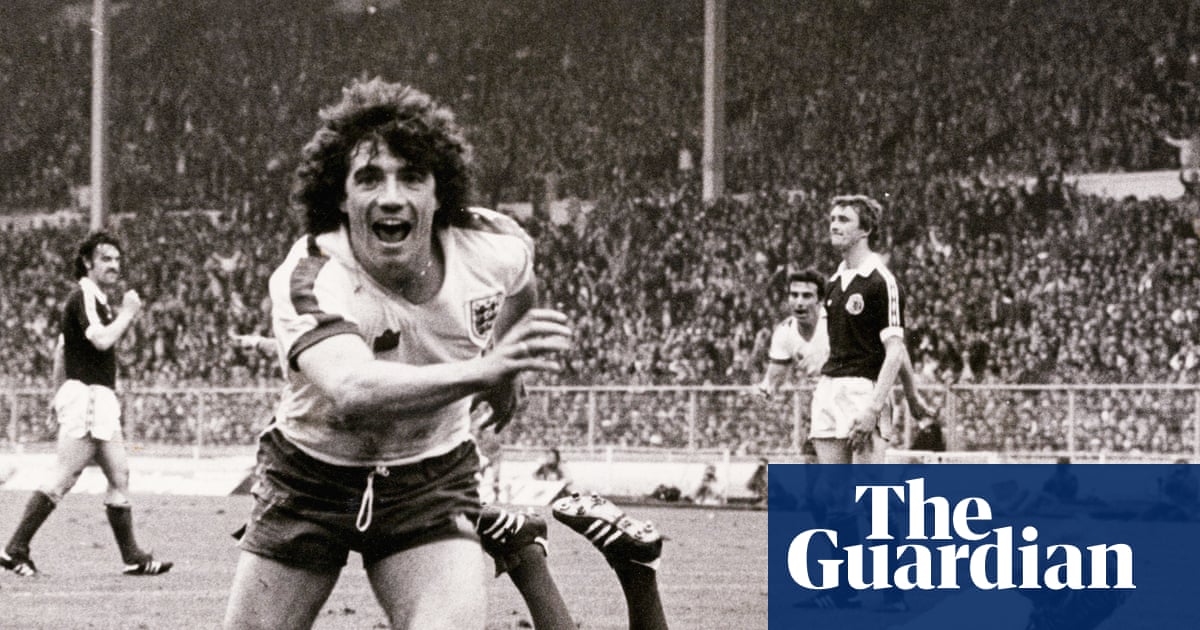
The story of Kevin Keegan and Newcastle United is perhaps best described as a three-act play. It involves an enduring and mutual love affair that brings joyous seasons in the sun punctuated by boardroom tensions and tear-stained exits.
Newcastle fans swiftly identified Keegan as a player and then, twice, a manager capable of switching the lights on at St James’ Park. “Special K” made everything about the club seem more vivid and exciting. To watch his 1990s “Entertainers” was to feel truly alive.
When Keegan first joined from Southampton in 1982, he was in the twilight of a highly distinguished playing career. Newcastle were then unwilling residents of the old Second Division but once the two-time Ballon d’or winner walked through the door, Tyneside suddenly appeared a far less monochrome place.
The former Liverpool, Hamburg forward wanted out at the Dell and, bolstered by a sponsorship deal with Scottish and Newcastle breweries, Arthur Cox, Newcastle’s manager, initiated a bold £100,000 transfer. At 31, Keegan began rediscovering long-buried roots. He was born and brought up in South Yorkshire and of Irish descent but, before his birth, his family lived in the north-east for some years.
Indeed Keegan’s father, Joe, a miner, was a fervent Newcastle fan who would tell his son stories about the goalscoring exploits of Hughie Gallacher and Jackie Milburn. Then there was Keegan’s grandfather Frank, who in 1909 courageously helped save 26 lives during the West Stanley pit disaster. In an emotional sense, such ties had always bound Keegan to Newcastle and dictated he regarded Cox’s offer as destiny.
When he scored on his home debut against Queens Park Rangers he hurled himself into the Gallowgate End. Keegan later explained this was something he had never done before and a purely instinctive reaction. “I wanted to show the fans I was one of them,” he said. “I wanted to stay for ever.”
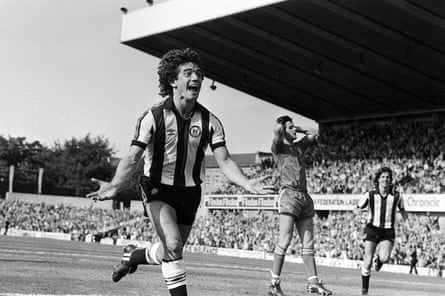
Newcastle finished seventh that season and bolstered by Peter Beardsley’s signing from Vancouver Whitecaps won promotion the following season. By then Keegan, who confessed to an abiding fear of letting down Newcastle fans, had announced his retirement from playing after deciding his legs were no longer swift enough for the top tier. His testimonial, against Liverpool, concluded with Keegan, in full kit and with a black-and-white scarf around his neck, departing in a helicopter that had landed on the pitch. Among those waving him goodbye was a 13-year-old ballboy named Alan Shearer.
As that helicopter rose into the night sky, Roy Orbison’s “It’s Over” was played over the St James’ Park public address system. Almost eight years later, though, Keegan’s relationship with Newcastle was dramatically back on after he was persuaded to emerge from an idyll with his wife and two daughters in southern Spain and manage a team seemingly destined to fall into the third tier for the first time.
It was early February 1992, Sir John Hall was Newcastle’s main boardroom player and Ossie Ardiles had just been sacked as manager. Keegan’s first act was to order and pay for a full fumigation of the club’s then less-than-appealing training ground. Eyebrows were soon raised by Keegan’s admission that he had watched only two live football matches during the previous seven years, but his first 16 gameshe led Newcastle from second bottom to safety.
The following year a team propelled by the talents of Rob Lee and Andy Cole cantered to the second-tier title and marked their maiden season in the newly established Premier League by finishing third, helped by the return of Beardsley.
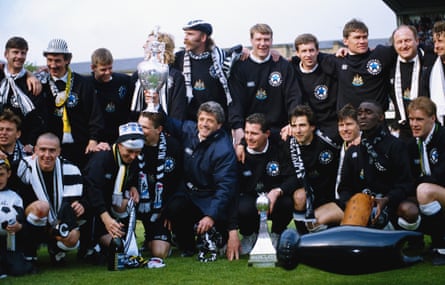
This attack-minded team were so thrilling that thousands routinely turned out to watch their training sessions at a base rented from and shared with Durham University. When lunchtime came, Terry McDermott, Keegan’s assistant, invariably headed to Marks & Spencer in the city centre to buy the squad sandwiches.
It was an era when footballers and managers remained much more accessible than today but Keegan remained closer to his public than most. In January 1995, he confronted angry Newcastle fans on the steps of the Milburn Stand outside main reception St James’ Park. Keegan told those supporters they had a “right to know” why he had sold Cole for a then record £7m to Manchester United and to “trust his judgment.”
after newsletter promotion
Newcastle ended the 1994-95 season sixth and, reinforced byplayers such as Les Ferdinand and David Ginola, challenged for the title the following season. In January 1996 they were 12 points clear before slowly but surely being reeled in by a Manchester United side in their pomp under Alex Ferguson and inspired by Eric Cantana. It was a heartbreaking denouement to a memorable campaign for one of the most exciting teams in Premier League history.
Keegan reacted by bringing Shearer home from Blackburn for a world-record £15m fee. Newcastle looked ready to challenge for the title again but a well-documented public clashing of swords with Ferguson featuring Keegan’s unforgettable “I will love it” TV outburst had taken its toll on the manager at a time when he was growing increasingly distant from a board preparing to float Newcastle on the stock market. On 8 January 1997, Keegan submitted his resignation. Tyneside’s Evening Chronicle dubbed it “Black Wednesday” and during training at Durham University that morning, Newcastle’s players were reportedly “visibly shaken”.
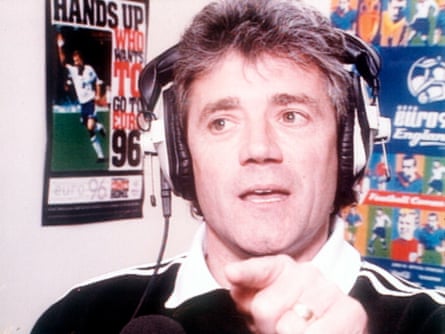
Keegan proceeded to manage Fulham, England and Manchester City before announcing his retirement from football in 2005. That retreat would last only until January 2008 when Newcastle’s new and decidedly maverick owner Mike Ashley convinced him to replace Sam Allardyce.
Newcastle fans were in rapture but, unfortunately for them, Keegan soon detected the presence of an unwelcome third party in this fledgling relationship: Dennis Wise. Tensions between Keegan and his director of football were running high when Wise signed a Spanish striker named Xisco without the manager’s knowledge at the conclusion of an acrimonious a summer transfer window.
On 4 September 2008, Keegan resigned once more after a three-day standoff with Wise – who had also attempted to sell Michael Owen behind Keegan’s back – and Ashley. In October 2009, Newcastle were ordered to pay their former manager £2m after a tribunal upheld his claim of unfair dismissal.
If a measure of justice was done, Keegan’s third Newcastle exit was a sad finale that singularly failed to befit an always exhilarating and sometimes exquisite drama.