.png)
 18 hours ago
6
18 hours ago
6
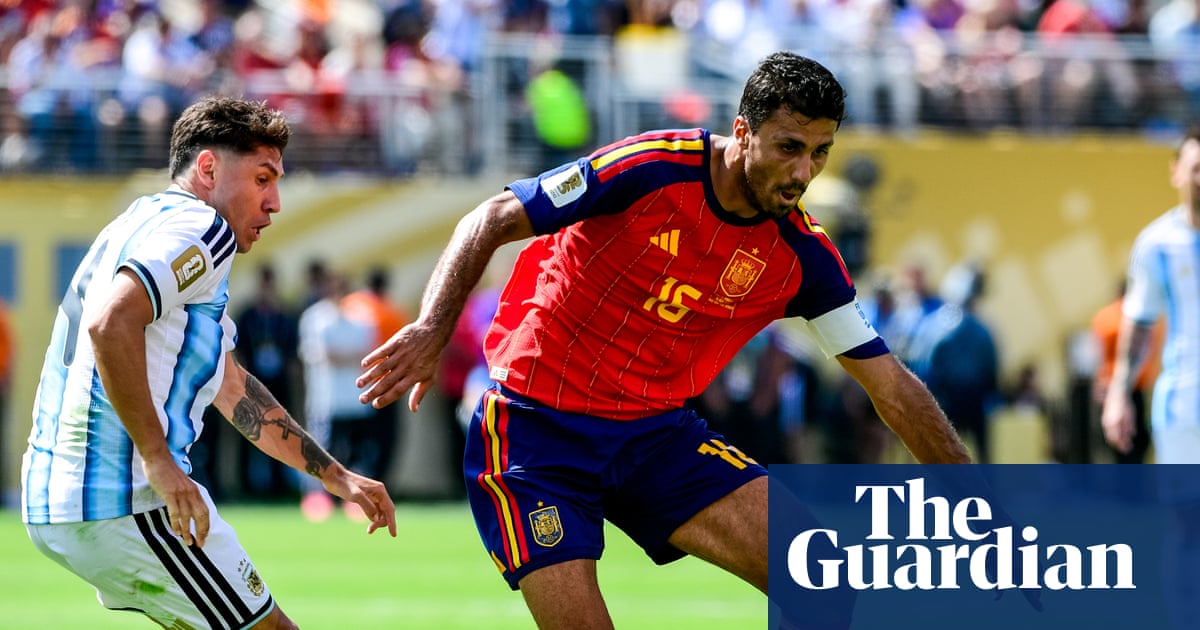
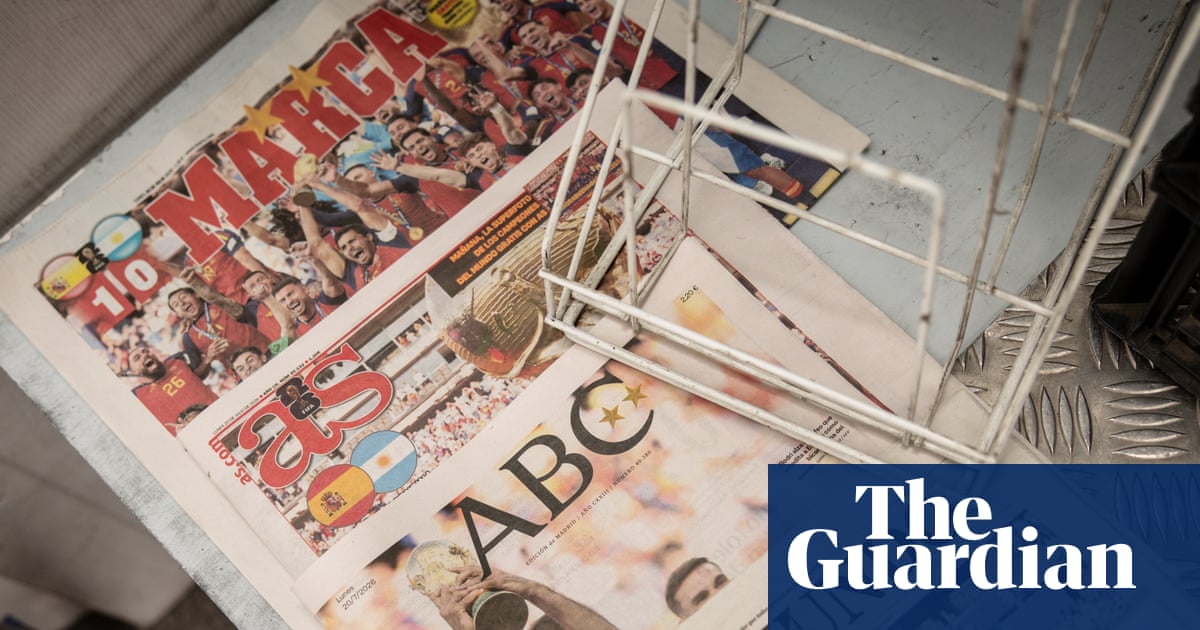
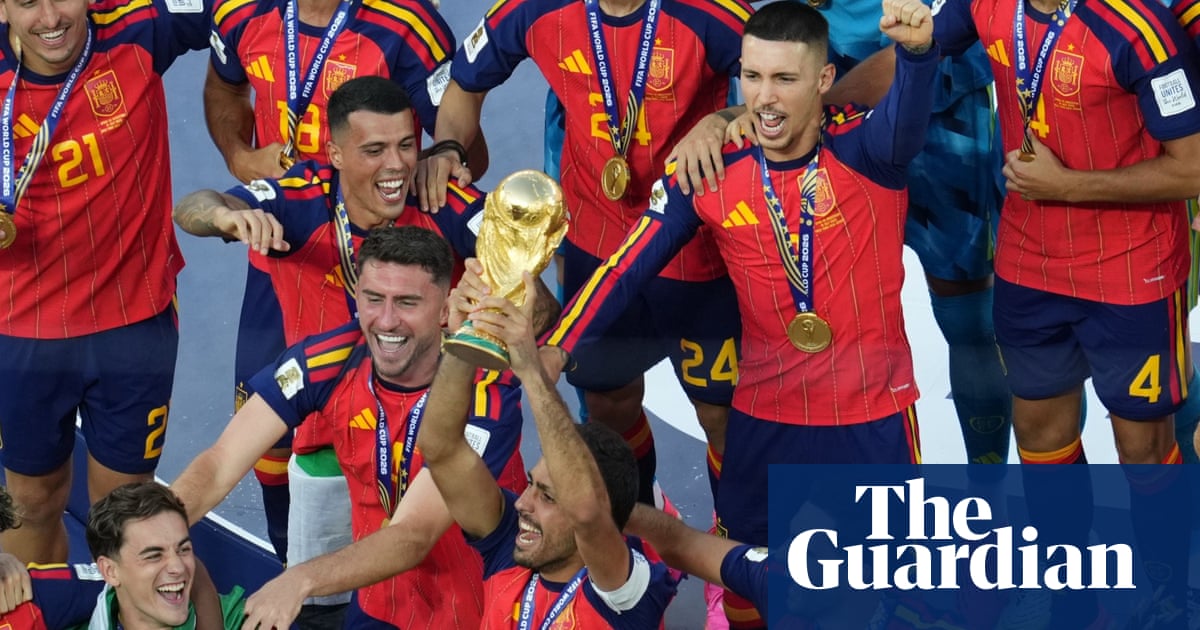
After Argentina lost 1-0 against Spain in the final on Sunday, in what is likely to be Lionel Messi’s last World Cup, the nation’s media celebrated the team while admitting the Europeans had been the better side.
The cover of Clarín, the country’s bestselling newspaper, showed a photo of Messi crying under the headline: “They gave it their all: [there is] nothing to blame them for.” In its editorial, the outlet said that “beyond the final result, and setting aside the strictly sporting aspects, there was, as never before, a special bond between the people and their national team”.
La Nación ran a similar headline: “Argentina gave their all, and they are the pride of the nation.” Página|12’s front page read “From here to eternity”, and its cover article said Scaloni’s Selección had lost “against a Spanish side that controlled the entire final but only managed to score in the second half of extra time”. It added: “Once the disappointment has faded, what will remain is the immense significance of a team which, with Lionel Messi as its leader and icon, has etched its name in capital letters into the history of world football.” The sports newspaper Olé struck a similar note with “May they be eternal”, a line from the national anthem referring to “the laurels that we knew how to win”.
After the match the Argentina head coach, Lionel Scaloni, left his press conference in tears, casting doubt over his future. “If they give everything the way they did today, it sets a great example for the people and for our country,” he said. “You have to pick yourself up again. When you leave everything like that, it’s very hard to find fault with anything.”
The former Argentina international Marcelo Gallardo said on ESPN that Scaloni had spoken “with great dignity, with great pride and with a presence that is also deeply emotional and human – which is what comes across in these words when everything is crashing down on you and when you’re losing everything”.
Gallardo said the semi-final against England the previous Wednesday had been an “emotional drain” on the team. Referring to the tactical aspect of the game, he said: “Argentina hadn’t faced a team like Spain before – a team that steals the ball from you and you can’t get it back. They didn’t let us recover or play.”
Alejandro Wall echoed the sentiment in a column for Tiempo Argentino titled “Spain proved too much for this great journey”. Wall described Luis de la Fuente’s Spain side as “a whirlwind of football and determination that dominated Argentina at will”. He wrote: “They had possession, the chances, the tempo of the match; they were in complete control. The Argentinian side simply set about holding out, nothing more. Looking at the match statistics, they seemed to be made up of an inert body.” Still, he said, the team’s “overall campaign was beyond reproach – they reached the final and left the pitch facing their fans, looking straight at the stands, in tears, paying tribute to their supporters”.
The Argentinian president, Javier Milei, said: “Even though the result isn’t what we would have liked, we need to recognise the historic significance of this group of players’ enormous achievement: in the last four World Cups, they’ve reached three finals and won one,” he said in an interview with Radio Mitre. “And this final was lost in extra time. What’s more, no one can hold anything against them because they gave their all.”
after newsletter promotion
The Argentinian Football Association said some of the squad would be back in Argentina on Monday. However, it did not mention any specific celebrations.