.png)
 5 hours ago
1
5 hours ago
1
How it works
The progress of the World Cup from match to match is determined from the beginning: there are no further draws to decide who plays whom in subsequent rounds.
To maximise the spectacle, the competition is structured, broadly, to ensure that the “bigger” teams don’t face each other (and knock each other out) too early in the competition, and to ensure that all 48 teams have an incentive to field their strongest side for every fixture.
The top two teams from each group automatically qualify to the next round. Because the winner of a group will face a second- or third-placed team from another group, the hope is that France, for instance, will not rest on their laurels once they have enough points to qualify for the knockouts but will try to win their last game to get what in principle are easier opponents in the next round, the last 32.
At the other end of the table, a team who know they will come at best third in their group still have an incentive to give their all in that last group game because the eight best-performing of the 12 third-placed teams also go into the last 32.
Let’s take the example of England, wholly arbitrarily. If England top their group, they will face a third-placed team in the first knockout round (technically any one of 20 other teams, but plausibly a team such as Côte d'Ivoire or Algeria). If they come second, they will play the runners-up from Group K, plausibly Colombia. And if they come third but have a better points total or goal difference than four of the other third-placed teams, they get a tougher fixture, against the winners of Group K, possibly Portugal. The simulator includes the predetermined routes for all 495 possible combinations of groups yielding the eight best third-placed teams.
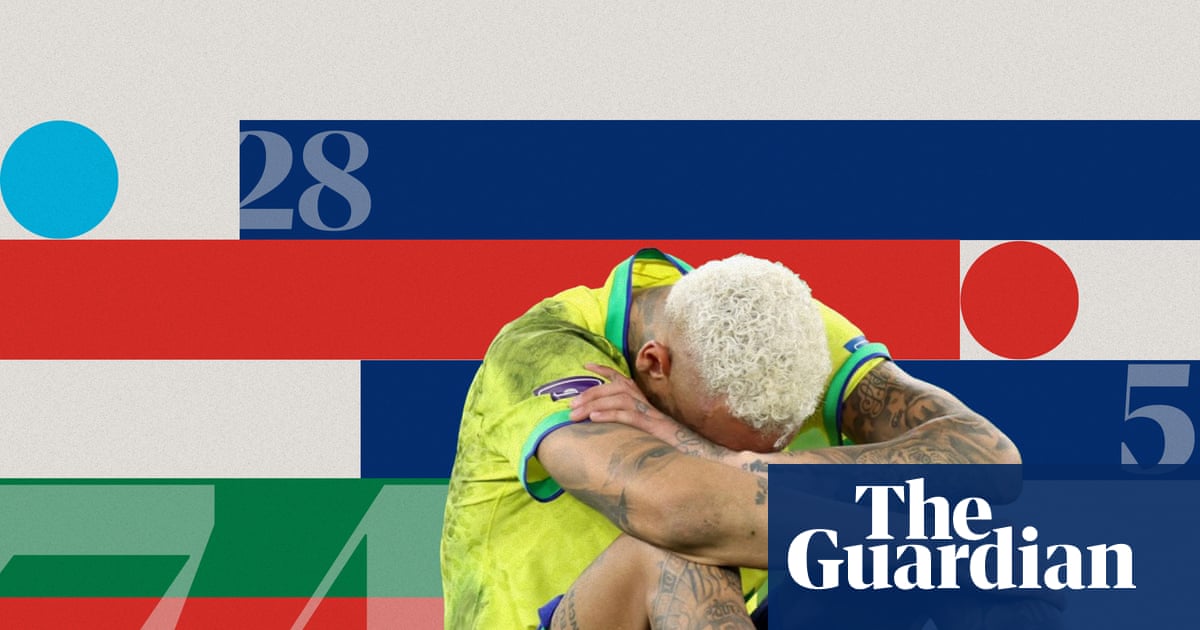
This simulator allows you to change the outcome of each group and see the effect that those changes have on the last 32, and then to imagine the winner of each knockout game to plot each team’s possible route to the final.
Credits
Editorial: James Dart, Marcus Christenson and Philip Cornwall
Design and development: Barry Ainslie, Georges Lebreton, Seán Clarke, Harry Fischer, Petter Nitter and Freddie Preece