.png)
 3 hours ago
2
3 hours ago
2
This article is part of the Guardian’s 2026 World Cup Experts’ Network, a cooperation between some of the best media organisations from the 48 countries who qualified. theguardian.com is running previews from three countries each day in the run-up to the tournament kicking off on 11 June.
The plan
Egypt qualified for the World Cup unbeaten after missing out on Qatar 2022, booking their ticket to North America with a game to spare. They scored 19 goals in nine matches, as Mohamed Salah led the way with nine, conceded two goals and kept seven clean sheets. Despite the impressive numbers in qualifying, Egypt’s shape is pragmatic more than romantic and they carried that same muscle memory into the 2025 Africa Cup of Nations: tight games, deep stretches without the ball, quick release into Salah or Omar Marmoush. This was exposed by a semi-final defeat to Senegal, when Egypt were set up more to endure rather than to control.
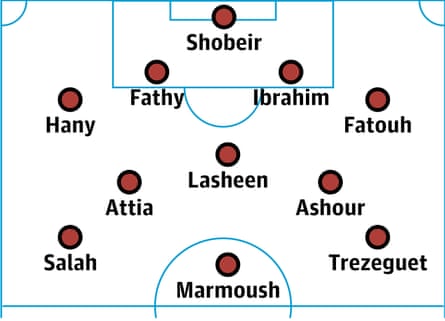
Egypt will probably begin the World Cup in a 4-3-3 formation that becomes a 4-2-3-1 when they have to chase a game, while occasionally switching to a 3-5-2 against high blocks. Mohamed El-Shenawy is likely to start in goal, although Mostafa Shobeir has lately been giving the veteran a run for his money. The rest of the spine looks solid with Rami Rabia and either Hossam Abdelmaguid or Yasser Ibrahim in central defence. Marwan Attia and Hamdi Fathi will screen the backline and Emam Ashour will look to deliver the ball to the trio up front.
Egypt: Group G fixtures
Show15 June v Belgium, Seattle (noon local, 8pm BST, 16 June 5am AEST)
21 June v New Zealand, Vancouver (6pm local, 22 June 2am BST, 22 June 11am AEST)
26 June v Iran, Seattle (8pm local, 27 June 4am BST, 27 June 1pm AEST)
The coach, Hossam Hassan, has effectively confirmed there will be no late tactical revolution, saying he has settled on “90%” of the side. He also frames the team as “100% locally made” compared with African rivals who are stocked with European-born players. “Hossam Hassan is completely different from the foreign coaches we have had before,” says the forward Ahmed “Zizo” Sayed. “He manages to convince you that you are the best player in the world even if you’re coming to the camp not having been in good form.”
Egypt are cohesive, often hard to score against and emotionally committed, but they can still look blunt if opponents double up on Salah and the midfield cannot pass through the press. The draw placed Egypt in Group G with Belgium, Iran and New Zealand. Egypt have never won a World Cup match so ending that is the floor-level target.
The coach
Hossam Hassan is the national team’s all-time leading scorer and a legend in Egyptian football. As a manager, the fanfare is considerably quieter. Across nine clubs and two national teams, he has won zero trophies. His appointment in 2024 carried a nationalist tone from day one. When Egypt qualified for the World Cup, he declared: “We are happy for this great day for Egyptian football and for pleasing the Egyptian people, headed by Abdel Fattah el-Sisi [president of Egypt].”
After the 2025 Afcon semi-final exit, Hassan blamed the loss on mosquito-infested hotels and scheduling conspiracies before resorting to blood-and-soil nationalism. “Egypt is the mother of Arabs and Africa. No one possesses the history we possess. We won the African Cup seven times. This creates jealousy. No one will achieve what Egypt’s national team accomplished.” When a journalist pressed him on tactical shortcomings, Hassan replied: “Your questions are impolite and show no respect. I will not answer you. You lack media etiquette.” It was recognisably on brand.
Star player
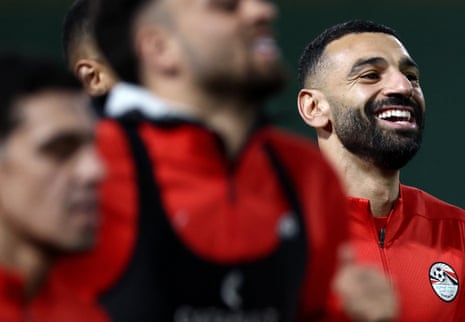
This is still Mohamed Salah’s team, even if the club version has entered a more mortal phase. For Egypt, he remains the attacking system and the emotional infrastructure. In qualification, he was decisive again, scoring twice in the match that secured the World Cup spot and was the main reason Egypt’s campaign did not require late drama. Salah turns 34 the same day the Pharaohs play their first group match. He is approaching the end of his international career and is acutely aware that this may be his final chance to change that.
One to watch
FC Nordsjælland’s Ibrahim Adel is not a pure touchline winger: he attacks the half-space, arrives at the back post and presses with more appetite than many Egyptian attackers raised on a counterattack diet. The 25-year-old’s case is built on movement. He may not start every match, but tactically he offers something Egypt need: a wide threat capable of carrying the ball into the final third independently of Salah, which reduces the team’s dependency on a single right-side channel. This tournament could cement him as a genuine option at this level, but it could also reveal his limitations.
Unsung hero
Marwan Attia is the sort of midfielder who makes the whole side look slightly more coherent than it is. The 27-year-old screens centre-backs, covers full-backs, kills counters, restarts attacks, receives awkward passes under pressure, and gives Emam Ashour and the wide players permission to go forward. After qualification, Attia spoke of the World Cup as a source of immense pride and of the current generation’s potential to achieve positive results, especially “securing Egypt’s first-ever World Cup victory”.
Probable starting XI
What to expect from fans?
Egyptian support will be present, but not socially representative. The reality is the overwhelming majority of Egyptians will watch from their homes or in cafes, with a phone screen propped against a cup of tea if they need to. North America is not as close as Qatar and Egypt is not part of a visa waiver program. The $185 (£137) visa application fee alone exceeds Egypt’s current minimum wage ($132), before flights, hotels or tickets. Expect diaspora families, wealthier Cairenes, corporate guests and expatriates. The broader Ultras, historically the most visible and vocal force in Egyptian football, have been systematically repressed since 2013, proscribed as terrorist organisations and many of them are in prison.
Relationship with the US/Trump?
The team and the EFA are not publicly pro- or anti-American; however the state relationship is more telling. With Donald Trump as president, Cairo has usually received warmth and fewer human-rights lectures. In his first term, Trump infamously called Sisi his “favourite dictator”, while his second administration preserved Egypt, alongside Israel, as an exception in a wider foreign-aid freeze.
The Egyptian president returned the praise, saying that Trump “is the only one capable of bringing peace to the region”. Notably, the World Cup flashpoint is cultural rather than diplomatic. The EFA formally asked Fifa to block LGBTQ+ pride activities around Egypt v Iran in Seattle, saying they clashed with cultural and religious values. The two countries have objected to the locally branded Pride match, which coincides with the city’s Pride weekend and was planned before the tournament draw took place.
Written by Saher Ahmed for Kingfut.com