.png)
 4 hours ago
3
4 hours ago
3
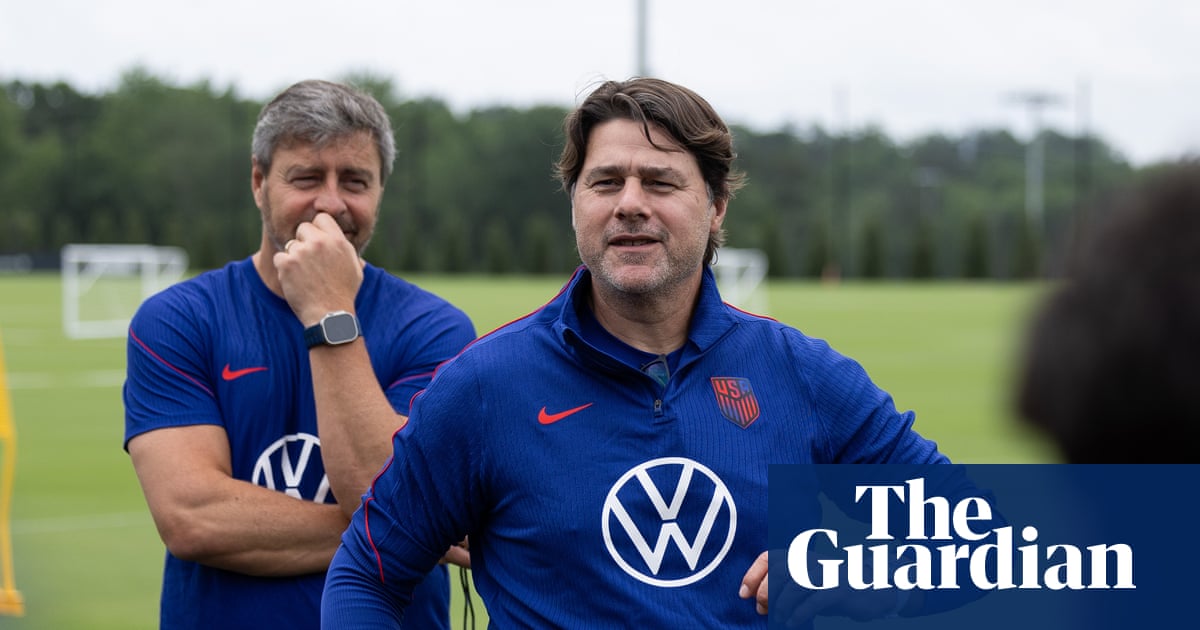
If you want to get US men’s national team head coach Mauricio Pochettino started, just use one word: leadership.
The former Tottenham Hotspur manager is famously well-studied on the subject and there are no shortage of clips of him waxing poetic about it. He’s led players over hot coals, or had them press their neck up against the tip of an arrow and lean into it until it shatters. Ask Mauricio Pochettino about leadership and the words he’ll sprinkle into his answers will overlap heavily with late-night self-help ads, his sentences dotted with words like aura, bravery and self-determination.
“I don’t want to spend too much time on this,” Pochettino said, laughing, when asked by the Guardian in March about his leadership style. He then spent roughly a third of his press conference unpacking his views. “Leadership is not something you can buy in a supermarket.”
Pochettino’s job, of course, is to lead from the sidelines, and to be among the public-facing faces of the program. But on the field, leadership is largely the job of his captain. And ahead of the 2026 World Cup, there’s been no official announcement of who that will be.
His players still don’t know, either.
“Your guess is as good as mine, honestly,” said midfielder Tyler Adams, who captained the US at the 2022 World Cup in Qatar. “I [couldn’t] care less. It’s a privilege and an honor, anybody that gets to wear the armband. But what I represent, how I lead, I think anybody that plays with me knows that I’m a leader, whether I’m wearing the armband or not. It is what it is.”
Pochettino has rotated the captaincy throughout his tenure, handing the armband most recently to Christian Pulisic and Chris Richards in friendlies against Portugal and Belgium this March. But 38-year-old Charlotte FC defender Tim Ream has served as captain most often – 16 times out of Pochettino’s 23 games in charge.
“He has the experience, he knows what it means to play in Europe and travel here (to play with the national team),” said Pochettino. “He has the values and the humanity and character to have the capacity to help the team day to day. In a national team you don’t need to do too much. You need to do the right things. Sometimes you need to say one word and sometimes you need to not talk, if you want to be a good leader.”
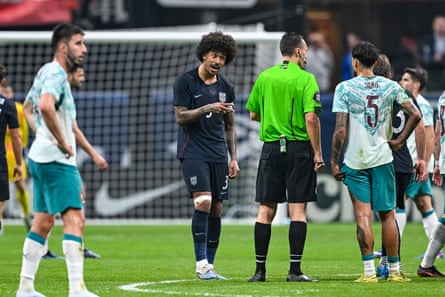
Aside from Ream, relatively few of the US’s World Cup squad regularly serve as captain for their club team – and the few that do mostly play in MLS. Miles Robinson is often FC Cincinnati’s captain when fit, while Cristian Roldan is practically synonymous with the leadership of the Seattle Sounders. A handful of others have worn the armband for their clubs, but more occasionally: Alejandro Zendejas at Club América, Auston Trusty at Celtic, Antonee Robinson at Fulham, Weston McKennie at Juventus and goalkeeper Matt Turner with the New England Revolution.
“Of course it’s important, who is captain,” said former USMNT attacker Jozy Altidore, who captained the US during a handful of World Cup qualifiers and friendlies. “You’re first one out of the tunnel, it’s very important especially in a home World Cup. But when I see this group I see a bunch of leaders. Maybe they didn’t start that way but now they’re most certainly leaders, in terms of how they’ve played at their clubs, how they’ve developed as young men … I think when you have a World Cup team, you’d like to think the 26 guys you’ve selected are all team leaders.”
For all of his success with the national team, Landon Donovan only captained the squad in roughly 10% of his appearances, thanks to his tenure largely overlapping with defender Carlos Bocanegra, the program’s all-time leader in captaincies. Donovan captained the LA Galaxy for two different stretches and famously gave up the armband to David Beckham when he arrived in 2007, reclaiming it two years later. Donovan is a veteran of three World Cups.
“In those tournaments, it didn’t really matter who was wearing the armband,” Donovan told the Guardian on Thursday. “It really didn’t. Almost everyone on the field was wearing the armband for their club team. Whether it was Carlos, or Claudio (Reyna), or (Jeff) Agoos, it didn’t really matter because there were at least six or seven or eight guys who wore the armband for their club team or who were leaders with their club team. The difference with this team is there actually aren’t many of those players. If you just went through the roster and put together a potential lineup, [you have a few] but that’s kind of it, right? I do think there’s more importance this time in who the captain is. My guess would be that it’s Tim Ream.”
Ream has shied away from specifically addressing the captaincy, calling himself just another “cog in the machine” in an interview during Fox’ roster reveal earlier this week. Yet he’s proven to be Pochettino’s most consistent choice. Should he see action this summer, as he almost inevitably will, he will become the oldest player in the history of the USMNT to appear at a World Cup, narrowly beating 1994 World Cup veteran Fernando Clavijo by a matter of months.
His standing within the group – Ream is widely liked and respected – is another reason he seems the safe money in terms of the captaincy. And there are other considerations, as well. At World Cups, captains are usually the players called to accompany a team’s manager to pregame press conferences that tend to draw the largest crowds. And on the field, this summer’s tournament will be the first in which captains will be relied upon as the primary mode of communication with the referee. In both cases, keeping a cool head is key.
Ream certainly has that. But Pochettino frequently proved full of surprises. It’s entirely possible that he throws the captaincy elsewhere, perhaps sensing a shift in energy.
“Leadership is not to score three goals or save three penalties,” said Pochettino. “It’s to make cohesion. It’s to provide the tools to the group to find the dynamic, to be alive, to feel the energy, to create energy. At the moment, though, who leads the national team is who needs to lead in every single team or in every single club or national team.”
“It is the coach,” said Pochettino, laughing. “Sorry.”