.png)
 1 month ago
41
1 month ago
41
Gordon CoreraSecurity correspondent

 EPA
EPA
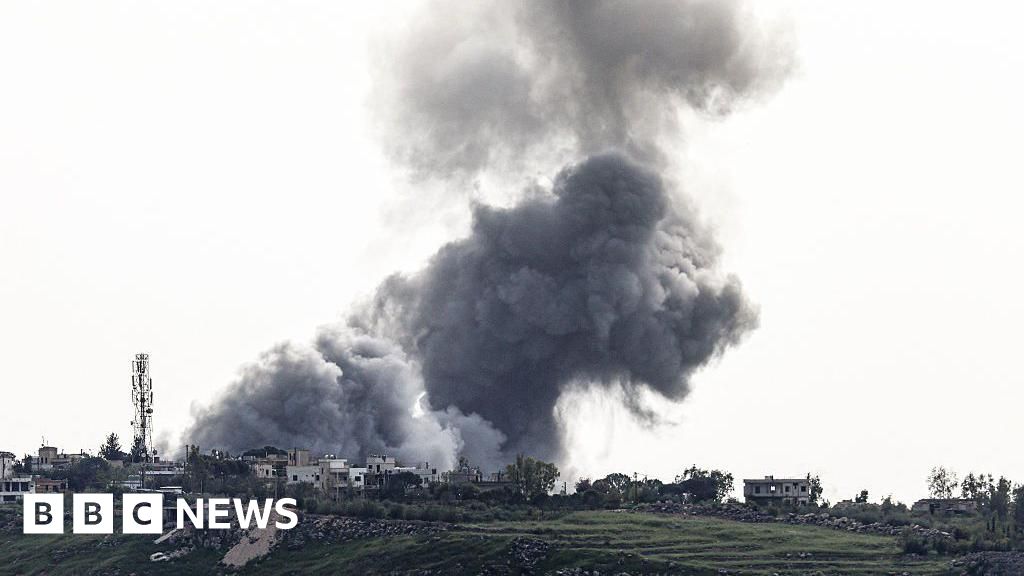
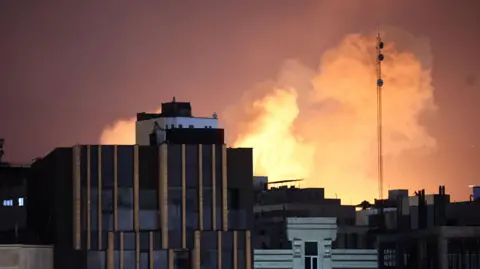
The US and Israel have said they have air superiority over parts of Iran, allowing their jets to strike targets at will.
They have also displayed a kind of intelligence superiority, a dominance which has allowed them to find and kill multiple Iranian leaders.
But what is the strategy behind this? One answer is a focus on causing confusion.
The first move in the campaign was not the attack that struck the supreme leader's compound, but the hackers at US Cybercommand Space Command and their Israeli counterparts.
They blinded Iran's ability to understand what was happening, stopping it from communicating and responding, according to US military officials.
Using that advantage, senior leaders were struck in multiple locations. Those officials had been tracked over months by the CIA and Mossad, amongst others.
That was most likely through long-standing technical penetration of the Iranian communications systems as well as human spies on the ground, often run by Mossad.
The results were startling. The army chief of staff, defence minister and head of the Revolutionary Guards were among those killed.
Israel is believed to have taken the lead on these strikes.
The US said that it also went on to strike Iran's command and control, ballistic missile sites and also intelligence infrastructure in the opening salvos.
The explicit aim of this was to "daze and confuse" the Iranians, said Dan Caine, the chairman of the Joint Chiefs of Staff in a Monday briefing.
The US and Israeli ambition was to paralyse Iran.
However, Tehran was known to have prepared for the targeting of its leadership, with officials told to designate multiple successors in the event of their death (and to keep their identities secret).
That awareness of the risk makes it even more surprising that some of the most senior people in the Iranian regime were meeting on Saturday morning - allowing so many to be killed.
 Reuters
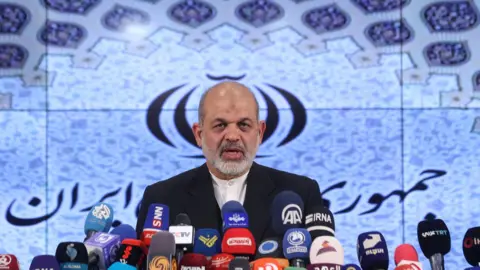
Ahmad Vahidi was appointed as the new head of the Revolutionary Guards after its key leaders were killed in the strikes
So what do the killings mean for the course of the war?
In the short term it may make it harder for Iran to muster a response. The confusion caused by the targeting has advantages militarily but could also have risks.
It is not clear if the volleys of missiles and drones being sent across the Middle East are the result of a pre-ordained policy which is now on auto-pilot, if local commanders are acting on their own initiative, or if someone centrally is issuing orders through a functioning chain of command.
The next question is whether the elimination of so many leaders will fundamentally shift Iran's calculation about whether to continue to fight or find some way out.
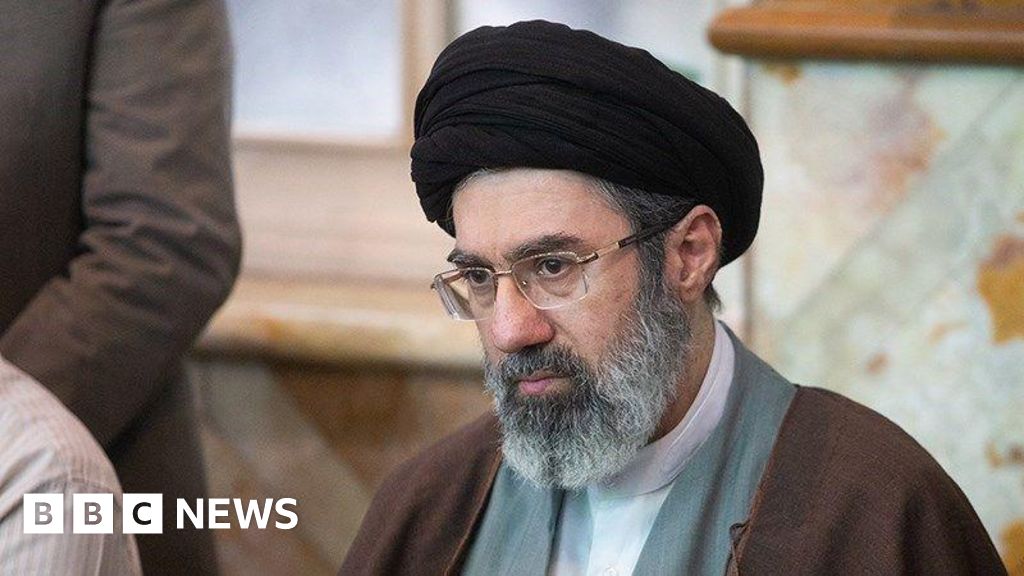
A CIA intelligence assessment completed just before the war began predicted that the removal of the supreme leader might lead to hardliners from the Revolutionary Guards taking more control.
Any new leader will have to calculate whether regime survival will be ensured by continuing to fight - or, alternatively, talking and effectively giving in to US demands.
But if they continue to be killed, it may be harder to come to any decision or negotiation.
The US may want to see a figure like Delcy Rodríguez - who took over from Nicolas Maduro in Venezuela, and is understood to be cooperating with the US - but it is not clear if such a person exists or could lead the state.
And so the last – even more significant question – is whether the killings makes it more likely there will be regime change?
History suggests air power alone is rarely enough, and the US has shown no desire to put boots on the ground.
It may be hoping that taking out security and intelligence forces may help a popular uprising to succeed this time, after protesters were crushed in January.
President Trump called for just such an uprising again and even promised immunity for members of the security forces who laid down their weapons. But the regime is deeply embedded and will do whatever it can to cling to power.
While future leadership is uncertain, the priority for Israel and the US appears to be to do as much damage as they can to the regime.
If that results in change, it may be welcomed by the Iranian people - but the risks will fall on them.
 Reuters
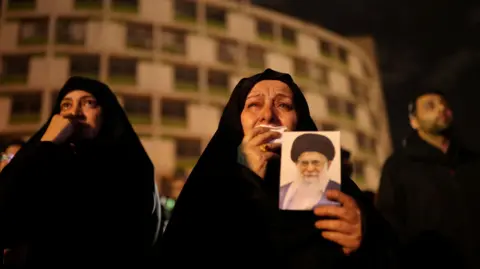
Thousands of people turned out in the streets to mourn the Supreme Leader