.png)
 5 hours ago
3
5 hours ago
3
2 hours ago
Atahualpa AmeriseBBC News Mundo

 Getty Images
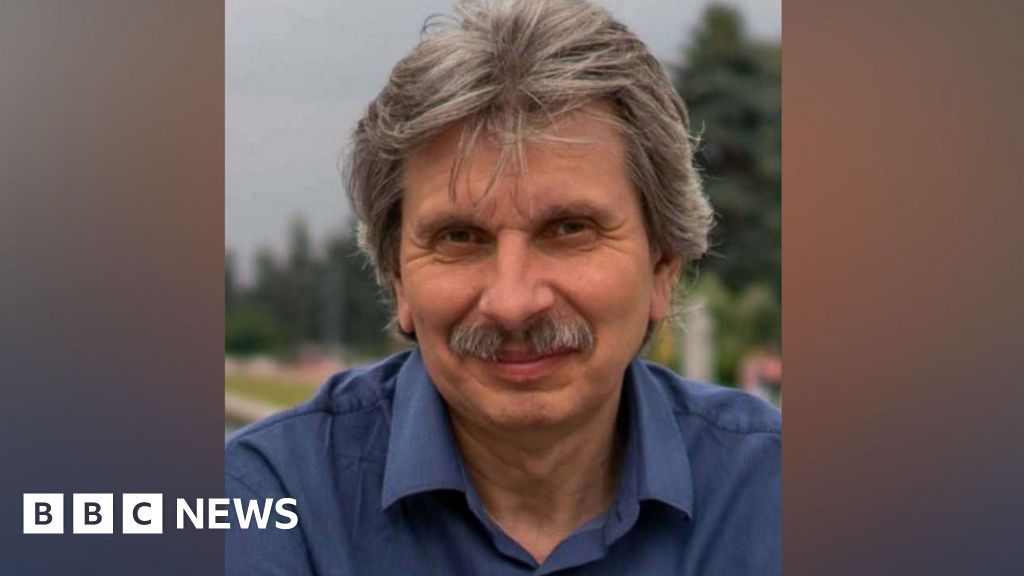
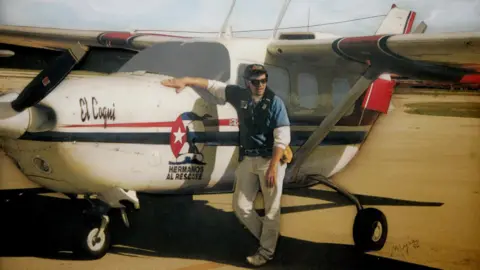
Carlos Costa was one of the four activists who died in the attack by Cuba
The fatal crash of two planes off the coast of Florida more than 30 years ago is at the heart of the criminal charges against Cuba's former leader Raúl Castro the US revealed on Wednesday.
The attack by the Cuban military on a civilian plane sparked one of the biggest crises between Cuba and the US, with effects lasting to this day.
Cuban fighter jets shot down the two small planes - which belonged to a group of Cuban exiles in Miami - in the waterway between the Caribbean island nation and the US state of Florida, with all four on board killed instantly.
The attack was met with strong international condemnation, including against Raúl Castro, who was Cuba's armed forces minister at the time
It led to the US tightening sanctions against his brother Fidel Castro's regime, and dashed any immediate possibility of dialogue between Cuba and US President Bill Clinton's administration.
Raúl Castro - Fidel Castro's brother - formally relinquished the presidency of Cuba and the leadership of the Communist Party in 2021, but is still considered by many to be the most powerful man in the country.
The indictment comes at a particularly delicate time for the island.
It is mired in economic and energy crises following recent pressure from Donald Trump's administration and the loss of support from Venezuela after former leader Nicolás Maduro's fall in January.
Thousands flee Cuba amid blackouts and food shortages
The aircraft attack took place during a profound economic crisis that struck Cuba in the 1990s after the collapse of its main economic supporter, the Soviet Union.
The island was plunged into extreme economic emergency, with blackouts, food shortages, and a lack of fuel.
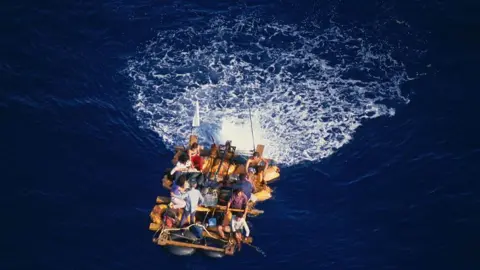
That crisis, which many compare to the current one, prompted thousands of Cubans to attempt to leave the island to reunite with family members in the US.
"Suddenly, everyone started looking for anything that floated to try to reach Florida," Cuban historian and former diplomat Juan Antonio Blanco explained to BBC Mundo.
The organisation Brothers to the Rescue soon emerged in Miami, founded by Cuban exiles and led by José Basulto.
The group began conducting flights over the Straits of Florida, searching for makeshift boats carrying Cuban migrants.
 Getty Images
Thousands fled on boats like this one - the photo was taken by Brothers to the Rescue
"We tried to find them, mark their position, and give it to the US Coast Guard so they could rescue them," Basulto, 85-year-old leader of Brothers to the Rescue, told BBC Mundo.
They also dropped water and food to the rafters. But, over time, they went even further.
"They stopped doing what they said they wanted to do, which was helping to rescue rafters, and started entering Cuban airspace and dropping leaflets over Havana," Cuban political scientist Carlos Alzugaray told BBC Mundo from Havana.
Cuba began denouncing the air incursions and considered the members of Brothers to the Rescue "terrorists", asserting that they posed a threat to national security.
Basulto, who led several of these operations, has a very different view.
"For them, it was terrorism because the leaflets we dropped contained the Universal Declaration of Human Rights, and that was prohibited in Cuba," he said.
'I saw smoke as the plane was shot down'
Three Cessna aircraft belonging to Brothers to the Rescue took off from Florida on 24 February 1996, for a routine mission over the Florida strait.
Over a six-minute period, two of them were shot down by Cuban fighter jets.
All four people on board were killed: Armando Alejandre Jr, 44, Carlos Alberto Costa, 29, Mario Manuel de la Peña, 24, Pablo Morales, 29. All were US citizens except Pablo Morales, who was a Cuban national.
A third aircraft managed to escape. It was piloted by José Basulto. "I looked to the right and saw the smoke in the distance from one of the planes being shot down," he said.
"I immediately looked at Sylvia Iriondo [a volunteer in the mission] and said to her, 'we're next.'"
Basulto said his plane was the one they "primarily wanted to shoot down because I was the leader of the group".
The projectiles from the Cuban jets practically disintegrated the small civilian aircraft - hardly any evidence remained.
Basulto insisted the planes were "in international waters, north of Havana" when they were attacked. The International Civil Aviation Organization and the US-based Organization of American States corroborated this and accused Cuba of violating international law.
But the Cuban government has always maintained it shot down the aircraft within its airspace.
Historian Juan Antonio Blanco, who was a diplomat in Havana when the incident occurred, described it as "an ambush orchestrated by Fidel Castro".
"Fidel Castro knew beforehand who was going to fly that day, which planes were going to fly, and the route they were going to take," Blanco said, adding that Castro's intelligence services had a spy in the Brothers to the Rescue group.
According to Blanco, Fidel Castro was politically responsible for the operation, while Raúl Castro, then minister of the armed forces, was its executor.
 Getty Images
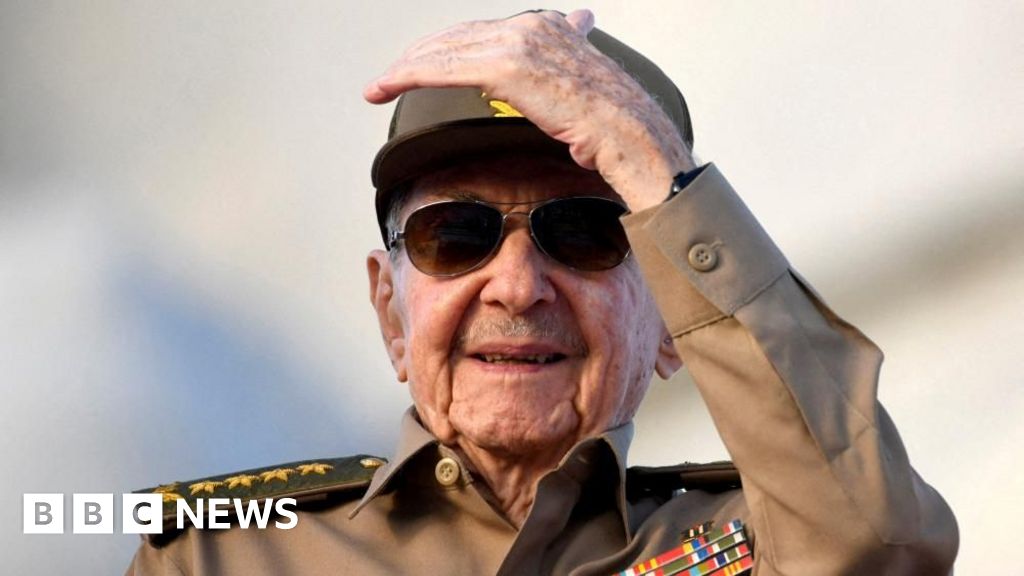
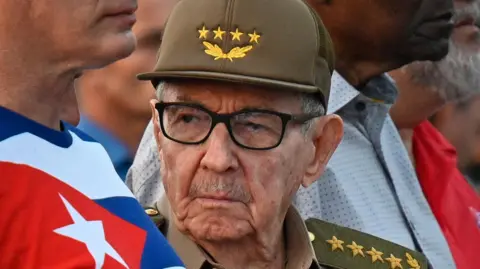
At 94, Raúl Castro is still present in public life in Cuba
Brothers to the Rescue has on its website a recording from the time, in which Raúl Castro, allegedly speaking with Cuban journalists, explains details of the operation carried out under his command.
That recording was leaked in 2006 and reached the hands of journalists, experts, and former Cuban officials exiled in the US, who confirmed its authenticity. BBC Mundo has not been able to verify it independently.
Why did Cuba shoot down the planes?
The reasons why Fidel Castro's government decided to shoot down the planes are still the subject of debate.
The official Cuban explanation - which maintains that the incident occurred over its airspace - is that Brothers to the Rescue posed a threat to national security due to its repeated air incursions.
But other interpretations point to significant political motivations.
Historian and former diplomat Juan Antonio Blanco, who at that time participated in informal channels of communication between Havana and Washington, believes that Fidel Castro sought to prevent a possible rapprochement with the US.
He explains that, months before the attack, Cuban and US officials were discreetly exploring a possible normalisation of relations, in anticipation of a potential second term for Bill Clinton.
The historian argued that Castro feared any rapprochement with Washington would spur political and economic reforms on the island that would jeopardise his absolute power.
"Shooting down the planes made it impossible for Clinton to enter into any kind of rapprochement afterwards," he said.
Crisis shaped US-Cuba relations for decades
The incident triggered the biggest crisis between Cuba and the US since the Cold War and shaped the course of relations between the two countries into the 21st Century.
Bill Clinton condemned the attack "in the strongest terms," and the United Nations Security Council condemned the use of weapons against civilian aircraft in flight.
The US significantly tightened economic sanctions against Cuba, and Havana considered their response to be unprecedented economic and diplomatic aggression.
The episode, according to the historian and former diplomat, also had consequences within Cuba.
"It brought back an almost Stalinist policy, the worst kind," Blanco said, adding that repression intensified after the incident.
Havana refused to pay compensation, and their families were ultimately compensated by the US government with $93m in frozen assets belonging to the Cuban regime.
Some 30 years later, the case retains enormous symbolic and political weight in Cuba and among the Cuban exile community.