.png)
 6 hours ago
4
6 hours ago
4
Just in case you were unaware that the forthcoming series between South Africa and New Zealand, dubbed Rugby’s Greatest Rivalry (RGR), is a “tour like no other”, the Springboks have just unveiled a jersey to prove it. “A jersey like no other” to be worn four times and then consigned to history. Meanwhile, RGR kicks off amid a looming legal battle in South Africa over the series’ commercial identity and the unauthorised use of its branding. And you thought sporting romance was dead.
Enough of the cynicism though. The series promises to be a blockbuster. It is a throwback, with New Zealand’s men facing four matches against provincial sides, starting with the Stormers in Cape Town on Friday, as well as four Tests against the Springboks. The countries’ women’s sides also face each other in a one-off Test. The series has further allure in just how rare tours such as this are these days. Add in the fact that the rugby calendar is pretty much barren at the moment and a series between the two best sides on the planet is enough to quicken the pulse.
It is the first of its kind by New Zealand since 1996 – an unforgettable tour and the first won by the All Blacks on South African soil – a year after their World Cup final defeat at Ellis Park. The sides’ marketing departments have wasted no opportunity, admittedly to impressive effect, in evoking the history of this particular series, which dates back to 1921. Even the name is designed to do just that.
What it means for the future Test landscape is just as fascinating, however. RGR comes just a few weeks after the launch of the inaugural Nations Championship – a competition that has effectively brought an end to traditional tours, certainly those made by northern hemisphere sides heading south. The key exception remains the British & Irish Lions and it was instructive to hear Mark Alexander, president of the South African union, say he believes RGR can eclipse even those quadrennial tours. All the more so because the Lions are having their heads turned by advances from, among others, France and the lucrative potential of moving away from their traditional destinations. Should they do so, it would be financially catastrophic for South Africa, New Zealand and Australia, so it stands to reason they would seek to diversify revenue streams.
With the Lions heading to New Zealand in 2029 and the Springboks arriving a year later for the second instalment of RGR, whichever proves more commercially successful will be significant in determining what the future global calendar looks like. Three-Test tours for England, Ireland et al are off the table for now but if RGR becomes the most successful enterprise on the Test scene beyond the World Cup then the northern hemisphere unions will surely react accordingly and plot their own Rivalry series.
If RGR puts the launch of the Nations Championship in the shade somewhat – the Springboks’ head coach, Rassie Erasmus, has barely tried to conceal which he has prioritised and opinion among the players would be pretty unanimous – South Africa and New Zealand have left Australia and Argentina hanging, too. There is no Rugby Championship this year, which feels like a mistake after the thrilling 2025 edition and viewed through the lens of the Wallabies and Pumas, RGR feels like a selfish move.
That said, who can really blame South Africa and New Zealand? They have, after all, won the last five World Cups between them and, unlike Australia, they have no realistic chance of hosting the tournament again any time soon. For all that the evocative history between the two sides is invoked, the imperatives for RGR are undoubtedly commercial, hammered home for those at the back by the fact the fourth and final Test takes place in Baltimore. The series revenue is a clean 50:50 split and a lucrative add-on in Maryland will swell the coffers further, strengthen both teams’ brand awareness in the United States and is music to the ears of World Rugby, who are putting a brave face on it but are desperate to ensure the 2031 World Cup does not pass by unnoticed among the locals.
after newsletter promotion
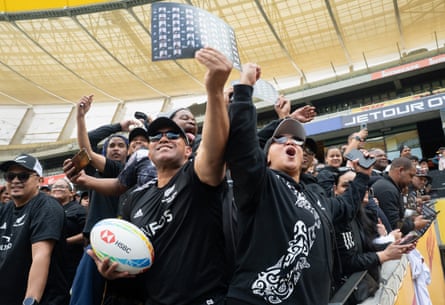
The benefits of RGR, beyond the bottom line, are obvious too. The South African union would be quick to point out it was New Zealand’s decision to break up the traditional Super Rugby format but there is no doubt the All Blacks have been hurt by the absence of regular fixtures for their provinces against their South African counterparts. More exposure to South African beef is a welcome addition to the menu. That the provincial sides will be shorn of their Springboks in the coming weeks detracts from the spectacle – it is a problem the Lions have run into on their last two tours and ticket sales for Friday’s opener have been slow – but it does allow the new All Blacks coach Dave Rennie to strengthen his player pool.
South Africa, meanwhile, tick along with their provinces in the URC, and their best players in Japan but a conveyor belt of raw talent at home will benefit from locking horns with the travelling All Blacks. Having a foot in both hemispheres does not seem sustainable amid reports that the South African clubs are pulling out of the Champions and Challenge Cups but it is a unique position for the double world champions who continue to find new ways to thrive and new ways to set the benchmark despite the continued concentration of financial power in the north. RGR is just the latest.