.png)
 14 hours ago
9
14 hours ago
9
1) Split the governing body up
How can an organisation that runs the biggest sporting event in the world also be the one that sets the rules for the entire game? We saw the reality of such a conflict at the recent World Cup as Fifa ran roughshod over its rulebook – be it over the length of suspensions or the duration of half-time – in an attempt to generate more attention for its competition. One person with extensive knowledge of the inside workings of Fifa puts it like this: “They have shown that they will bend the rules to make them more money. This is a big conflict of interest. Not only should the commercial and the regulatory parts of Fifa be separated, but so should the development part and possibly one or two others as well.”
According to Miguel Maduro, a former chair of Fifa’s governance committee and now one of the leading critics of the organisation, the creation of different corporate entities – even if they ultimately came under its umbrella – would allow for different priorities to take hold. “There would have to be a Chinese wall between these entities and they would have to have different incentives,” he says. “Those who are seeking to maximise commercial income should not be dependent on the regulatory rules and those working on the regulatory side should not be influenced by commercial considerations.”
One insider notes that Gianni Infantino’s aborted Fifa Forward Enterprise (FFE) scheme would have created such a separation “but for completely the wrong reasons”.
2) Introduce external regulation
The least sexy word in sport might be necessary if a new Fifa – answerable to nobody bar the courts – is to be expected to follow its new rules. “Change needs to be imposed from the outside. It won’t happen from the inside,” says Maduro. He shares the belief with other critics that it would be necessary to create a new equivalent to Wada, the global anti-doping body. It would hold sporting organisations to account on rules related to governance.
“There’s so much money swirling around in football it could easily be funded,” says one Fifa-watcher. The question is under whose auspices the new body would be created. “One way is to do something at the level of the EU,” Maduro says. “Other countries could join, perhaps the UK for example, and that could then evolve into a world sports agency that would exist to review ethical issues and compliance of the sports associations.”
In this context it is perhaps worth noting that Uefa, which is leading the protests against Infantino’s FFE plan, has in recent years been moving closer to Brussels. Meanwhile another body, the European Leagues, has called on the EU’s executive, the European Commission, to intervene over another Infantino plan: to expand the World Cup from 48 to 64 teams. The commission, it said, “should take the necessary action to protect fair competition and ensure compliance with the principles already set out by the court of justice of the EU”.
3) Defang the president
As has been proven by the FFE affair, where the whole scheme was apparently devised without the knowledge of anyone outside Infantino’s office, Fifa’s president has too much power. “The president was not supposed to control the administration, but then he began to control the administration,” Maduro says. “Then the Fifa council was supposed to control the president and be involved in the real big decisions outside the congress, and they weren’t. At the political level itself you need checks and balances.”
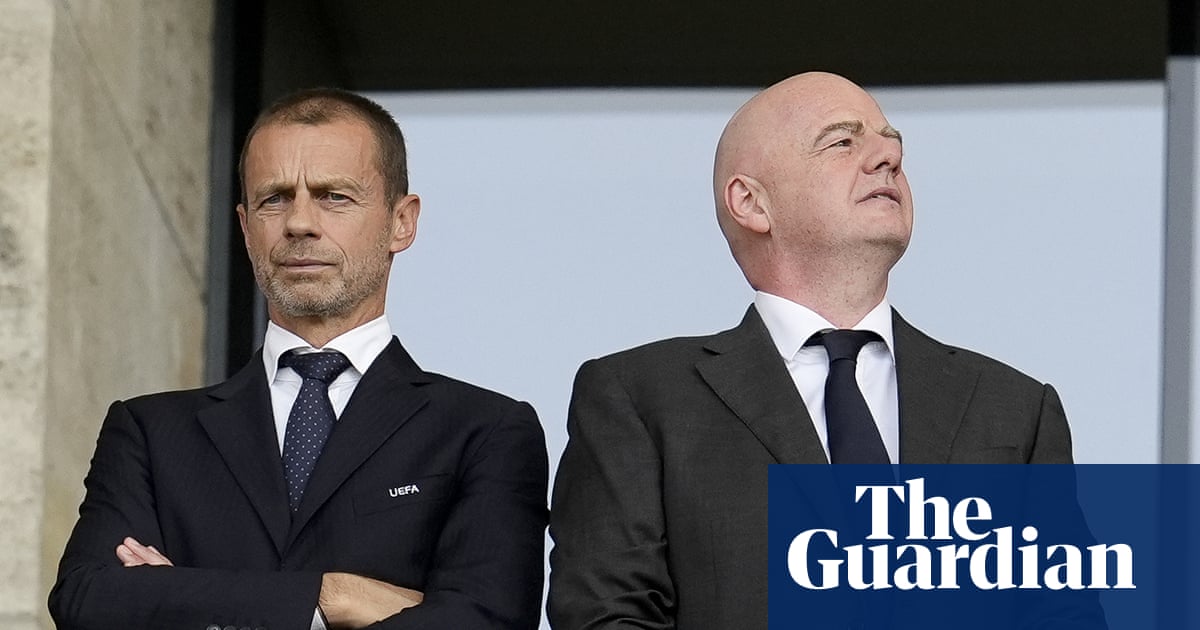
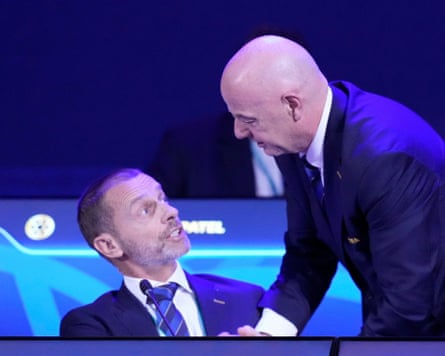
One suggestion on limiting executive power would be to remove the president’s power to determine funding. The governance expert Mark Pieth has an alternative proposal, one he says was once mooted by the president of Uefa, Aleksander Ceferin. It would see the heads of Fifa’s six continental confederations taking turns at being president.
“It’s not an outrageous idea,” Pieth says. “I am Swiss and it happens in my country. Seven ministers take turns being the president, but their tenure lasts one year and it’s clear who the next president is because they go around in order. The effect is nobody gets really powerful. Then you ask yourself, well, why would a Fifa president need power anyway? He’s there to organise matters.”
4) Greater transparency
For campaigners looking to hold Fifa to account over the world body’s existing commitments, such as human rights, a lack of transparency over decision-making and the existing appeals process are longstanding frustrations.
Equally, what Fifa does with the money it generates and distributes to its member associations can be opaque. Nick McGeehan, the director and co-founder of the not-for-profit Fair Square, has frequently come up against the limits of transparency within Fifa. “Where are the audited accounts?” he asks.
“Fifa have a development budget that is equal to many big development agencies, but not only is there no needs analysis in terms of how that money is distributed but there is literally no evidence of any audits. Go on their website and you can find all sorts of data about what money is spent, but if you actually wanted to verify what that money is being spent on, it’s impossible.”
McGeehan notes that greater transparency would also involve engaging more with the media. “It seems like Infantino only calls a press conference once every four years,” he says. “It shows an authoritarian state-style distrust of the media and a concomitant lack of transparency.”
5) Rethink development
“Fifa is a not-for-profit organisation – the money it makes is reinvested in football.” This phrase has become something of a mantra under Infantino and following the $15bn (£11.2m) generated by this year’s World Cup, each member nation can expect to receive $8m between 2027 and 2030. But not only is there a lack of scrutiny over how the money is spent, the nature of the distribution itself is questionable.
“It’s an issue that one country, one vote is combined with giving everyone the same amount of money,” says the Fifa-watcher. “The money is distributed in proportion to votes, which is completely wrong because Montserrat and Gibraltar have very different needs to Nigeria or India. It’s amazing that he didn’t look to even try and tweak that.”
With money neither distributed according to need nor determined by strategic goals to grow participation in the game, Fifa is undermining its own aims, the critic says. “If Fifa were to be judged on results, then football is more Eurocentric now than it was 20 years ago. You can expand the World Cup, that’s easy. They claim it’s development but if you get into the nitty-gritty it can be a negative. Associations spend all their money on the men’s national team, on a European coach, and there’s nothing spent on the grassroots or technical development.”
6) Switch the electorate
The steady funnel of funds shared with associations big and small has kept Infantino popular with his electorate, the heads of his 211 member associations. A change in who gets a say in Fifa’s decisions might be another way to achieve more effective governance.
“When I am at a Fifa meeting and I look around the table, I see very few people who have direct experience of either playing the game, or being a coach or an executive at a club,” says one senior football figure. “I see very few people who actually understand the day-to-day of football.”
The overwhelmingly male makeup of the Fifa electorate is another fact at glaring odds with the real world, while supporters are, as ever, not invited to the party. Ashish Prashar, a political consultant who regularly engages with Fifa on the game’s social responsibilities, says: “What we need is confederations to get together and form a new entity to solidify the game with the values that serve the people. The biggest item for that entity must be fan ownership of the game. The World Cup and its surrounding events should involve the public in its decision making whether that’s fan groups, fan ambassadors or elections for fans.”
For Maduro, a change in the electorate could then unlock further progress. “Currently you have voting syndicates at Fifa, which creates a huge degree of voting control,” he says. “You need to force new mechanisms of representation, and be creative in finding solutions to bring in people that have so far been absent. If you create a diverse electorate that, by itself, will create a mechanism of checks and balances that can help to lead to better decision-making in the interests of football and all its stakeholders.”
Fifa was approached for comment.