.png)
 1 month ago
94
1 month ago
94
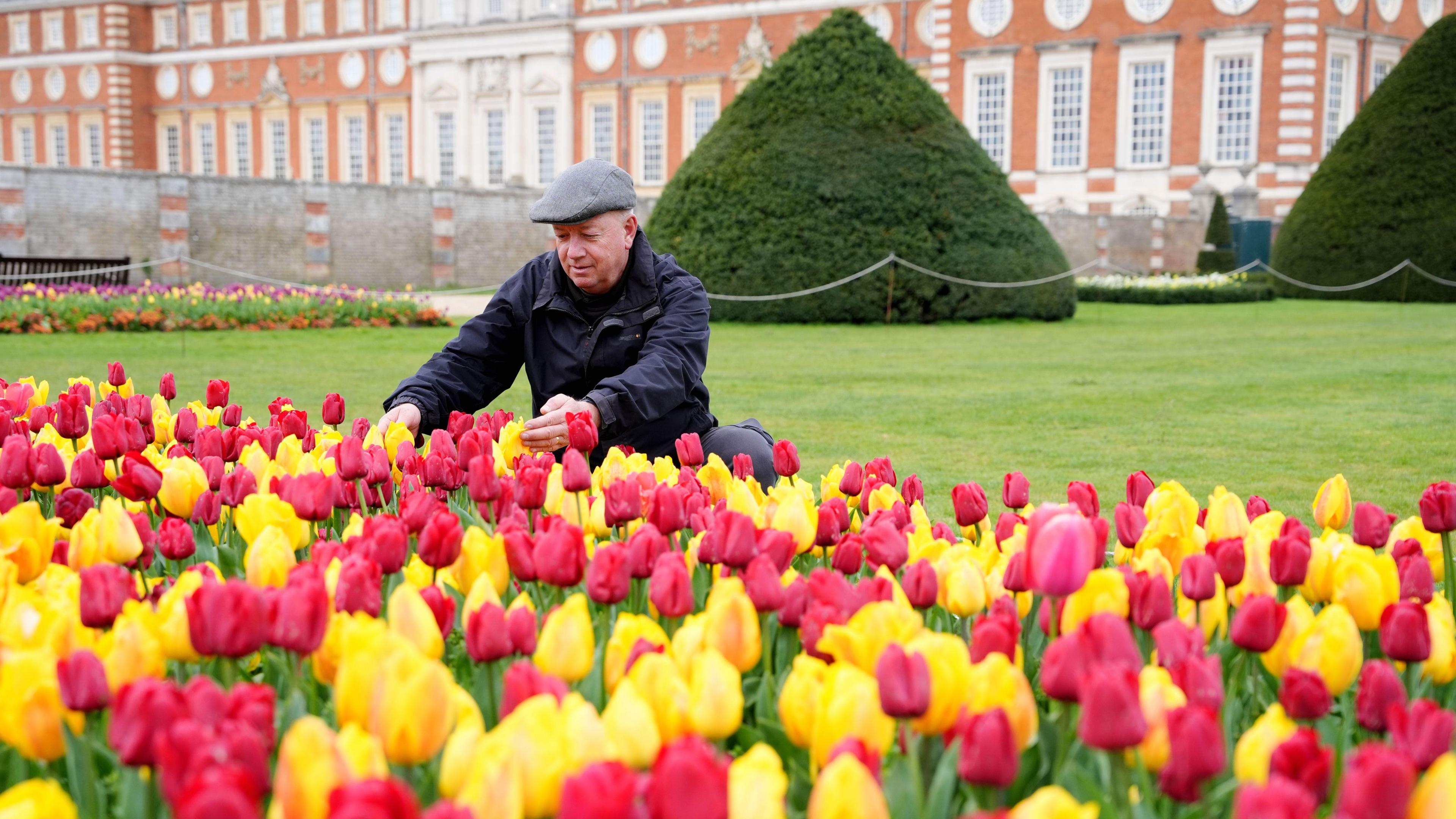 Image source, PA Media
Recent warm weather has encouraged the tulips at Hampton Court Palace to bloom slightly earlier than usual this year
BySarah Keith-Lucas
Lead Weather Presenter
A warm start to spring after a mild, wet winter has meant optimal conditions for a vivid display of spring flowers in some places this year.
Wet earth, plenty of sunshine and a lack of frosts have combined to give some plants a noticeable head start.
Gardens in southern England in particular have reported flowers blooming weeks earlier than normal.
Further north, however, spring has been a little slower to get off the marked as cooler and wetter weather has held on for longer.
Earliest blooming bluebells for decades
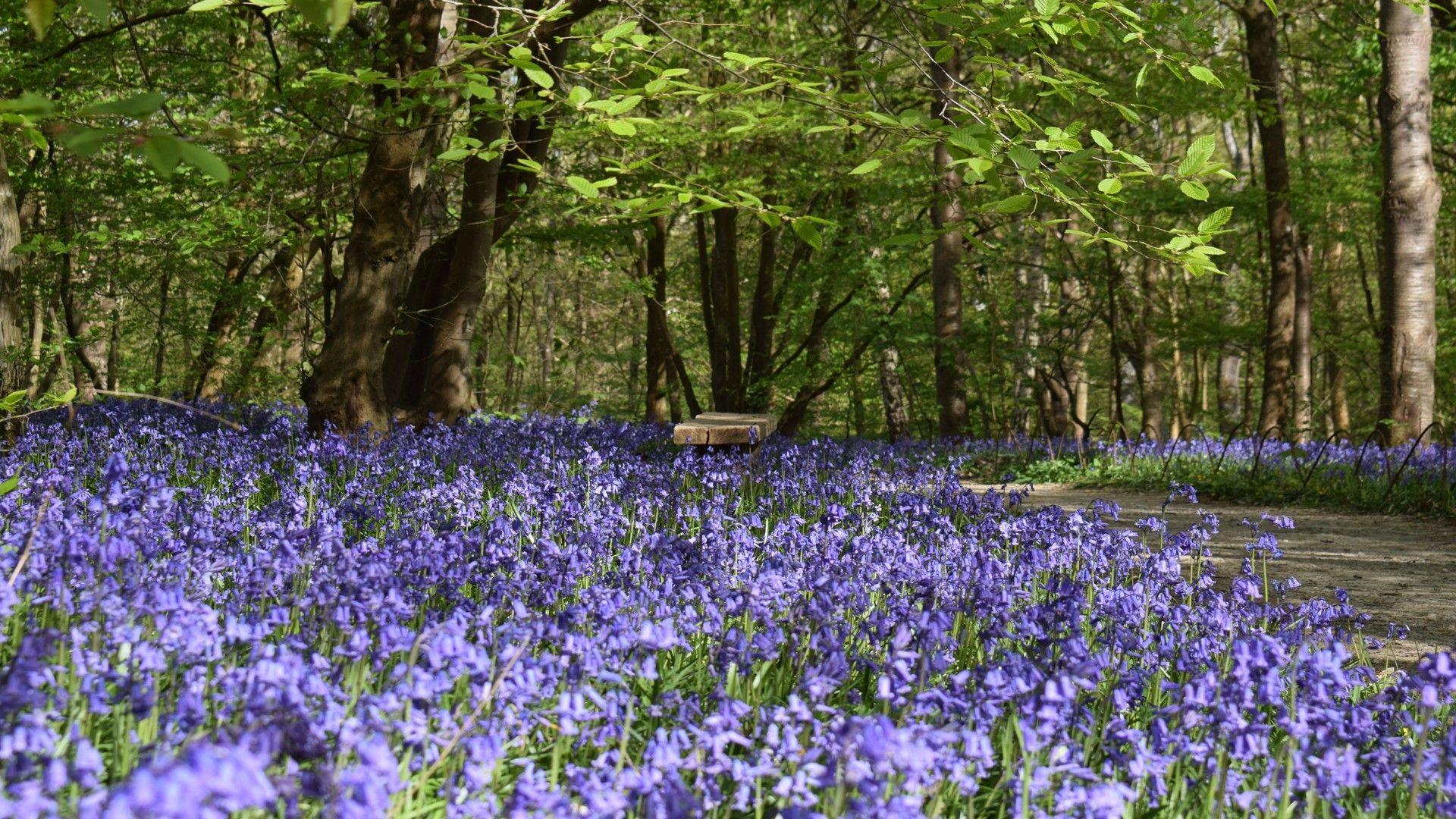 Image source, BBC Weather Watchers/AJMSnaps
A stunning display of bluebells at Hole Park Gardens in Kent
Spring is a season of transition, as lingering winter influences are gradually replaced by increasing warmth.
The days get longer, the sun is higher in the sky with plants responding to this increased sunlight and rise in temperatures.
Snowdrops and daffodils give way to tulips and bluebells, and the speed and intensity of spring's blooms are highly influenced by the weather.
This year much of the UK started spring with plenty of moisture in the soil after a wetter than average winter. Met Office figures show that March delivered some notably warm weather for England and Wales in particular, alongside plenty of sunshine.
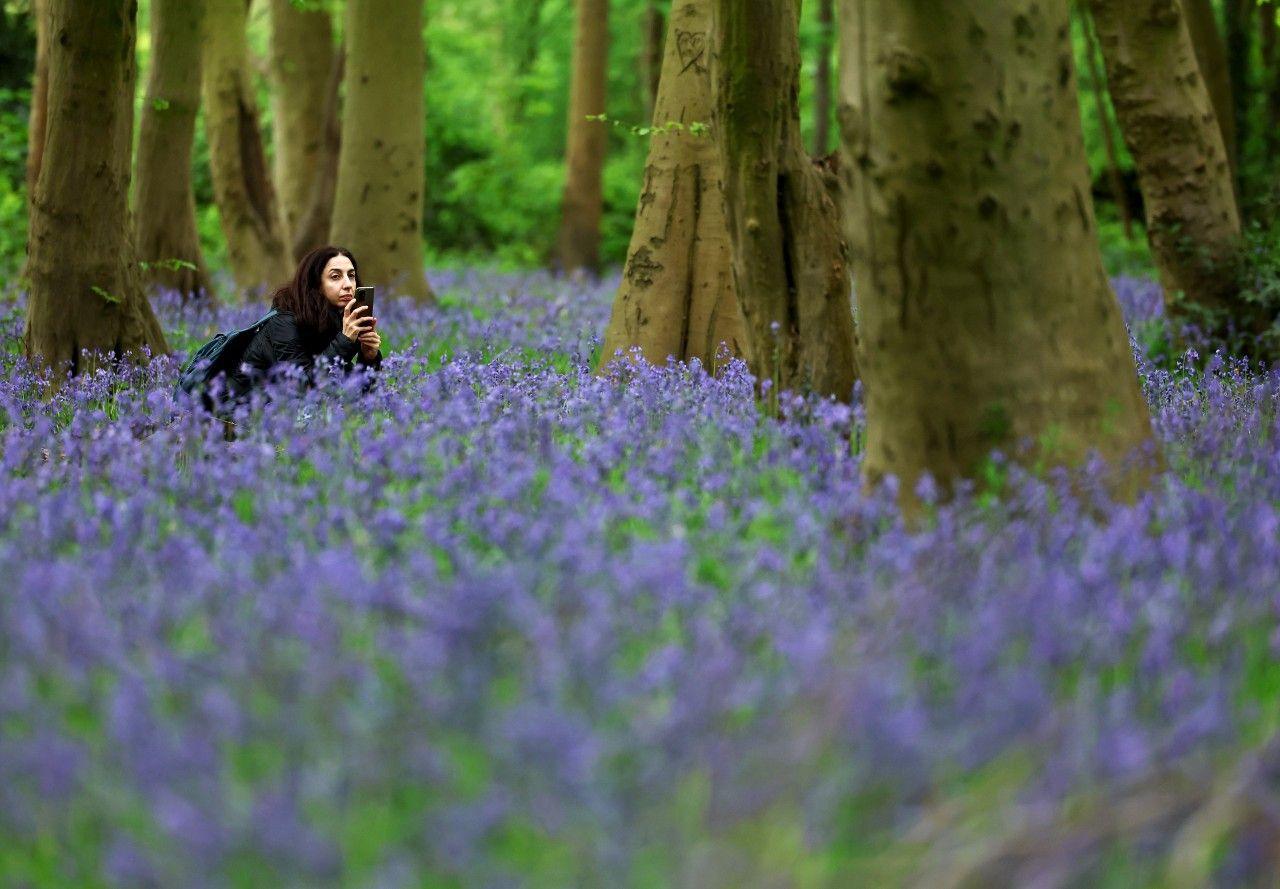 Image source, EPA
Bluebells carpet the ground in Chalet Wood, Wanstead Forest
This combination of weather types - with a lack of overnight frosts - has meant an early bloom of spring flowers, especially in southern England.
At Hole Park Gardens in Kent, owner Edward Barham has described this year's bluebell display as "magnificent - probably one of the best of recent years". Their records go back for decades.
"This is certainly the earliest we have seen the bluebells come into flower - at least two weeks ahead of schedule - brought on to their peak by the very warm weather around Easter time," he told BBC Weather.
Spring so far shows big temperature and rainfall contrasts across the UK
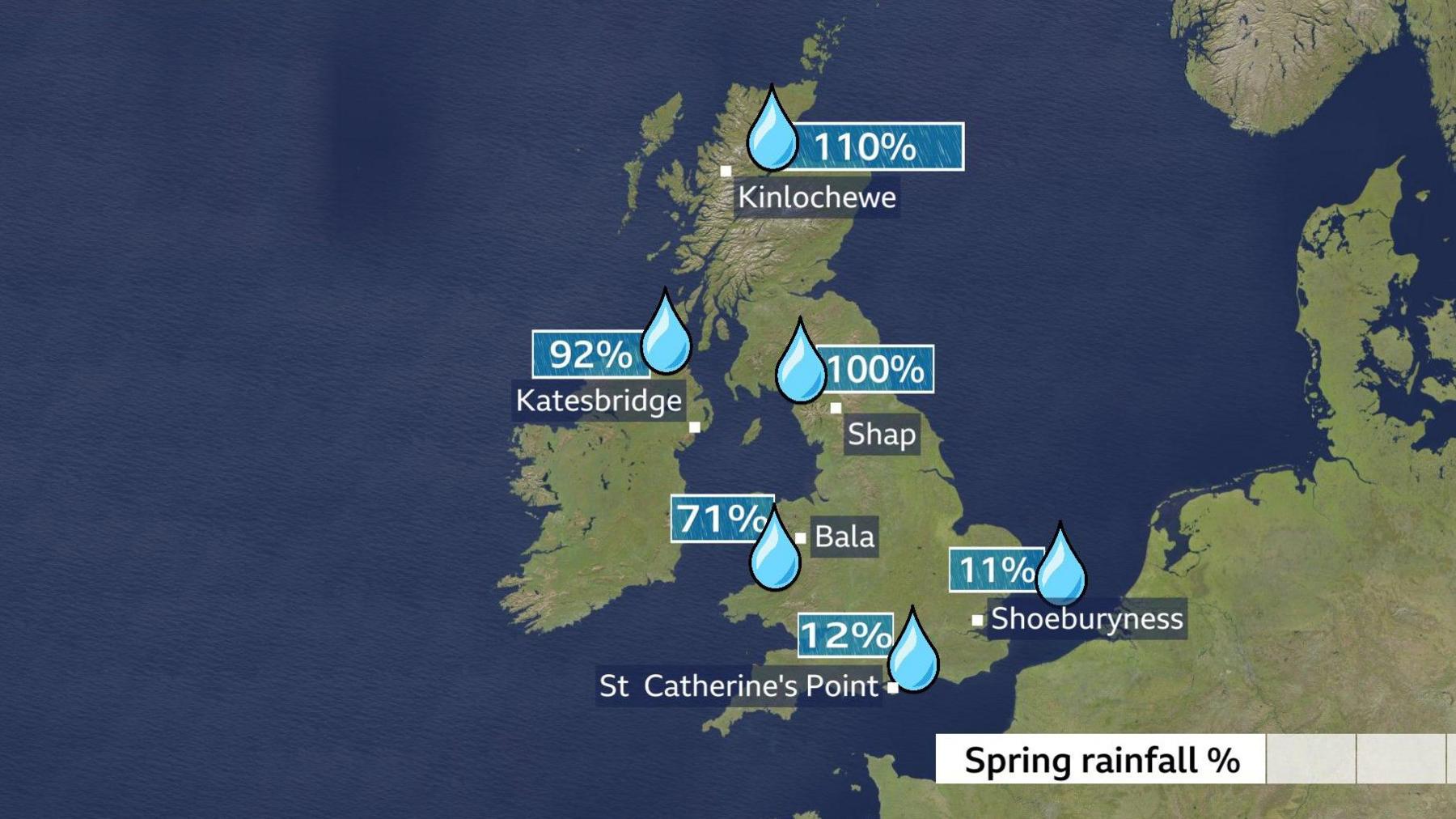
Percentages of spring rainfall so far compared to what we'd expect for the whole of spring
The weather since the start of meteorological spring on 1 March has seen a marked north/south split across the UK.
Successive low pressure systems have delivered a lot of rain to parts of Scotland, Northern Ireland and north-west England. Further south higher pressure has meant much drier weather.
At this halfway stage in spring we'd expect to have seen roughly 50% of average spring rainfall, but Kinlochewe in Scotland has received 110% so far, whilst Shoeburyness in Essex has had only 11% of its expected spring rainfall.
Temperatures for April are also showing a regional contrast, for example Northern Ireland has been -0.4C below average so far this month whilst England is at 0.8C above average.
The Royal Horticultural Society (RHS) has noticed a marked difference in timing of spring blooms this year.
According to Tim Upson, its Director of Gardens and Horticulture, the cherry blossom at RHS Garden Wisley in Surrey has finished flowering, while the tulip displays are nearing the end of their peak. Whilst at RHS Garden Harlow Carr in North Yorkshire things are not quite as advanced.
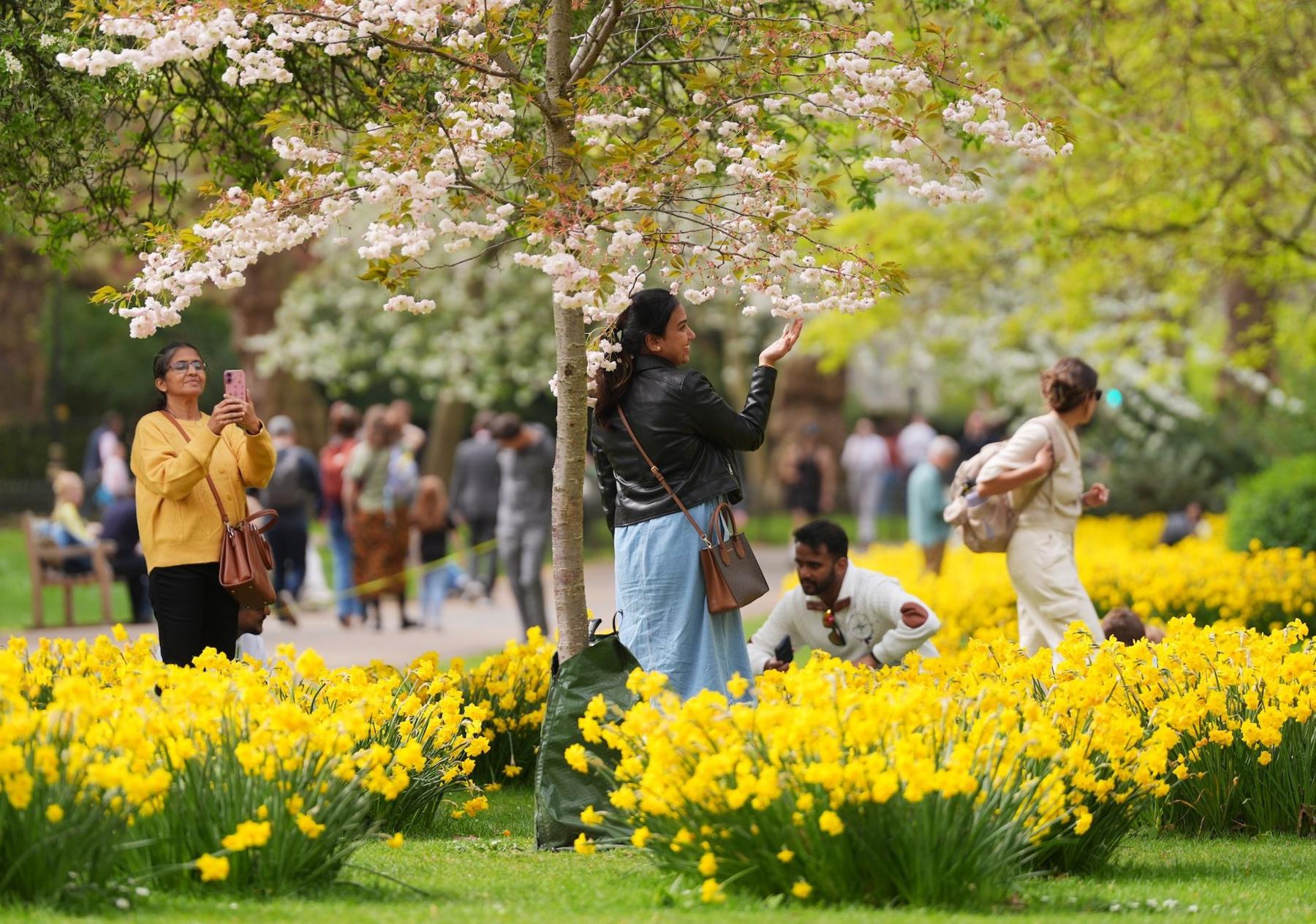 Image source, PA
Cherry blossoms and daffodils on display in St James's Park, London
"Spring is slightly behind due to cooler temperatures," he said. "Cherry blossoms there are in flower now with the main spectacular rhododendron display to follow."
Further north at the Royal Botanic Garden in Edinburgh, David Knott, the Curator of the Living Collection, added that that last year's dry sunny spring and early summer are also having an impact.
He said that plants like magnolias and rhododendrons that flower on last year's growth got a boost from the weather in 2025 and are now flowering perhaps seven to 14 days earlier than normal.
Spring - the fastest warming season
As our world warms due to climate change, not all seasons are changing at the same rate.
Spring is the fastest warming season in all four nations of the UK. The average spring temperature has increased by 1.8C since 1970.
Research from the University of Cambridge, external in 2022 found that plants in the UK are now flowering a month earlier. This could have major consequences for wildlife and ecosystem as well as farmers and gardeners.
As rising temperatures are shifting natural plant cycles, species that synchronise their migration or hibernation can be left without the flowers and plants they rely on – a phenomenon known as ecological mismatch.