.png)
 1 month ago
35
1 month ago
35

 Nottinghamshire Police
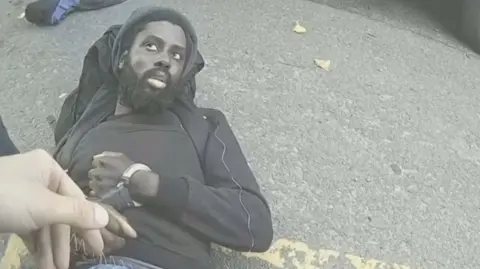
Valdo Calocane was arrested following the Nottingham attacks on 13 June 2023 and charged with murder three days later
The senior officer in charge of the investigation into the Nottingham attacks has denied that triple killer Valdo Calocane was charged early to "shut down stories of police failings".
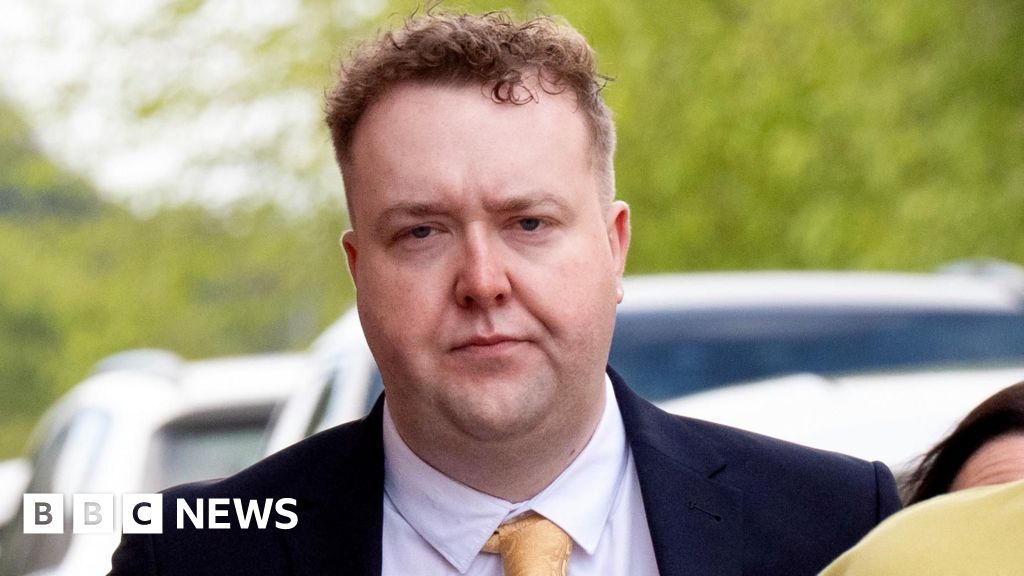
Now retired Det Supt Leigh Sanders was appointed the senior investigating officer after Valdo Calocane stabbed to death Barnaby Webber, Grace O'Malley-Kumar and Ian Coates and tried to kill three others on 13 June 2023.
A public inquiry into the attacks has heard how Sanders pushed for a charge against Calocane to subdue some of the reporting, due to media laws around court reporting.
On Wednesday, Sanders said he was not trying to stop stories about police failings being published.
The inquiry, which is being chaired by retired senior judge Deborah Taylor KC, is hearing from more than 100 witnesses over a total of nine weeks in London.
Calocane was charged with murder and three counts of attempted murder on 16 June, three days after the attacks.
However, following psychiatric reports, Calocane ultimately pleaded guilty to three counts of manslaughter on the grounds of diminished responsibility and three counts of attempted murder.
Calocane, now 34, is serving an indefinite hospital order.
 Reuters
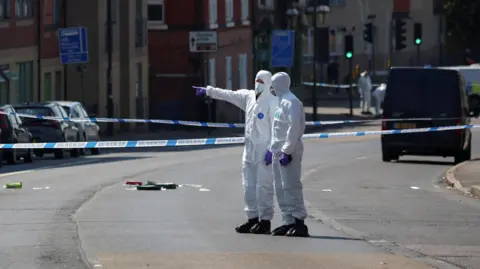
Large cordons were in place across the city in the aftermath of the attacks
Sanders said his focus in the days after the attacks had been "purely and squarely on dealing with a triple homicide" and not "the other noise", he said, referring to media reporting.
"It was obvious by this time that media interest in the case was enormous. It made not just national news, but international news," he said.
Counsel to the inquiry Rachel Langdale KC said: "Did you feel the need to communicate to the media what you were doing, rather than just getting on with what you were doing?"
Sanders said: "In terms of the media strategy if I'm being perfectly honest, I left that with gold [the senior officer with overall strategic command].
"My focus was purely and squarely in trying to secure preserve evidence."
When a charge has been made against a person, the UK media is at risk of being in contempt of court, if it reports details that create a substantial risk of serious prejudice to active legal proceedings.
That means media reporting is limited once a charge has been imposed.
 The Nottingham Inquiry
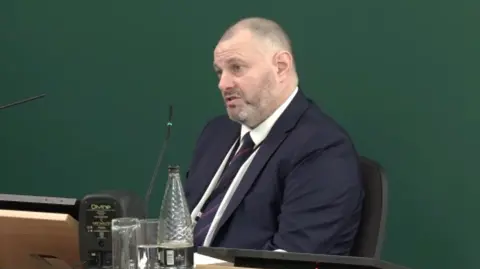
Retired Det Supt Leigh Sanders was questioned about his decisions around the investigation
Sanders told the inquiry how on 16 June, while being close to the point of charging Calocane, he had received a call about "stories that were going to appear in the press that were going to undermine the investigation".
The force had been contacted by the press about wanting to run an "inaccurate story" about an outstanding warrant for Calocane's arrest, the hearing was told.
Sanders claimed he could not remember the details of the story he was warned about.
In a decision log, shown to the inquiry, Sanders recorded the need to liaise with the head of corporate communications, Matthew Jarram, to "ascertain what covenants can be imposed on the press".
To impose a charge, police needed authorisation from the Crown Prosecution Service (CPS), however, the inquiry heard Sanders authorised the charge before getting written confirmation from the CPS.
Tim Moloney KC, representing the bereaved families, asked Sanders: "Are you sure that you didn't charge to shut down the stories of police failings around the warrant and police investigations?"
Sanders replied: "Absolutely not."
The inquiry was also told of concerns from within Nottinghamshire Police about internal leaks to the press, which were investigated by the force's professional standards department.
The inquiry heard Sanders had noted that a coordinated media release, with families affected, would be required, adding it could have a "significant impact on the reputation of the constabulary".
While Calocane was in custody following the attacks, the inquiry heard he did not consent to toxicology samples being taken.
Dr Sanjoy Kumar, Grace's father, had asked whether a hair sample could be taken to determine whether Calocane had drugs in his system, which Sanders said was requested. However, this was not carried out.
Sanders told the inquiry there had been a "complete absence of any reference of drugs or drug abuse" in the investigation, but apologised.
"I do concede in hindsight, if a sample of head hair had been taken, if nothing else, would have at least alleviated some of the fears of the families," he said.
"So I apologise for that we didn't do it, again. Again that's been in my statement and I will extend the apology to David Webber and Sanjoy Kumar [the fathers of Barnaby and Grace]."
Sanders said it was the fathers who had raised the matter.
He added he understood that a sample showing the presence of drugs could have provided rebuttal for the concept of diminished responsibility, but added it "would not be able to provide analysis that showed drugs or alcohol in the system at a specific time or date".
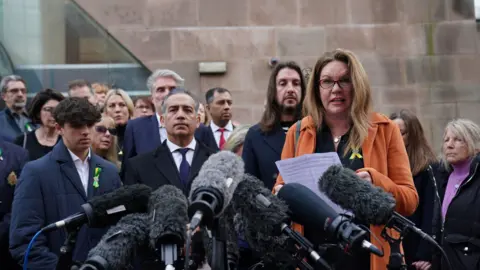 PA Media
The victims' families expressed their unhappiness about Calocane's sentence outside Nottingham Crown Court in January 2024
Inquiry counsel Rachel Langdale KC asked Sanders what he thought about a charge of manslaughter on the basis of diminished responsibility being put forward.
In response, he said: "I can concede that the difficulties that the families were trying to grapple with in terms of 'how could this not be murder?'
"In terms of some of the behaviour that had been exhibited - were not dissimilar to the views that I possessed previously and continued to possess."
Sanders said he still believed Calocane had shown "elements of control, of planning", seemed to be "exhibiting choices" and "did not seem to be under duress".
He added: "I shared those concerns and continued to share those concerns, but I am not a psychiatrist and I have to operate within the framework that exists."
He said two psychiatrists who assessed Calocane had "very little difference" between their conclusions that a partial defence of manslaughter on the basis of diminished responsibility existed.
Sanders said: "There were a lot of officers who genuinely believed that this was an instance of murder."
He added while police officers had "observational views" based on their lines of inquiry, they "simply don't have the expertise" of psychiatrists.