.png)
 1 month ago
81
1 month ago
81
59 minutes ago
Justin RowlattClimate Editor

 BBC
BBC
"I'm an early adopter of new technology," says Gavin Tait, a 69-year-old from Glasgow, with a hint of pride.
So when he received a lump sum on retirement a decade or so ago, he invested in renewable energy: solar panels on the roof, a home battery and a heat pump. "It seemed like a no-brainer," he recalls. "I could save money and help the environment - why wouldn't I?"
At first, it worked. His well-insulated home stayed warm and his energy bills fell. But over the past couple of winters, things began to change. "I noticed my electricity bills were going through the roof," he says.
This winter, he and his wife switched it off and went back to their gas boiler, which they had kept as a backup.
Gavin - who wrote in to BBC Your Voice about his experiences - says he knows what the problem was. At best gas delivers nearly one unit of heat for each unit of energy put in; his heat pump can deliver up to three or four units of heat for every unit of power. But as heat pumps run on electricity, he is now paying around 27p per kilowatt-hour, compared with less than 6p for gas that powers a boiler - more than four times as much.
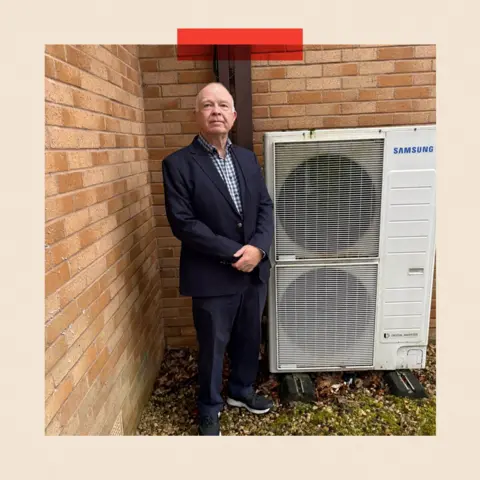 Gavin Tait
Gavin Tait and his wife switched off their heat pump and returned to their gas boiler after rising electricity costs made it too expensive to run
"It's simple," he says. "Economically, it just doesn't stack up."
His experience is not unusual. A survey of 1,000 heat pump owners last summer, carried out by Censuswide for Ecotricity, found two-thirds said their homes were more expensive to heat than before.
For critics of government policy, stories like Gavin's point to a deeper problem.
Heating and transport account for over 40% of the UK's emissions but they say that progress on replacing gas boilers and petrol cars is lagging well behind targets because ministers have got the wrong focus.
In their view, the government is obsessed with cleaning up electricity generation, even though it accounts for a far smaller total of our emissions - around 10%. So that obsession is pushing up the price of electricity and making it more expensive for people to switch to a heat pump or electric vehicle.
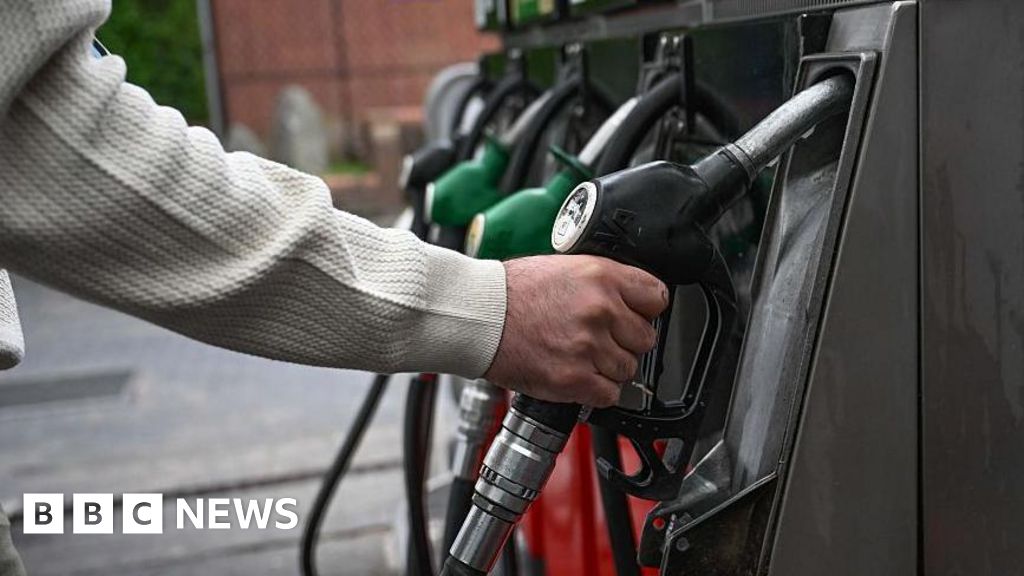
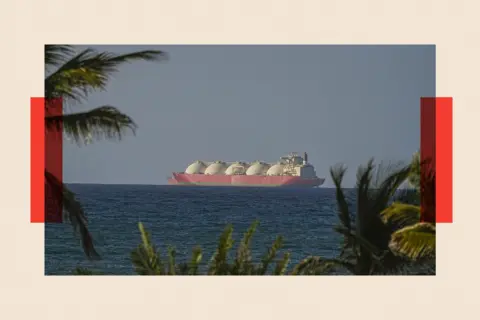
The issue has taken on new urgency as conflict in the Middle East pushes up oil and gas prices, raising fears that high energy costs could persist.
 Anadolu via Getty Images
Conflict in the Middle East, particularly tensions around the Strait of Hormuz, has pushed up oil and gas prices
The government insists that focusing on renewables will ultimately deliver greater energy security by reducing reliance on imported gas, lowering emissions and - crucially - cutting bills.
Are they right? Or by prioritising cleaner electricity while progress on heating and transport lags behind, is the government chasing the wrong targets?
The hidden cost of clean power
The issue is that while generating renewable electricity can be cheap, the system needed to deliver it is not. When I ask Sir Dieter Helm, professor of economic policy at Oxford University, for his definitive answer on the cost of renewables, he laughs.
"It all depends what you choose to measure," he says. Sir Dieter says focusing only on the cost of generating electricity misses a larger issue: the cost of the system as a whole.
Electricity has to be available all the time - not just when the wind is blowing or the sun is shining. That means back-up generation, additional capacity and a more extensive network.
 PA Media
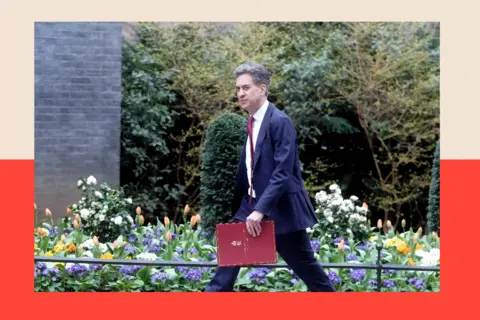
Energy secretary Ed Miliband is leading the government's green energy push
Sir Dieter gives me a simplified example. The UK's peak electricity demand is around 45 gigawatts (GW), he says. In the past, this could be met with roughly 60GW of capacity from coal, gas and nuclear power stations.
As the system shifts towards renewables, far more capacity is needed - not just wind and solar, but back-up for when they are not producing. In Sir Dieter's estimate, the UK is moving towards something closer to 120GW. At the same time, the grid must also be expanded to carry electricity from offshore wind farms to where it is needed.
The exact figures are debated, but the direction is clear: partly because of renewables, the system is becoming larger, more complex and more expensive. Some of those costs are already showing up in bills. Expanding the grid - building new pylons and power lines - is pushing up network charges.
There are also "balancing costs", including payments to wind farms to switch off when the system cannot absorb all the electricity they produce. And until recently, a subsidy scheme accounted for around 10% of the average household bill.
There is another issue. The UK is richest in one of the more expensive renewable resources - offshore wind.
Solar power has seen dramatic cost reductions thanks to mass production. But Britain's often dull skies - especially in winter, when demand is highest - limit how far it can carry the system.
Offshore wind is more dependable but it involves large, site-specific engineering projects that cannot be replicated in the same way, and so have not seen the same sustained falls in cost. At the same time, rising prices for materials such as steel and rare earths - along with higher interest rates - have pushed costs up further.
On paper, the UK has made significant progress on going green — the nation's emissions are down by around 50% since 1990. But that does not necessarily mean the UK's overall global footprint has fallen by that much.
Many of the goods that were once produced and then used in Britain are now being made overseas and then imported here, and often that production is happening in countries with a higher carbon footprint.
China, for example, still relies on coal for more than half of its energy, meaning emissions simply have shifted abroad rather than been reduced altogether.
This is a point made by leading climate scientists including Prof Kevin Anderson of Manchester University, who argues the 50% figure "excludes international aviation and shipping and our imports and exports".
He adds: "If you include those, which of course the climate includes, then the reduction's about 20% since 1990." The government says it follows United Nations guidelines on emissions reporting.
 Future Publishing via Getty Images
China still relies on coal for more than half of its energy, raising concerns that emissions linked to UK consumption may simply have shifted overseas
At the same time, the higher system costs do not just show up in household bills - they ripple through the wider economy. UK households face some of the highest electricity bills in Europe. For businesses, the picture is even starker.
While the cost of renewables plays a part, the principal driver for this is, ironically, gas itself. The UK energy mix at any one moment usually includes plenty of renewables, but some gas is still frequently still needed. The way the market works, generators bid to supply power in half-hour blocks, with the cheapest bid accepted first. But all successful bidders end up being paid the price of the most expensive source needed to meet demand.
In practice, that source is usually gas. So, even when much of the electricity is generated from renewables, which are cheap to produce once you get past the hefty set-up costs, it is often gas-fired power stations that set the price - and therefore what everyone pays.
The system is widely used across Europe, but the UK's heavy reliance on gas has a clear consequence: when gas prices rise dramatically as in recent weeks, electricity bills tend to rise with them - even if much of the power itself is renewables that are cheap to produce.
The UK's comparatively higher energy costs have coincided with a wave of closures among energy-intensive industries. Sharon Todd, chief executive of the Society of Chemical Industry, described the impact of energy costs as a "national act of self-harm", warning that UK industry is "standing on the edge of a cliff" and calling for an urgent independent review of the country's approach to net zero.
It is against this backdrop that the politics of climate change has begun to shift.
When then Prime Minister Theresa May set the 2050 net zero target in 2019, it passed without formal opposition in Parliament. That consensus has since fractured.
The Conservative Party now argues the target is "impossible", with leader Kemi Badenoch openly sceptical. Reform UK says it would abandon what it calls "net stupid zero" altogether. Even the Green Party has criticised aspects of government policy, with its leader, Zack Polanski, saying the current approach to net zero is not delivering for ordinary people.
The Liberal Democrats also say net zero must support households and bring down energy bills. The SNP says it is "absolutely committed to a fair and just transition to net zero", while Plaid Cymru recently moved away from its earlier ambition of reaching net zero in Wales by 2035.
 Getty Images
Under Kemi Badenoch's leadership, the Conservatives argue the UK's 2050 net-zero target is "impossible"
Polling suggests the public appears to still support the decarbonisation effort. More in Common found that four in five Britons think it is important that the government cares about tackling climate change, including nearly 80% of 2024 Conservative voters.
What really concerns people is cost. Data from the Office for National Statistics shows the cost of living is cited by around nine in 10 adults as an important issue, with energy bills among the most frequently mentioned pressures on household finances.
This is where the argument about focusing on lower energy prices and decarbonisation comes in. The economists and politicians who make this case say that it would both help keep the public onside on decarbonisation and drive more rapid emissions reductions.
Their argument is simple: if electricity is cheaper, more people and businesses will switch to technologies like electric cars and heat pumps - and emissions will fall faster.
The highest-profile intervention to date has come from former UK Prime Minister Sir Tony Blair. His Tony Blair Institute for Global Change last year called for a shift in focus from the government's "Clean Power 2030" agenda to "Cheap Power 2030".
 AFP via Getty Images
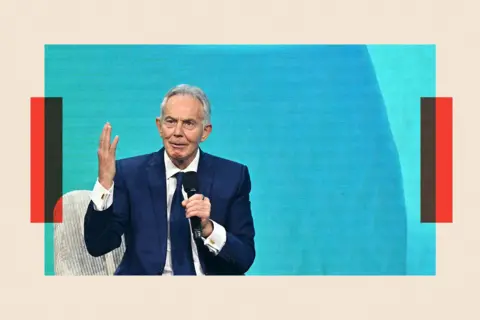
The Tony Blair Institute for Global Change has called for a shift from the government's "Clean Power 2030" agenda
The "clean power" logic is that a cleaner grid will make everything that runs on electricity, from cars to heating, cleaner by default. Supporters of a "cheap power" approach argue that is only part of the story. The bigger prize lies in cutting emissions from the sectors that use energy, not just how that energy is generated.
Reducing emissions therefore depends on persuading people to switch to electric technologies such as heat pumps and electric vehicles. But, as the experience of Gavin Tait - the Glasgow homeowner - shows, that decision often comes down to cost.
If electricity is expensive, households and businesses have little incentive to make the switch. If it is cheaper, the transition becomes easier - and faster.
The difficult choices ahead
Tone Langengen, senior policy adviser on climate and energy at the Tony Blair Institute and the author of its recent report, argues that the focus should shift away from targets and towards what will bring down the cost of energy.
In her view, every decision on energy policy should be judged through the prism of whether it reduces prices.
"The sooner we move from a debate focused on targets to one focused on how you structurally change the economy and decarbonise in a way that works both economically and politically," she says, "the faster we will move on climate action."
But turning that idea into policy is not straightforward. Every option involves trade-offs - between prices, emissions and public spending.
Sir Dieter, the Conservatives and the Tony Blair Institute all argue that slowing the pace of renewable expansion, and maintaining a larger role for gas in the short term, should be part of the answer. But while using fewer renewables could ease pressure on system costs, it risks slowing the pace of emissions cuts.
Energy Secretary Ed Miliband says renewables bring other benefits too. "The lesson of yet another global energy shock is that the UK needs to get off the fossil fuel rollercoaster and onto clean homegrown power that we control," he says.
"Driving for clean energy is a national security and economic security imperative- that is why this Government is investing record amounts in new renewables, nuclear, and upgrading homes through our Warm Homes Plan."
Other proposals raise similar tensions. Reforming the way the electricity market works could reduce the amount providers get and therefore reduce bills. Shifting some policy costs from electricity bills to general taxation could lower prices but would place greater strain on public finances.
When I press Langengen on how electricity prices could be reduced in practice, she acknowledges there is "no magic wand". She argues that "speaks to the credibility of the argument". But it also highlights just how difficult those choices are.
For some economists, that difficulty points to an even more uncomfortable conclusion - one that goes to the heart of political leadership.
Sir Dieter says we need to face up to a hard truth: tackling climate change costs money.
 AFP via Getty Images
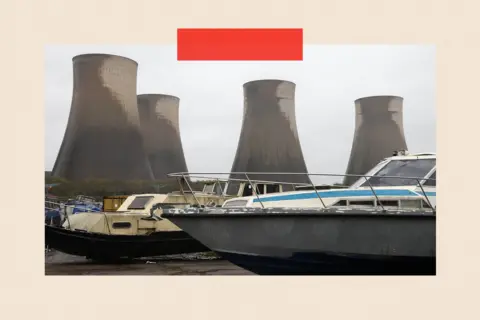
Sir Dieter says tackling climate change comes with a hard truth that it will cost money
Fossil fuels are cheap in part because their price does not reflect the damage they cause - from rising temperatures to impacts on health, property and the natural world. Cutting emissions means bringing those hidden costs into the price of energy. And that has consequences.
"My costs go up, my bills go up and my standard of living goes down," says Sir Dieter. There is, he argues, no easy way around that. "The evidence suggests it is going to be more expensive."
That presents a dilemma for governments. The bet behind today's push for clean power is that countries, like the UK, can show it is possible to decarbonise the grid without imposing unacceptable costs - and in doing so, lead the way for others.
The Office of Budget Responsibility has said "the costs of failing to get climate change under control would be much larger than those of bringing emissions down to zero." But achieving that requires global emissions cuts.
There is also the argument that getting off gas quicker reduces vulnerability to price shocks. But there is a risk. If the transition here in the UK drives up costs and erodes public support, it will not be a model to follow, but a warning to avoid.
And yet the urgency of cutting emissions is not in doubt. The World Meteorological Organization warns the Earth is now further out of balance than at any time in recorded history, with the planet absorbing far more heat than it can release. As the UN Secretary General António Guterres has put it, "every key climate indicator is flashing red".
If Sir Dieter is right, governments will have to be honest: the transition will cost more. The challenge - and it is a tough one - is persuading the public it is worth it.
Top image credit: Getty Images

BBC InDepth is the home on the website and app for the best analysis, with fresh perspectives that challenge assumptions and deep reporting on the biggest issues of the day. Emma Barnett and John Simpson bring their pick of the most thought-provoking deep reads and analysis, every Saturday. Sign up for the newsletter here