.png)
 1 month ago
38
1 month ago
38
Kevin PeacheyCost of living correspondent

 Getty Images
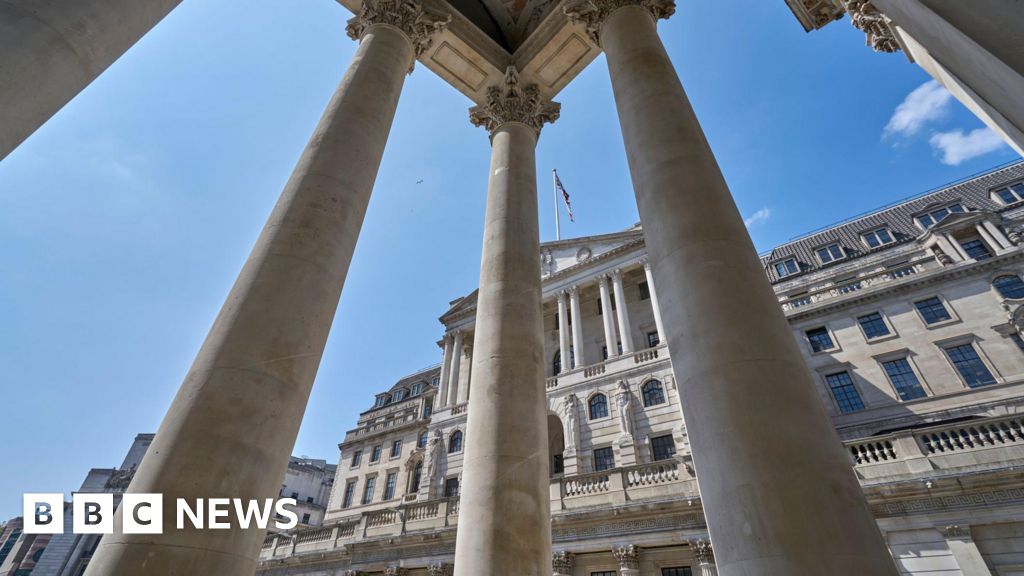
Turmoil in the UK mortgage market is at its most intense since the mini-Budget of 2022, figures suggest, as the average rate on two-year fixed deals rose above 5%.
The rate is at its highest level since August, according to financial information service Moneyfacts. Five-year mortgages are at their most expensive since June.
Nearly 500 mortgage products have been pulled off the shelves in the last two days, the highest number since the aftermath of mini-Budget, when Liz Truss was prime minister.
Anyone renewing a fixed mortgage, or looking for a new one - such as first-time buyers - will be affected.
Before the US-Israel war with Iran began, financial markets had been expecting a cut in UK interest rates at some point this year.
But these expectations vanished after rising oil prices raised the prospect of higher inflation.
The yield, or interest rate, on two-year government bonds - which indicates how much it would cost to borrow money for two years - has been volatile.
"Recent days have been some of the most turbulent in the UK mortgage market since the aftermath of the September 2022 mini-Budget," said Adam French, head of consumer finance at Moneyfacts.
"It's unwelcome news for borrowers, as the prospect of falling mortgage rates has quickly given way to rate rises," he said, adding: "How far they could go is now heavily dependent on how global markets and inflation expectations evolve as conflict in the Middle East unfolds."
Lenders are lifting mortgage rates as they respond to changing predictions about the future direction of the Bank of England's benchmark rate, which dictates borrowing costs.
For borrowers, the interest rate on a fixed mortgage does not change until the deal expires, usually after two or five years, and a new one is chosen to replace it.
On Wednesday, data shows:
- The average rate on a two-year fixed deal stood at 5.01%, up from 4.84% on Friday
- Over the same period, the average rate on a five-year fixed deal has risen from 4.96% to 5.09%
- Over the last two days, 472 residential mortgage products have been withdrawn from the market, according to Moneyfacts. This is about 6.5% of the market, leaving 7,164 deals to choose from.
The biggest single day fall for residential mortgages recorded by Moneyfacts was the withdrawal of 935 products on 27 September, 2022 after Truss and her chancellor Kwasi Kwarteng announced £45bn worth of unfunded tax cuts.
More than 25% of mortgage deals available at the time were pulled.
Brokers said they were expecting further rate rises in the coming days, but people could take action.
"Most lenders allow their existing mortgage customers to secure a rate switch four months before their fixed or tracker rates expire," said Aaron Strutt, from broker Trinity Financial.
"At the moment some of the banks and building societies are still offering sub-4% fixed rates," he said.
Meanwhile, petrol and diesel costs continued to rise in the UK due to volatile oil prices from disruption to Middle East supplies.
The average cost of unleaded petrol rose by 1p in the last 24 hours to 139p a litre, while diesel ticked 2p higher to 155.1p, according to RAC head of policy Simon Williams.
He said that diesel had now increased by nearly 13p, or 9%, since 28 February when the US-Israel war with Iran began. It means diesel is at its highest price since May 2024.
Williams added: "If oil were to settle at around the $90 a barrel mark and the pound were to maintain its current position against the US dollar, drivers in the UK could expect average petrol prices to reach around 140p a litre, and diesel around 167p a litre."
Brent crude, which is the global benchmark for oil prices, is trading at $89.44 a barrel.
While prices are down from a recent spike of nearly $120 barrel, they are more than 20% higher than before the war began.