.png)
 5 hours ago
1
5 hours ago
1
4 hours ago
Rob Englandand Jess Carr,BBC Verify

 BBC/Getty Images
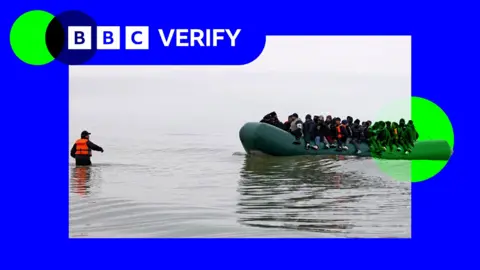
More than 200,000 migrants have crossed the English Channel in small boats since records began in 2018, new figures show.
The Home Office recorded 70 people arriving in the UK on Friday, taking the total to 200,013 in the last nine years. Calm weather conditions meant 70 people on one boat were able to make the crossing.
Successive governments have promised to reduce migrant arrivals through this route and halt the smuggling operations that facilitate the dangerous crossings, but the number of small boat arrivals has more than doubled in the last three years to reach this new milestone.
At least eight migrants have died while trying to cross the Channel by boat this year, according to the UN's International Organization for Migration and French authorities. Last year 23 people were confirmed to have died.
A combination of enhanced security at ports, a clamp down on other illegal routes, and the development of organised gangs have reportedly helped contribute to the rise in small boat crossings.
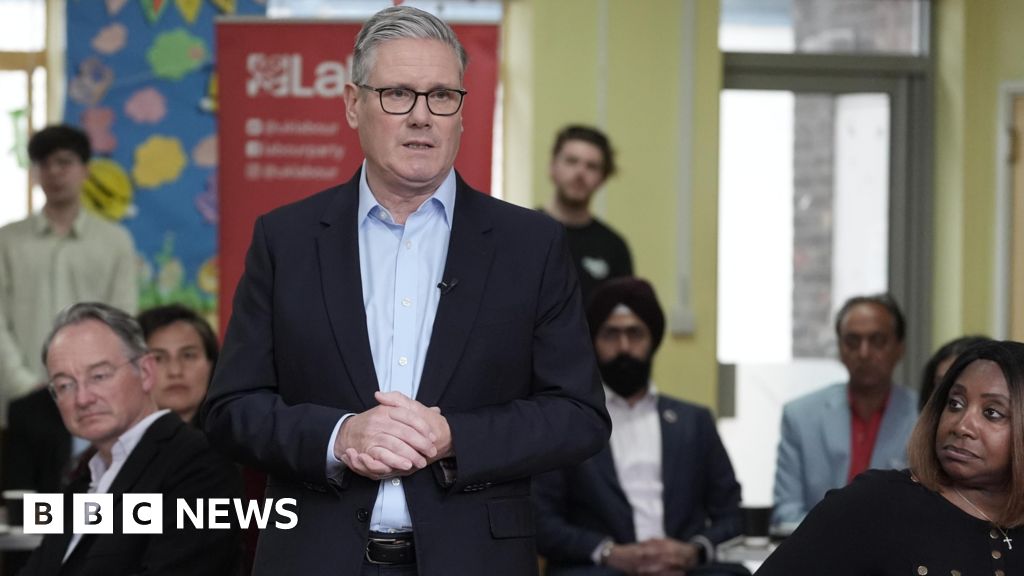
About 128,000 crossings were made under previous Conservative governments between 2018 and 2024. Former Tory prime minister Rishi Sunak pledged to "stop the boats" in 2022, while Labour promised to "smash" the people-smuggling gangs making money from illegal Channel crossings when Sir Keir Starmer took power in 2024.
Since then more than 72,000 people have entered the UK this way. The majority of people making the crossing travel from France and go on to claim asylum in the UK, though not all of them are granted it.
The number of people taking this dangerous route each year peaked in 2022 when more than 45,000 people made the journey before dropping by several thousand the next year. The annual number of crossings has since risen gradually to similar levels in the past three years.
More than 7,380 people have crossed the Channel since January, which is 36% lower than the same period last year.
A Home Office spokesperson said the government was "bearing down on small boat crossings".
"The home secretary has signed a landmark new deal with France to boost enforcement action on beaches and put people smugglers behind bars," they added.
"This builds on joint work that has stopped over 42,000 illegal migrants attempting to cross the channel since the election.
"We have removed or deported almost 60,000 people who were here illegally and are going further to remove the incentives that draw illegal migrants to this country."
Who is crossing the Channel on small boats?
The majority of migrants crossing the Channel on small boats from 2018-2025 are from Iran, Afghanistan, Iraq, Eritrea and Albania, Home Office figures show.
But in the last year there has been an increasing number of people from several African nations attempting to cross.
People arriving from Eritrea, Somalia and Ethiopia nearly trebled to 13,000 compared with 2024, while the number of people arriving from Sudan through this route rose by about 60% in the same period, following ongoing civil wars and political repression in the country.
The EU's border agency, Frontex, has also reported an increase in sea arrivals across a number of Mediterranean countries by migrants from the same four African countries.
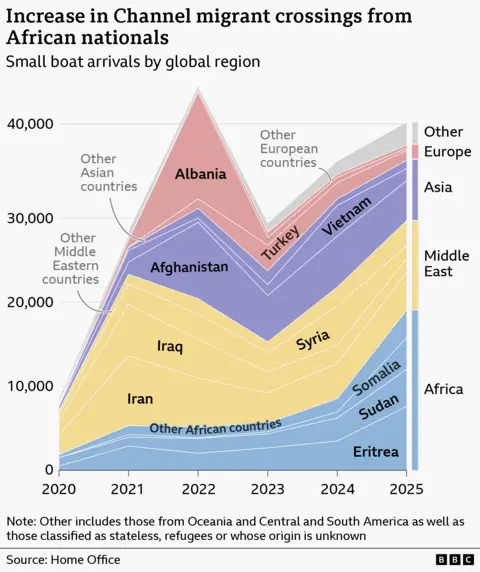
It marks a change from previous years when the majority of people making the crossing were from Iran, Iraq, and Afghanistan. It had followed years of oppression by the Iranian government, economic hardship and instability across Iraq, and the rise of the Taliban in Afghanistan.
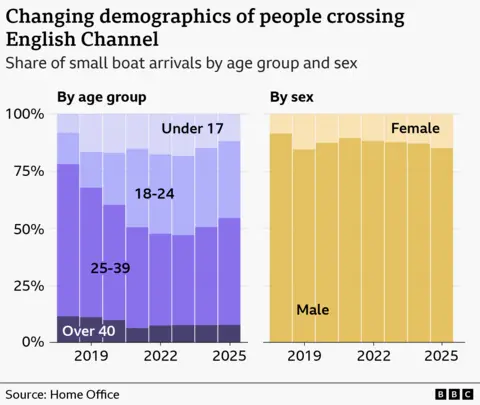
Almost all those making the journey across the Channel are under the age of 40, while men and boys made up nearly nine in 10 small boat arrivals between 2018 and 2025. The percentage of women and girls crossing the Channel has gradually increased, and while young children and babies are known to have been taken across the Channel the government does not publish a more detailed breakdown of age groups under 17 or over 40.
Who is allowed to stay in the UK?
About 95% of people who arrived on small boats in the eight years to 2025 claimed asylum in the UK, according to the Home Office. They made up about a third of all asylum claims over that period, including people who arrived legally and then claimed asylum.
By December last year, more than 108,000 of these asylum applications had been processed, with about three in five people granted asylum.
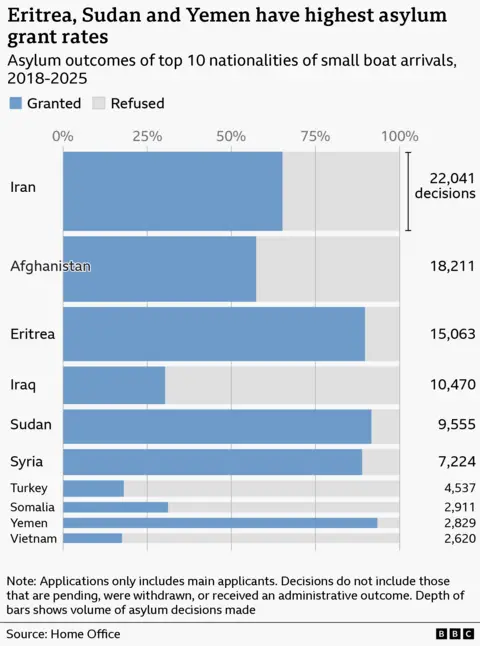
Grant rates vary widely by nationality, however. Among the 10 countries with the highest number of decisions, more than 90% of applications from Yemen, Sudan and Eritrea were approved.
These outcomes can change over time, too. In 2022, 96% of Afghan applicants were granted asylum following the Taliban's return to power, but by 2025 this had fallen to 33% after a change in Home Office guidance suggested the security situation was no longer as severe as in previous years.
What happens to people who are refused asylum?
For those refused asylum, the government may seek to return people to another country, although this is not always possible.
This can happen voluntarily - where people agree to leave the UK in return for financial or travel assistance - or involuntarily, when people are detained and escorted out of the country by immigration officers.
About 7,600 people who arrived by small boat have been returned from the UK since 2018, according to the latest figures. The government does not state whether these returns were enforced or voluntary, but figures up to December 2025 suggest 70% of those returned were from Albania.
The Home Office has paused returns to Afghanistan, as there is currently no diplomatic mission to the UK.