.png)
 1 month ago
44
1 month ago
44
The Anglo-Scottish Cup, which had a brief and never particularly beloved life between 1975-76 and 1980-81, always struggled to find a place in the calendar. In its second season, the two legs of the final had to be squeezed into 48 hours, Nottingham Forest drawing 1-1 away at Leyton Orient before a 4-0 win at home. Only 12,717 bothered to turn up at the City Ground to see it. It was all very anticlimactic. Yet that game holds a place in football’s history.
“Our lot tasted champagne,” said Brian Clough, “and found that they liked it.” Forest would win promotion to the First Division that season and, within three years, had added a league title, two European Cups and two League Cups. It had been a similar story for Clough at Derby who, two seasons before lifting the league title, won the Watney Cup, a pre-season tournament for the two highest scorers in each of the four divisions who had not been promoted or qualified for Europe. In both cases, Clough was adamant that the experience of winning even a minor competition was a vital part of the greater glories that followed.
It’s not an inevitable process. None of Middlesbrough, Bristol City, Burnley, St Mirren or Chesterfield followed their Anglo-Scottish successes with a flight of other trophies. But, equally, the first trophy in a dynasty always has an importance, even if it is chiefly symbolic. Beating Liverpool to win the Carling Cup in 2005, quite apart from igniting his rivalry with Rafa Benítez, was the first concrete indication that José Mourinho might be just as successful in English football as he had been in Portuguese. Victory in the 1990 FA Cup settled much of the anxiety at Manchester United and persuaded them Alex Ferguson was on the right track. Manchester City’s FA Cup final win over Stoke in 2011 was a huge moment for a club whose recent history had been of failure.
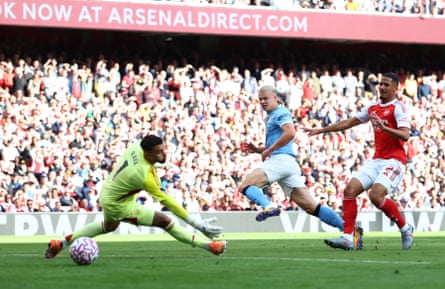
Mikel Arteta, of course, has already won a trophy with Arsenal, but for all that the FA Cup success in 2020, and perhaps especially the semi-final victory against Manchester City, gave notice of his capacities as a manager, that was a very different team to this one. Of the match-day squad from the final, only Bukayo Saka and Reiss Nelson, unused subs that day, remain at the club – and Nelson, now on loan at Brentford, has started only one league game for Arsenal since. The side that Arteta has built, the side that has finished second in the league in each of the past three seasons, awaits its consecration.
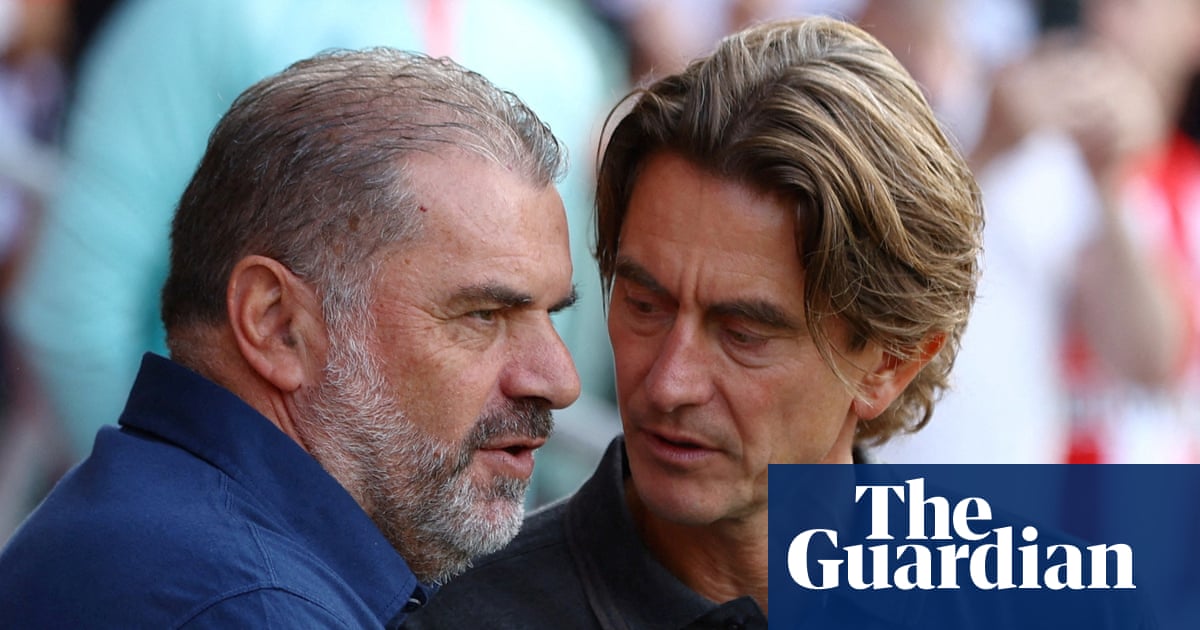
That the final is against City, the team who have twice overhauled Arsenal in title races, the dominant side of the past decade, the club where Arteta served as assistant to Pep Guardiola, only ramps up the symbolism. If Arsenal win, this could be the passing of the torch from master to apprentice, the moment at which Arsenal become winners and perhaps even begin a reign as the dominant side of the era. Lose, though, and all the doubts about Arsenal’s resolve will return more virulent than ever.
For Guardiola the significance of the game is more complex. Although he tends to dismiss questions about his possible departure in the summer, he does not deny their substance. There is at the very least a strong possibility that this will be his final season at City. Perhaps last season would have been had it not been so obviously dreadful; nobody wants to leave on such a diminuendo.
Guardiola is extremely conscious of his own legacy, as can be seen by his defensiveness whenever such issues are raised. It was notable after the defeat by Real Madrid this week that when he was asked whether a record of one Champions League title in 10 years at City would be as disappointment, his sarcastic response was to say that he should have won six.
That was not a random number; Carlo Ancelotti has won five and Guardiola, very evidently, would like the record for himself – and knows that having spent 17 seasons at three of the biggest clubs in the world, he has had an opportunity few others will have to set a new mark.
For City, the Champions League dream is over for another season. The Premier League is not entirely out of reach but if City are to overhaul Arsenal it will require a consistency over the final two months of the season that they have not demonstrated for a couple of years. Would another League Cup or an FA Cup, or both, be enough of a high to allow Guardiola to leave in triumph? In truth, his standards have been so elevated that it would not: when you’ve won six league titles and a Champions League at a club, it doesn’t much matter whether you’ve won four or five League Cups, two or three FA Cups.
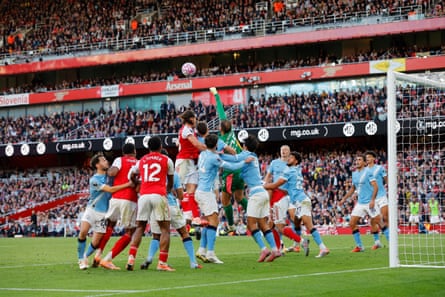
So the motivation comes less from what he can do than from what he can stop his former assistant doing. Arsenal could this season become the first English side to do a quadruple. Guardiola has twice (excluding the pointless gewgaw of the Club World Cup or any of the various super cups) won three trophies in a season, but he has never done four. Did he really walk so Arteta could run? Did he devise pressing and passing schema of inordinate sophistication so his former assistant could outdo him with inswinging corners? A desire for reassertion would be entirely understandable.
No elite side is ever defined by the League Cup. For the super clubs finals are little more than another notch on the chart, a nice day out for fans. But sometimes, in part because of their position in the calendar as the first final of the season, they take on additional meaning. Sunday is one of those occasions. Perhaps Arsenal will taste success and find that they like it, or perhaps the bottler tag will be imprinted on them more indelibly than ever.
It’s only the Carabao Cup but it could be a game that defines not only the final two months of this season but the tenor of the next few years in English football as well.