.png)
 1 month ago
34
1 month ago
34
Rachel ClunBusiness reporter

 Getty Images
UK lenders have begun raising mortgage interest rates as the ongoing conflict in the Middle East has raised fears that inflation will rise and curb further Bank of England rate cuts.
Nationwide has increased rates some of its products by up to 0.25%, while HSBC UK and Coventry Building Society have also said they will increase rates.
The increases come after changes to the financial market's view of what the Bank of England will do to UK interest rates.
David Hollingworth, associate director at L&C Mortgages, does not expect mortgage costs to skyrocket but said borrowers considering a new fixed-rate deal should try to secure that "sooner rather than later".
Nationwide said its rate changes to some of its two, three, five and 10-year fixed rate products would apply to all new mortgage applications from Friday.
Those products include its mortgages for first-time buyers, new and existing customers who are moving, those who are remortgaging and people switching.
When setting mortgage rates, lenders are heavily influenced by a financial market measure called "swap rates" which reflect the market's view of which direction the Bank of England's interest rates will go.
A Nationwide spokesperson said the lender keeps its mortgage rates "under continual review".
"Like other lenders, we are having to increase rates following a significant rise in swap rates as a result of recent global events," the spokesperson said.
"However, our increases are more limited than the swap rates rise, and we continue to support existing customers with our pricing pledge."
HSBC has increased rates for new customers by between 0.10% and 0.25%, and for existing customers by between 0.04% and 0.13%, the bank confirmed.
Coventry Building Society is set to increase its rates from Monday.
"Mortgage pricing is closely linked to swap rates, and as these have moved in recent days we've had to adjust some of our mortgage rates too," the building society said in a statement.
"While our rates will be increasing, we remain committed to offering competitive options to people looking for a new mortgage deal."
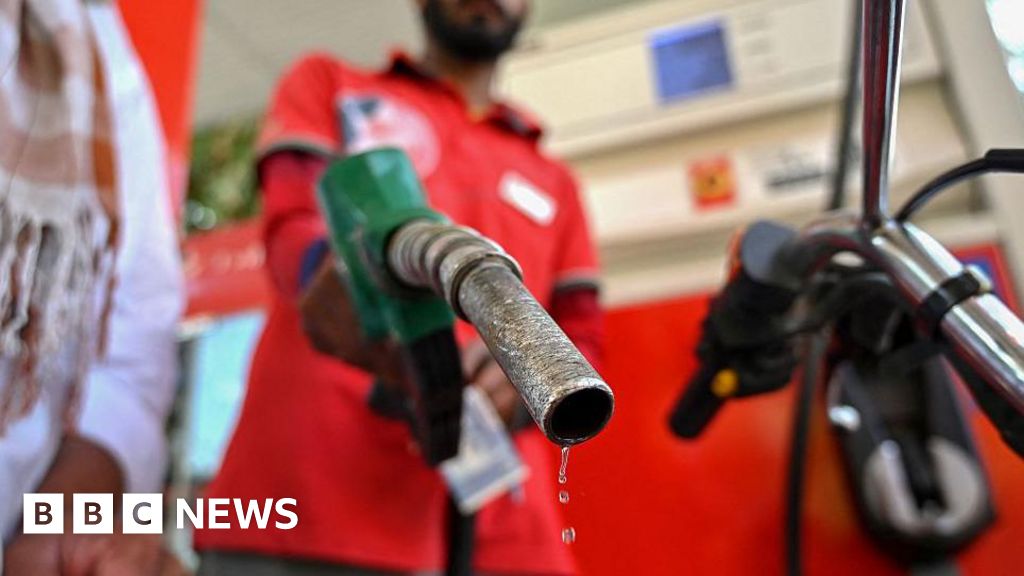
Experts have warned that if prices for oil and gas remain high due to the Middle East conflict, that could increase the cost of goods more broadly in the UK, which would slow the Bank of England's rate cuts.
"The conflict in the Middle East has led to market expectation of higher inflationary pressure causing rate cuts to be slowed or put on hold," Hollingworth said.
"That pushes up the cost for lenders when pricing their fixed rate mortgages, which can force rates higher."
Amanda Bryden, head of mortgages at Halifax, said the geopolitical uncertainty was appearing to influence the outlook for inflation, and how the Bank of England will react.
"Against that backdrop, markets are now anticipating a more gradual path for interest‑rate reductions," she said.
"If realised, the speed at which borrowing costs ease may be tempered."
Last month, the Bank of England held interest rates at 3.75% and at the time its governor, Andrew Bailey, told the BBC that there was likely to be "some further reduction" in rates later this year.
However, this has now been called into question by the impact of the Middle East conflict, and the worry that inflation could increase.
The National Institute of Economic and Social Research, an economic think tank, said earlier this week that if higher energy prices persist, it could force the Bank of England to push interest rates back up, above 4%.
The Bank of England will announce its latest interest rate decision on 19 March.
Karen Noye, mortgage expert at Quilter, said part of the change coming from lenders was also about capacity, as lower rates before the conflict had created a surge in applications.
"For borrowers, the landscape is more volatile than it appeared even a few days ago. Mortgage rates are likely to remain choppy until geopolitical risk settles and there is clearer evidence that inflation is not going to rise significantly again," she said.
Noye said people could take practical steps to secure their finances and save some money.
"Most lenders allow borrowers to secure a rate up to six months in advance, so locking something in early can provide valuable protection, with the option to reassess as the end of a fixed term approaches," she said.
"For those just outside the six-month window, some products offer completion deadlines that can provide even longer cover."
Adam French, head of consumer finance at Moneyfacts, said it was also worth noting that higher inflation for a prolonged period was also damaging for households.
"It may not be the news many prospective borrowers will want to hear, but the long-term damage caused by inflation is far worse than a delay to rate cuts. Inflation compounds quietly but relentlessly," he said.