.png)
 1 month ago
74
1 month ago
74
13 minutes ago
Kate WhannelPolitical reporter

 PA Media
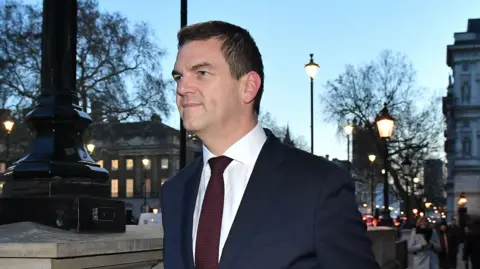
Sir Olly Robbins, the former top civil servant at the Foreign Office, has been giving evidence to MPs on the foreign affairs committee about his role in vetting Lord Mandelson to be the UK's ambassador to the US.
It comes after Sir Olly was effectively sacked last week after it emerged his department had granted the peer security clearance for the role in January 2025, despite concerns raised by vetting officials.
Lord Mandelson formally took up the role the following month, but was sacked seven months later over his ties to the late convicted sex offender Jeffrey Epstein.
Here are the key points from his evidence to the committee.
No 10 had a 'dismissive approach' to vetting
In a letter to the committee published as he was giving oral evidence, Sir Olly said that when he arrived in post at the Foreign Office on 20 January, Lord Mandelson's appointment had already been announced and agreed to by the US.
He also noted that Lord Mandelson had already been given access to the Foreign Office building as well as "highly classified briefing on a case-by-case basis".
He said these factors "resulted in a dismissive approach" to developed vetting, the process required to obtain security clearance, from Downing Street.
Following the evidence session, No 10 rejected Sir Olly's claims of a "dismissive attitude," telling reporters there was "clearly a difference between asking for updates in the appointment process" and being dismissive about vetting.
'Constant pressure' from Downing Street
Sir Olly said there was a "strong expectation" coming from Downing Street that Lord Mandelson "needed to be in post and in America as quickly as humanly possible".
He said his office had been "under constant pressure" over when the vetting process would be completed.
There was "never any interest, as far as I can recall, in whether, but only an interest in when," he added.
He later said that: "Whilst I think the department felt under pressure, we were proud of the fact we'd not bowed to that pressure."
Mandelson's case was 'borderline'
In his letter, the former civil servant said he had not seen the documentation from UK Security Vetting (UKSV), the government's in-house vetting unit, containing their vetting assessment of Lord Mandelson.
He said that instead, he was given an oral briefing, during which he was told the vetting agency considered Mandelson to be a "borderline case" and that they were "leaning towards recommending that clearance be denied".
He said UKSV acknowledged that the Foreign Office "may wish to grant clearance, with appropriate risk management".
Last Friday, the Cabinet Office published a template of UKSV's vetting form which includes three tick boxes - green, amber and red - that allows officials to give their view and recommend whether the appointment should be approved.
A separate email disclosed by the department said that the recommendation in Lord Mandelson's case had been that security clearance "should not be granted".
Sir Olly said he was never given that information, and he did "not recall the way in which the UKSV findings were presented to me as being that definitive".
He also pushed back on the idea that UKSV "fails" candidates - emphasising instead that officials provide an assessment for the Foreign Office to act on.
Concerns did not relate to Epstein
Sir Olly said the risks identified in Lord Mandelson's vetting report "did not relate to Jeffrey Epstein".
Despite questions from Labour MP Dame Emily Thornberry, who chairs the committee, Sir Olly declined to say if there was anything flagged during the vetting that had not already been made public.
Vetting process must be 'absolutely confidential'
On Monday, Sir Keir Starmer said he should have been informed about the vetting team's recommendation on Lord Mandelson at the time.
But Sir Olly defended his decision not to share this, saying the decision-making "within the box of the vetting process must remain absolutely confidential".
Dame Emily said he could have told others that he had cleared Lord Mandelson, but that there had been "difficulties".
Sir Olly replied: "If I started sharing that burden with others and saying 'this was a bit of a tricky one but I think we can manage' what I'm doing is I'm offloading that responsibility... the responsibility was ultimately on me."
Later in the hearing, he pointed to comments made by Foreign Office Minister Stephen Doughty last September, who told the Commons the vetting process was "rightly independent" of ministers, who are "not informed of any findings other than the final outcome".
Sir Olly said the Cabinet Office and Downing Street had, at the time, approved that description of the process.
Blocking Mandelson would have caused issues with US
Sir Olly said he would have advised the government to carry out Lord Mandelson's vetting before announcing the appointment.
He said former US President Joe Biden had agreed to the appointment towards the end of his term in office.
"I think if the nomination had changed after that point, the incoming administration may well have commented on it publicly and it would, yes, have caused quite an issue in the relationship," he added.
No 10 requested possible diplomat job for communications aide
Sir Olly said that in March 2025 he was asked by No 10 to "potentially" find an ambassadorial job for Matthew Doyle, who at the time was the PM's director of communications.
He said he felt "quite uncomfortable" about the request, as well as an instruction from Downing Street not to discuss the possible appointment with the then-Foreign Secretary David Lammy.
Responding to Sir Olly's evidence, Lord Doyle said he had "never sought" any role as an ambassador or a similar diplomatic posting, nor was he aware of "anyone speaking to the [Foreign Office] about such a role for me".
Matthew Doyle stepped down from the communications role in 2025 and was given a Labour peerage.
However, he was later suspended by the party after it emerged he had campaigned on behalf of former Labour councillor Sean Morton, who had been charged with possessing indecent images of children.
The peer has previously apologised for backing Morton before the case against him had concluded, saying he believed his assertions of innocence before Morton later admitted the offending.