.png)
 1 month ago
35
1 month ago
35
Orla Guerin,Senior international correspondent, northern Iraqand Jaroslav Lukiv

 Matthew Goddard / BBC
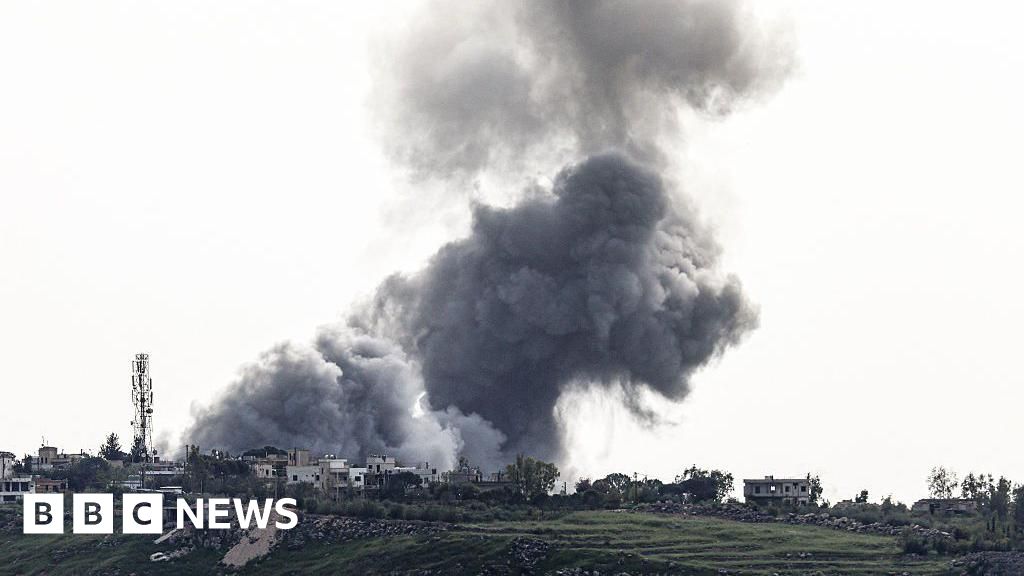
Iran's military has said it has targeted the headquarters of Iranian Kurdish forces in northern Iraq, stepping up strikes on Kurdish regions in both Iran and Iraq.
The military said it attacked "Kurdish groups opposed to the [Islamic] revolution in Iraqi Kurdistan with three missiles". One person was killed and three injured in the strikes on Tuesday and Wednesday, the BBC has confirmed.
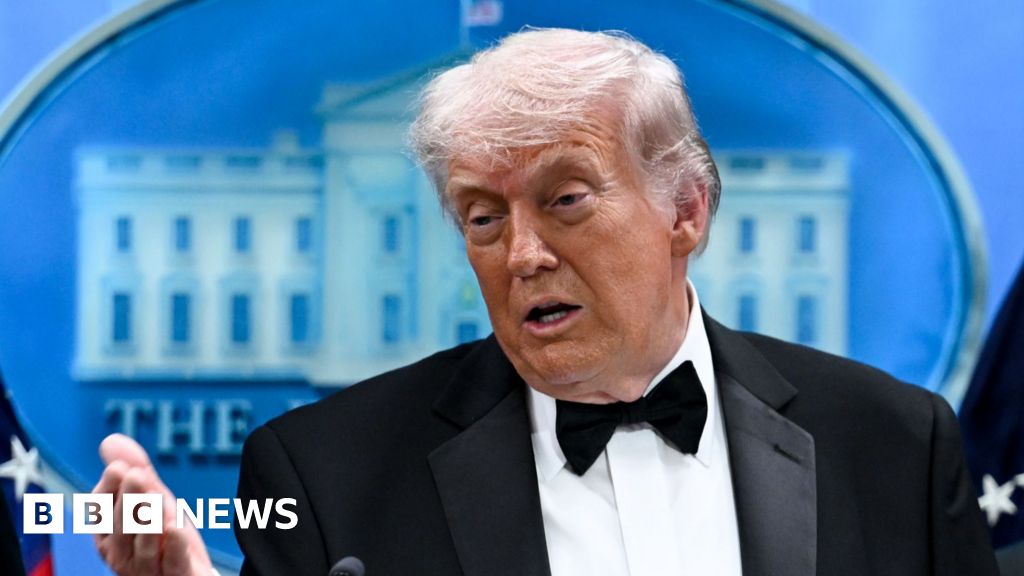
Tehran is intensifying its attacks on Iranian Kurdish groups in Iraq amid reports that US President Donald Trump wants them to join the fight against Iran, as US and Israeli strikes continue.
Kurdish Iranian opposition parties in Iraq have denied reports that some of their forces have crossed into Iran.
"This is not true. Do not believe it," said Hanna Hussein Yazdan Pana of the Kurdistan Freedom Party (PAK). "Not a single Peshmerga [fighter] has moved. No-one moves alone."
She said six Kurdish opposition groups - which recently formed a coalition - were co-ordinating their plans but needed the Americans to pave the way for a move. She told the BBC nothing would happen this week.
"It's not about the hours or days. We cannot move if the air above us is not cleaned. We need to see weapons depots [of Iran's security forces] being destroyed. Otherwise, it would be suicidal."
Pana also called for a no-fly zone to provide protection for Kurdish forces.
"The regime is very brutal," she said, "and the most advanced weapon we have is a Kalashnikov."
There has been growing speculation that Trump wants Kurdish forces to join the war, to provide boots on the ground.
The White House has denied a report that the president is considering arming them.
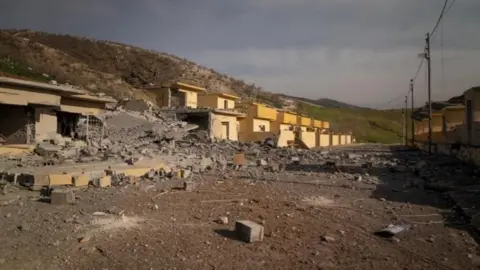
On Wednesday, the BBC visited the scene of the Iranian attack on attacks on two separate Kurdish opposition groups.
One base was hit by a ballistic missile at about 11:00 local time (08:00 GMT) on Wednesday, injuring four Kurdish Peshmerga fighters. One died later from his injuries.
One building at the base had been crushed, with rubble and twisted metal strewn over a wide area. There was also a hole in the ground, gouged out by a missile.
At another base - belonging to the Democratic Party of Iranian Kurdistan (KDPI) - the BBC saw the aftermath of a double drone strike on Tuesday, which was said to have injured one civilian.
A senior political leader of the KDPI told the BBC he believed that the Kurds would be fighting in Iran soon - but did not give an exact timeline.
He would not comment on reports that Trump has spoken to the KDPI leader in recent days.
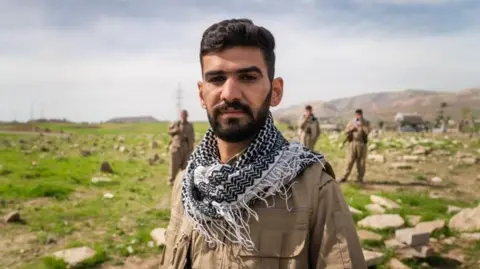
A fighter called Hassan, 25, armed with an AK-47, said he was eager to go to Iran to fight for freedom.
"We are closer than ever," he said.
 Matthew Goddard / BBC
KDPI fighter Hassan told the BBC he was eager to go to Iran to fight for freedom and for his nation
Sir Simon Gass, a former British ambassador in Tehran, described Iran as "a patchwork of different ethnicities" with a Persian majority and significant minorities of Kurds, Balochs, Arabs and Azeris.
"If the United States and Israel find a way to ignite some of those groups into armed insurrection against the regime, it will be another problem which the regime needs to manage. It will be extremely difficult," he told BBC Radio 4's Today programme.
Gass said Iranian Kurdish opposition fighters were "relatively lightly armed" and "under normal circumstances you would not expect them to be able to stand up to the strength of the Iranian armed forces".
"However, if they are supported by special forces from other countries who can call in air support - that could be a different matter," the former diplomat added.
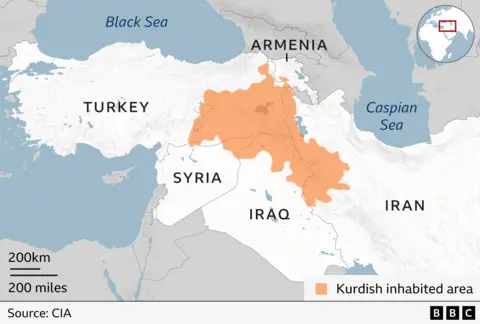
More than 30 million Kurds inhabit a mountainous region straddling the borders of Turkey, Iraq, Syria, Iran and Armenia. They make up the fourth-largest ethnic group in the Middle East, but they have never obtained a permanent nation state.
About 10% of Shia Muslim-majority Iran's 91 million population are Kurds, who are mainly Sunni Muslims and live mostly in the country's north-western regions.
Amnesty International has said that Iranian Kurds have "long suffered deep-rooted discrimination" and that "their social, political and cultural rights have been repressed, as have their economic aspirations".