.png)
 1 month ago
49
1 month ago
49
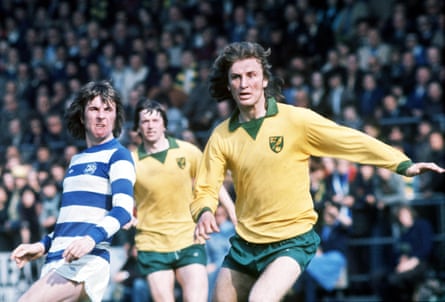
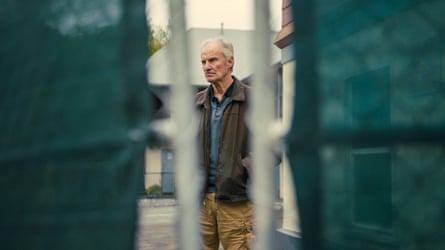
“I hated it,” Tony Powell says on a spring afternoon in Los Angeles of his past as a secretly gay professional footballer for Bournemouth and Norwich in the 1970s. Powell is 78 and now lives in a very different world compared with when he was a husband, the father of two young daughters and Norwich’s player of the season in 1979.
Powell is not a demonstrative man and, having been forced to bury his true self for decades, does not make a fuss about the pain he endured. But there is an ache in his English accent, which remains intact after 45 years in America. “I just wanted to be who I am, but at that time it was not a good idea to come out.”
Powell and I are joined by Robbie Rogers, the former USA international who played briefly for Leeds and Stevenage in 2012‑13. Rogers is 40 years younger than Powell but, as a gay man and former professional footballer, he understands such hurt with bruising clarity. Thirteen years ago this month, Rogers and I conducted his first newspaper interview after he had come out in a social media post a few weeks earlier.
Rogers looks at Powell and says: “I kept it completely secret. I was so afraid it would get out and I’d have no control and people would be whispering in the locker room. I wanted to come out and tell a really intimate secret to my family and the people I loved first and not for it to be in the news.”
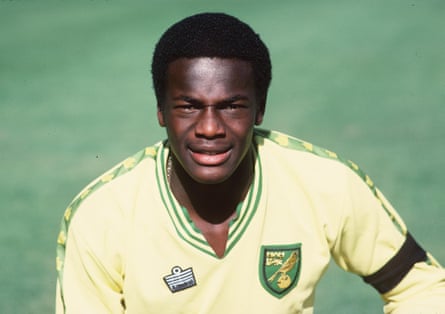
Powell and Rogers belong to a very small group of male footballers who have played professionally in England and had the courage to come out as gay. Justin Fashanu was the first to do so, in 1990 and he was one of Powell’s teammates at Norwich between 1978 and 1981. Powell, a central defender, played 275 games for Norwich while Fashanu made 103 appearances for the club and scored 40 goals. He says Fashanu was “a very good footballer and a really nice guy”.

Did Powell know then that Fashanu was gay? “Yes, but he didn’t want to talk about it. He thought if he came out as gay his career would be over. So he was scared.” Could he talk privately with him? “I spoke with him a few times. He was a super guy, really friendly and good to be around. It was so sad he ended up like he did.”
Fashanu played 11 times for England Under-21s, but his international aspirations were blunted by swirling rumours. In August 1981, when Powell moved to America, Fashanu had just become the first million-pound black footballer after Brian Clough signed him for Nottingham Forest. Fashanu played 32 league games for Forest, but scored only three goals and Clough castigated him as “a bloody poof”.
He played for multiple clubs in many countries including England, the US, Canada and Scotland, but Fashanu felt ashamed of his sexuality. He came out to the Sun in October 1990 and the reaction scarred him. His brother John, a member of the Wimbledon side who won the FA Cup in 1988, called him an “outcast”. Justin never recovered from the abuse he experienced and, after retiring in 1997, he took his own life in May 1998.
Rogers, as the second man to have come out in England while playing professional football, underlines the links between Powell, Fashanu and himself. Turning to Powell he says: “Tony, I don’t know if I ever told you, but I was at Leeds when I first learned about Justin. On the telly, next to a picture of Justin, there was a question: ‘Will there ever be another gay footballer?’
“The other players and I were having lunch and they started saying things that scared me – like how disgusting it would be to have a gay man showering with us. That told me this is not a world where I can be myself and still compete.”
Did Rogers say anything to his teammates? “I kept quiet. Although I had some close friends in the UK I didn’t have anyone in football to share that secret. I was a little lonely.”
Did Powell feel that same loneliness at Norwich? “At times, yes,” he says. “It felt like there was no one you could talk to. It was difficult.”
Rogers says that, at Leeds: “I read about Justin. He was incredibly inspiring, but also really tragic. I didn’t want to end up like him. I wanted to have a full life where I wasn’t living in secrecy. Tony, he played with you and so the three of us have a really interesting connection as you and I lived two blocks from each other.”
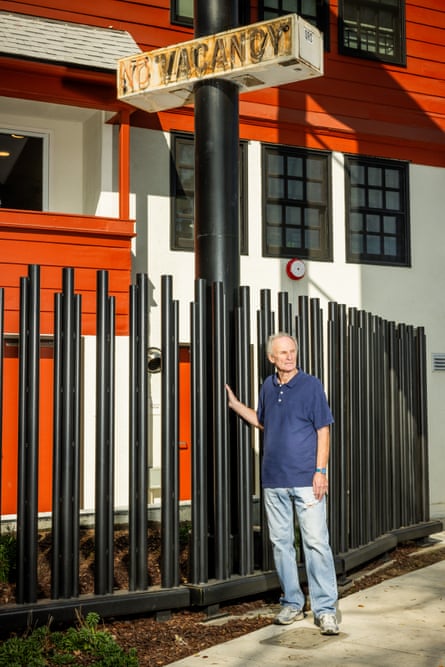
After Rogers came out, feeling proud and loved by his family, he returned to the US and played for LA Galaxy. Most days he walked past the Holloway Motel on Santa Monica Boulevard in West Hollywood – without realising that another gay footballer lived in the dilapidated motel. Rogers has now helped to produce a moving and important feature-length documentary about Powell – The Last Guest at the Holloway Motel.
Powell took a different journey, physically and emotionally, to Rogers. He travelled to the US in the early 1980s to continue his career. He came out in a new country, abandoned his family in England and cut ties with them so they had no idea where he was for 35 years. He took that drastic decision because he was convinced his family would shun him if they learned the truth about his sexuality.
“When I came to the US it was like setting myself free in lots of ways,” he says. But he still hid his sexuality while playing for the San Jose Earthquakes and Seattle Sounders. “It’s just not accepted. You can’t be a professional soccer player and be gay.” How does that grim reality make him feel today? “It’s sad that someone can’t be themselves.”
Asked why he ended up living in West Hollywood, he says: “Because it was gay. People go to West Hollywood because they feel safe. They move from places where they’re getting harassed to somewhere they can live freely.” Powell spent 25 years at the Holloway Motel as its manager and then as its last occupant before it closed and offered temporary housing for homeless people last September. “I miss it,” Powell says, wistfully. “It was a fun place.”
Ramiel Petros, the young film-maker who co-directed the documentary with Nick Freeman, tells me how they met Powell: “I used to go walking when I first moved here and whenever I passed the motel I’d see this stranger on a balcony of what seemed an abandoned building. He would sit there, 12 hours a day, glass of wine in hand, laptop in front of him.
“He always looked serious and grumpy and I’d think: ‘Maybe he’s writing a novel or fighting the city to save this beautiful gothic motel.’ But he was just watching Arsenal or looking for the Norwich score.”
Petros and Rogers laugh, but Powell remains impassive. The director becomes more serious: “Nick and I were thinking about a new project and I said: ‘This man seems interesting. Why don’t we talk to him?’ So we’re on the street shouting: ‘Hey. Who are you?’ After a while he said: ‘I was a professional soccer player when I was younger. Look it up.’ We were like: ‘OK, you crazy old man, I played soccer too.’
“Then we searched Tony Powell on our computers and, yes, he was a soccer player. We find photographs and, woah, there’s this man with beautiful long hair. It was initially this short film, a portrait of a motel manager running an abandoned building as he’s being evicted and then it became something else. Tony didn’t immediately say: ‘I’m gay,’ but we’re in West Hollywood and I kind of knew.”
Rogers was one of the producers Petros and Freeman approached. “I don’t know any gay footballers,” Rogers says, “so part of this was wanting to learn about Tony and being able to connect with someone I could relate to.”
The film becomes even more affecting when, with help from the directors, Powell reunites with his two sisters and brother in England. Those emotional scenes are captured on camera, but, understandably, Powell’s daughters, who had been so wounded by his disappearance, chose not to be filmed. “It was good,” Powell says of reconciling with his daughters. “They were accepting and our love for one another was there even after all they’d gone through.”
They talk online and his daughters visited him in San Diego. As the documentary shows, it has been even easier to reconnect with his sisters, Denise and Jane. “I was quite surprised how quickly we connected,” Powell says, “and it was special to see them because when you’re apart for that long you don’t even know if they are still alive.”
Have they spoken in detail about why he disappeared? “Not really. The past is the past.”
Listening to our exchange, Rogers says: “One of the greatest things about this documentary, aside from making a beautiful film, is that Tony now has a real relationship with his daughters and sisters. We’re so proud of that.”
Petros turns to Powell and asks a simple question: “Tony, are you proud of the film?” “Absolutely,” Powell replies.
Watching old Match of the Day footage, featuring Powell, Rogers says: “I was really impressed with his technical ability and the defensive side of his game, making hard tackles. It’s more common in the modern game to have guys that are very technical and defend really well. He had that and, watching his interviews, he was so composed and looked a natural leader.”
Former Norwich teammates, such as Mick McGuire, praise Powell in the documentary as Mr Dependable – who was “as hard as nails” with “courage and commitment”. They also remember him being “gentle” away from football.
That tenderness was apparent years later when he lost David Castro, the love of his life, whom Powell says was “a very special guy”. David contracted HIV which developed into Aids and Powell cared for him at home, rather than allowing him to die in a hospice. Rogers says: “There are guys I played with that take care of everyone. I got that sense with Tony, watching him at Norwich and the way he speaks about Justin Fashanu. So hearing his love story with David, and how he cared for him, was really emotional.”
David was apparently a great dancer, but a deadpan Powell says: “I had a left and a right foot playing football. Dancing, I had two left feet.”
But his empathy meant he helped Erica, a trans woman who was his assistant manager at the motel, to accept herself. Powell says that, before Erica’s transition, “she thought I was going to turn on her like everybody else. But we’re really good friends and I told her she’s still the person I loved being around. She had the courage to come out.”
It still feels almost impossible for a first gay footballer to come out in the Premier League. Rogers says: “I love football so much I wake up early in the morning to watch Arsenal, but my husband, Greg, and I have been saying for years: ‘When will someone else come out?’
“One of the big reasons I came out in public was that I wanted to try and change football so young gay men could be themselves. But I’ve heard this from different people over the years – everyone is too afraid. I understand so I’m not saying anyone is cowardly. But it’s been a little sad for me that other footballers haven’t been able to come out.”
Does Powell have any significant hope that a gay footballer will emerge in English football in the next few years? “Not really. It’s too difficult to come out and get accepted, especially in the Premier League. Nothing’s really changed. It’s still a homophobic league.
“I would love to have been the first person to really come out as gay, and kept playing, but I don’t know what acceptance I’d have received from the league and my teammates. I don’t think that’s possible. But we can only hope things change for gay players in the future.”
The Last Guest at the Holloway Motel is screened at the NFT in London as part of the BFI Flare film festival on 22 and 24 March.