.png)
 1 month ago
35
1 month ago
35
Nicky CampbellDon’t Say A Word presenter

 BBC
BBC
Certainty is a curse of our age. It is a pandemic. And I've never been more certain about anything.
I've been presenting television debates and radio phone-ins over five decades, stumbling from one epoch to the next. Almost every day, I hear the thoughts and worries of ordinary British people, an experience that's given me a rare insight into our national psyche.
When I look back at the start of my career as a BBC presenter, it seems like a different century (the fact that it actually was is highly convenient for the metaphor).
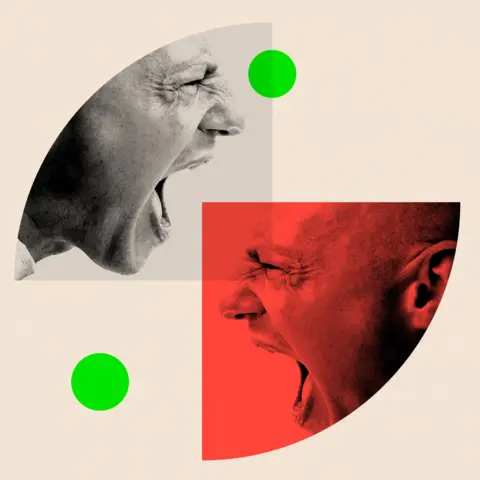
The tone has always been feisty and combative, but in recent years it seems to me like opinion has ossified, weaponised, and tribalised. There's a growing fear (among political scientists and others) that in our modern, social media-driven world, every issue is reduced to a zero-sum game and shoved into a political tick box. I feel that I'm walking on eggshells. Causes and positions are embraced uncritically. Nuance and understanding are viewed as signs of weakness. Either you're with us, or you are history.
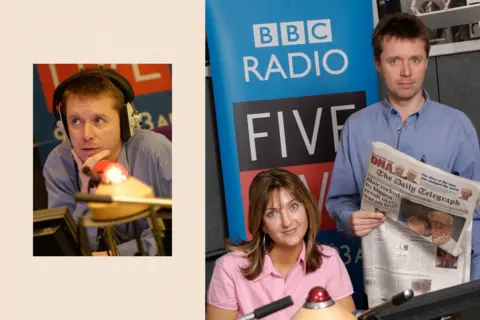
Nicky Campbell earlier in his career as a 5 Live presenter
I've been exploring the psychology of the cult, navigating some of the most divisive issues, venturing into no-man's land in a high-viz jacket.
Until the 1960s, most broadcasting was dry and deferential. Men with clipped accents told listeners the news from on high; there was certainly little back and forth between presenter and listener.
But in 1968, BBC Nottingham launched what is believed to be Britain's first radio phone-in show. What Are They Up to Now? allowed members of the public to call in and complain about the council, or argue about pop music. It opened a window into the minds of ordinary people.
Since 1997, I've had extraordinary experience after extraordinary experience of hosting "the Nations Phone-in" on Radio 5Live. I've also presented numerous TV debates and documentaries over the years, with what some of my professional colleagues somewhat curiously call "real people".
Over those years, I have had thousands of voices in my head. The callers opine on anything from pot holes to Pol Pot. Don't get me wrong, the tone of these discussions has always been quarrelsome and combative; more Lemme than Liszt.
But to me at least, recently it's become a wailing cacophony of polarisation and mutual demonisation. Simplicity is elevated, subtlety is trashed, and complexity decried.
Brexit was certainly an inflection point. On 5Live we had a beeline to the decision makers (in other words, the electorate). Some days, after two hours of fire and fury, I'd feel like ringing Gwyneth Paltrow and getting the name of a good wellness retreat. It was over that time I realised that whatever the person on the other side of the debate said, it was no more than white noise. And it could get bitterly personal and utterly vile very quickly. "People like you" was a phrase I heard a lot, from both sides.
And don't just take my word for it. Over the last decade or so, political scientists in most high-income countries have recorded a rise in what they call "affective polarisation" - which is where people don't just disagree on policy, but start to strongly disapprove of people in the opposing camp.
"People are increasingly disliking each other," says Prof Sander van der Linden, who researches social psychology at the University of Cambridge. "People are less willing to work with people from the other side, to engage in romantic relationships with people from the other side, and to even cohabitate with people from the other side.
"That sort of affective polarisation has seen a sharp increase."
 Getty Images
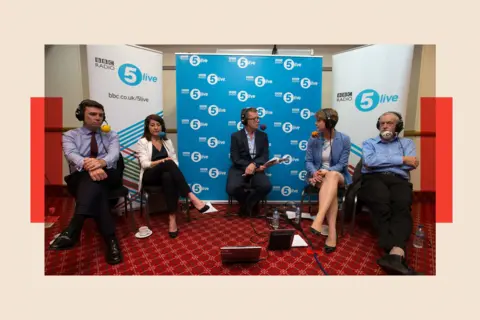
Nicky Campbell speaking to the Labour Party leadership contenders in 2015
And there's another phenomenon that has been termed "complexity phobia": the aversion to recognising incontrovertible evidence and facts if they challenge a more comfortable and comforting narrative.
We don't debate evolution anymore in the mainstream. Many years ago, in a Darwin adjacent debate about home schooling (I think), one brilliant scientist gently explained the natural process over billions of years. But I could see his interlocutor was completely ignoring him as he'd thought of his own killer point and couldn't wait to slam-dunk it. "Explain this then" he said, "and you won't be able to. What did we do before the poo hole?". It was a moment I won't forget.
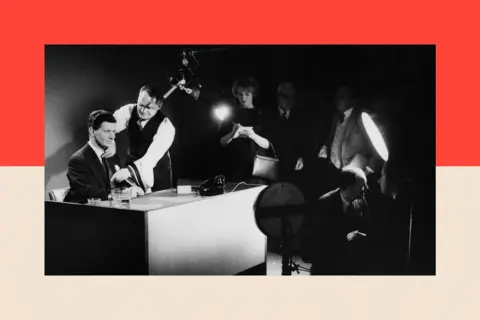
Of course, elements of this fractiousness have always existed. For TV producers, it's long been tempting to invite two self-righteous zealots into a studio to bellow at each other. In the business it's called a "good row".
Often it's simply a pantomime to prick up the ears and the ratings; a bit of lunge and repose (or lunge and head-butt). And sometimes there has been a higher purpose to these arguments: occasionally, from the white-hot furnace of debate, truth can emerge.
 Getty Images
Nicky Campbell: "For TV producers, it's long been tempting to invite two self-righteous zealots into a studio to bellow at each other"
I remember and now cherish the spine-tingling moments in debates where someone changed their mind before my very eyes. Once I was hosting a debate on sperm donation, and whether the anonymity of the donor should be preserved. I have an interest in the subject; I was adopted myself, and I am sympathetic to a child's right to know their origins. It's notable that every children's advocacy agency argues for it.
One participant explained how they had acquired some sperm from an anonymous internet donor abroad, with untraceable lineage. Their view was largely: "what does it matter? It's our child now".
But as the arguments played out, I saw her position softening in real time. She absorbed the opposing arguments and thought her own reasoning through. She seemed to decide that her priorities had been ever so slightly misplaced. The look of uncomfortable epiphany was powerful and deeply moving. She listened. She understood. And eventually, she changed her mind.
It still happens. The crucial point, though, is that these flashes of insight happen far less than they used to.
What's driving this increased stridency among the public?
Social media certainly seems to be playing its part. The science now suggests that it makes people more polarised and angry, says Linden.
He and his colleagues used a computer model in 2020 to analyse more than two million posts by American politicians and major media outlets that had been published on Facebook and on X (then known as Twitter). They found that negative language did a good job of riling up readers online, and by far the strongest predictor of engagement were words that demonised some sort of "out-group".
Even when users try to escape this vortex of pessimism, they'll struggle. In another study in 2023, scientists used an eye-tracking device and showed them social media content. On average, their eyes dwelt on their screen for longer when the language was angry and emotive.
 Condé Nast via Getty Images
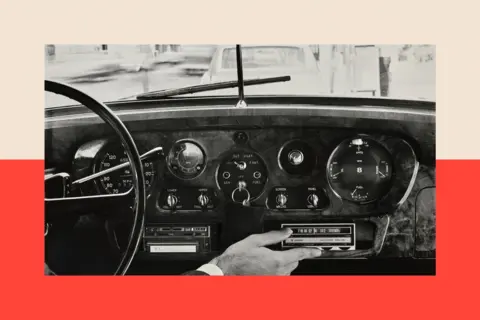
Professor Linden believes traditional media, like TV and radio have long had a "negativity bias"
These apps seem to make people more angry and divided - and in turn, more certain about their own opinions.
My trade isn't totally blame-free, of course. Linden points out that traditional media - TV, radio and the like - has long had a "negativity bias". But apps like Facebook and X have amplified it hugely. "The balance is off much more on social media," he says.
The social media factor seems compelling to me. We see everything through a new lens; change now happens at the speed of light. On every social site there are the shock-mongers, keyboard warriors, outrage archaeologists, click-baiters, and moral highlanders. We are sucked into our own ideological comfort zones and when we stray outside it's a shock to the system, and often our sense of self.
The distorting effect of social media was most apparent to me when I presented The Big Questions, the BBC's Sunday morning debate show. Often we debated two very different topics on the same day - meaning someone who'd turned up to talk about politics might also be able to opine on religion.
One morning we were discussing two topics: the influence of big money on football, and Islamist extremism.
During the football debate, someone in the audience argued that too many clubs moved to fancy new stadia, away from their traditional homes. Then, out of nowhere, we heard a contribution from a young man who was in the room to take part in the Islamist debate. He was from an organisation that is now proscribed (and their leader is now in prison). "We could use the old stadiums for public punishments and executions?," he suggested.
Audience members screamed. He looked so crestfallen that I almost felt sorry for him. I realised he'd only ever said stuff like that in his own echo chamber. He was playing, as they say in vaudeville, to a different "house". Thanks to social media, to him his ideas seemed totally mainstream.
But I also wonder if it's overly simplistic to give full blame to the tech bros. To me, it seems more accurate to say that it's a coalescence - or maybe a collision - of social media with a troubled and hopelessly confusing world. There is so much to shout and angst about - or might I say howl at the moon about. The moon is right there on your phone now and that can be a fleeting balm for our troubled souls.
No wonder we seek refuge in certainty. I don't blame us.
Samuel Pepys and culture wars
There's another place I see this undue certainty cropping up: the fraught debate over whether we can continue listening to the music, or watching the films, of artists who have done bad things.
Philip Larkin, Oscar Wilde, Charles Dickens and sundry others have all been criticised for their personal conduct. Some argue that we shouldn't even read the books of these men.
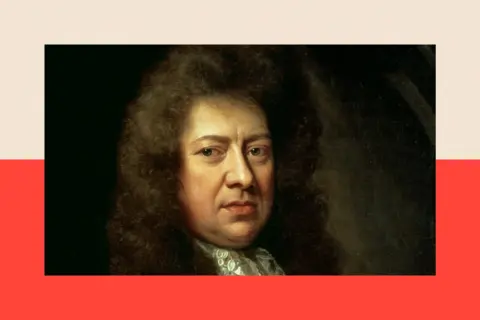
The case of Samuel Pepys seems illustrative. The diarist is loved by many for his colourful observations of Restoration England. But others condemn his treatment of women, described vividly in his own diaries (Pepys writes about groping a female servant and forcing himself on an acquaintance's wife).
Just this week, Hinchingbrooke School in Cambridgeshire - where Pepys was a pupil - renamed a house that was named after him.
 Art Images via Getty Images
Samuel Pepys is loved by some for his writing but is condemned by others for his treatment of women
In an email to parents, the school wrote: "While Pepys is an important historical figure… recent research on his personal behaviour… includes actions that were harmful, abusive and exploitative, especially in his relations with women." The school replaced Pepys's name with the Victorian philanthropist, Lady Olivia Bernard Sparrow. Let's trawl her social media then.
The decision prompted a backlash, including from the author Andrew Doyle, who wrote in the Washington Post that the "shaming of the dead is one of the most asinine pastimes of today's culture warriors".
What strikes me most about these "art versus artist" debates is the degree of certainty visible on all sides. In truth, it is devilishly complicated and all beings blessed with reason should be able to see that there are always strong counter arguments. But no - everybody on all fronts seems to have the answer. We all think we know best.
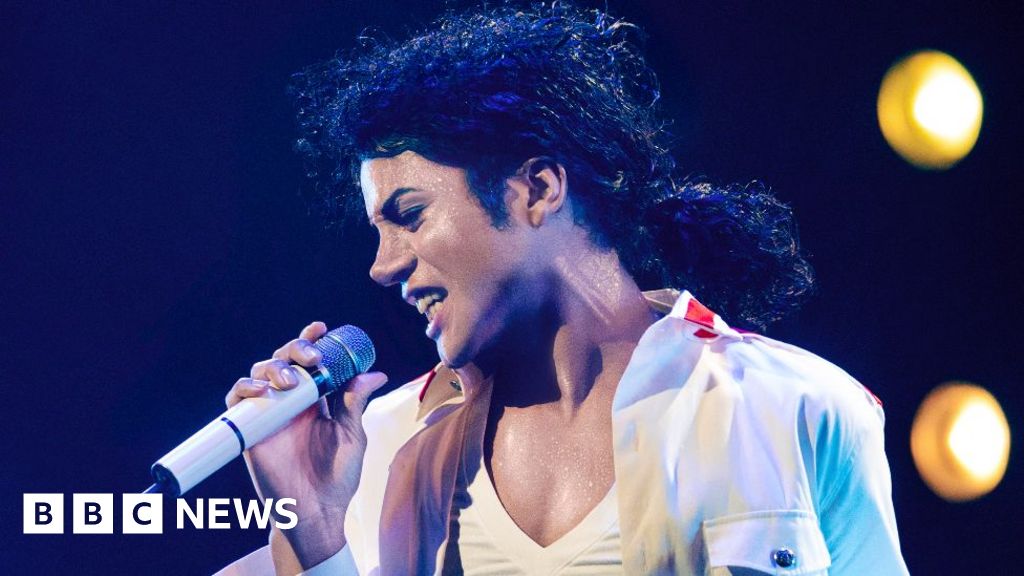
Michael Jackson is a prime example of this conundrumFor his millions of devotees their love for him is rivalled in intensity only by their seething loathing for his critics. . That's their right.
In 2019, the widely-discussed documentary Leaving Neverland published detailed allegations from two men who say that Jackson abused them as children. When he was alive, Jackson denied similar allegations.
I feel extremely uncomfortable about Jackson. Given what my contemporaries and I experienced at our school in the seventies - a matter of public record - I am perfectly entitled to believe his accusers as a default. It's visceral, I'm afraid. I'm entitled to be wrong and they are entitled to hold me in contempt for thinking the worst.
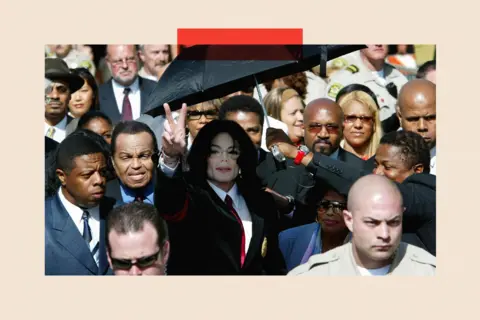 Getty Images
In 2019, a documentary detailed allegations from two men who say that Michael Jackson abused them as children
But agreeing to disagree is, I'm afraid to say, so last century.
Putting all the allegations aside - as well as the multi million pound pay-off, non-disclosure agreement, and much delayed forthcoming trials - Jackson was a man who admitted to sharing his bed with prepubescent boys. Can you imagine that now, with contemporary child protection sensibilities. Have we become poisonously cynical or properly sceptical?
And Jackson was a giant. How would a lesser talent, under a similar shadow, be regarded?
But even with a figure as arguably monstrous as Jackson, there are complications.
Let me explain. My best friend Allan Robb, no longer with us, was a great radio journalist who never saw 50. At university we'd roar through the Aberdeenshire countryside on his bike, with not a care in the world. We always imagined Michael Jackson's "One Day in Your Life" as our soundtrack. He loved that song, and I love the fact that he loved it. I always will and nothing will ever change that. And do you know what? That's why I occasionally still listen to it. It's transcendent, yes, but it's complicated.
Hypocrite? Perhaps. But aren't we all.
Now that is something about which I am certain.
You can listen to Don't Say A Word here.
Additional reporting: Luke Mintz.
Top image credit: Getty Images

BBC InDepth is the home on the website and app for the best analysis, with fresh perspectives that challenge assumptions and deep reporting on the biggest issues of the day. Emma Barnett and John Simpson bring their pick of the most thought-provoking deep reads and analysis, every Saturday. Sign up for the newsletter here