.png)
 1 month ago
42
1 month ago
42
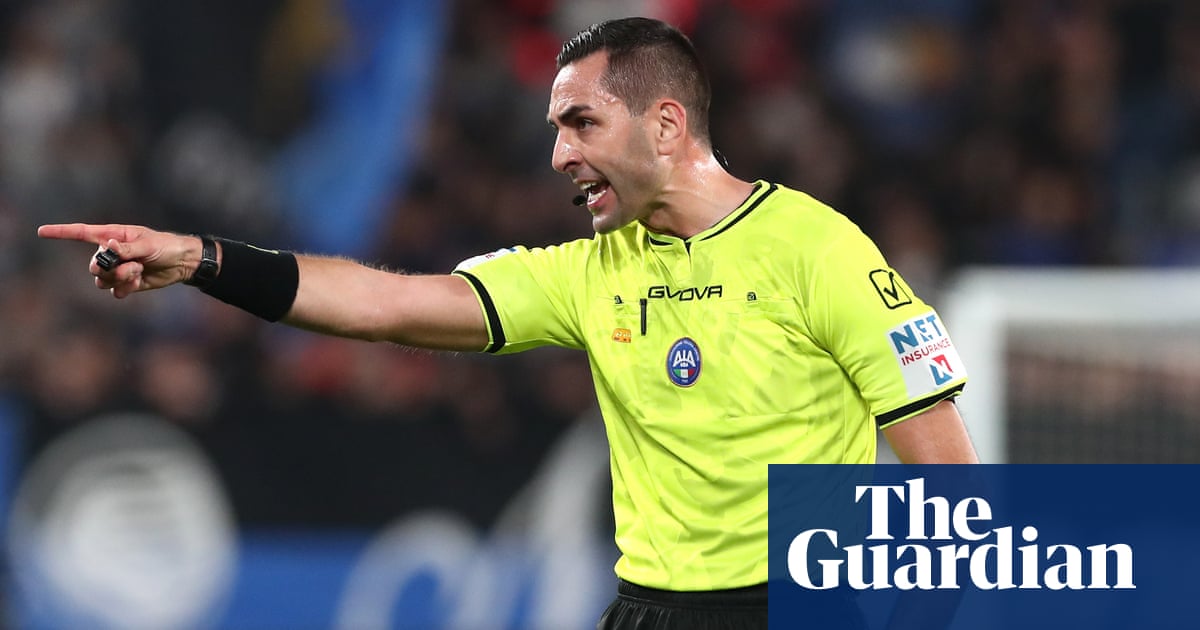
Football’s lawmaking authority, the Ifab, is to conduct a two-year review of the video assistant referee to ensure the technology is being used “to its best”. The announcement on Saturday came alongside a flurry of enhancements to the rulebook before the World Cup, including expanding the use of VAR into determining corner kicks.
Another proposal could mean punishments for players obscuring their mouths being fast-tracked for implementation at this summer’s tournament, after the alleged racist abuse of Vinícius Júnior by Benfica’s Gianluca Prestianni.
The VAR review was confirmed by the technical director of Ifab, David Elleray, on the 10th anniversary of the decision to first trial video technology. “We have agreed today that after 10 years we should be reviewing VAR to see where we want to go with it in the future,” Elleray said.
“There is a very interesting debate over what direction VAR should go in because within football there are two contrasting philosophies: some that want as far as possible perfect decision making … and those who say we have to accept that refereeing errors are part of the game.”
Before the outcome of any review, Ifab confirmed that VAR’s powers are to be extended into three new areas. The first will give official permission to check and review any red card decision that comes from a “clearly incorrect second yellow card”. Second, they will be able to intervene when the referee punishes the wrong team for an offence.
Finally VAR will be able to review a “clearly incorrectly awarded corner kick”, albeit only under the condition that the review “can be completed immediately and without delaying the restart.”
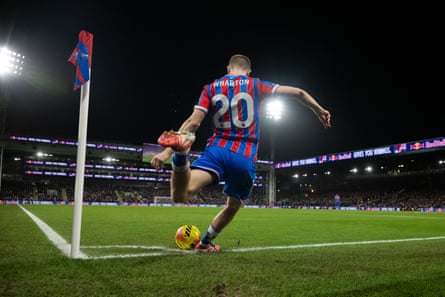
All of these developments are to be in place by June and it is expected that Ifab will confirm new disciplinary measures related to discriminatory behaviour too. There is to be a fast-tracked consultation over incidents where players “cover their mouth when confronting opponents during matches” or “unilaterally the field of play as an act of protest” as in the case of the Senegal national side during this year’s Afcon final. Both actions are likely to be punished with a yellow card.
The first “semi-live” trial of VAR was conducted in 2016 during a men’s international friendly between France and Italy. A decade later video technology is now embedded in the top echelons of the game but has driven widespread dissatisfaction due to delays in decision making and matches being determined by marginal outcomes.
The English FA’s chief executive, Mark Bullingham, said it was key that rulemakers continued to innovate in their application of VAR. “There is a review going on looking at how we use VAR to its best,” he said. “If you look at the innovations that Fifa have brought through, particularly in semi-autonomous offside, I think they’re fantastic.
“The speed with which decisions are made, and the accuracy, takes a big amount of frustration away from fans. The other interesting area is looking at what can we learn from other trials being done? The Football Video Support system gives the coach a challenge system. Are there elements of that we should consider adopting for the future? Because that reduces the amount of times when there is a VAR intervention and effectively puts the emphasis on the coach.”
At the AGM in his role as chair of the Fifa referee’s committee, Pierluigi Collina encapsulated the first decade of VAR with a metaphor. “In Italy we are used to saying that, in every wonderful marriage, there is a crisis after seven years,” he said. “So it might be possible that people fell in love with the VAR and then after some years, as with your wife, you have a small crisis.”

In addition to the extension of VAR protocols, the Ifab brought in new measures to tackle time-wasting and the disruption of tempo in matches. The successful introduction of the eight-second rule for goalkeepers has encouraged Ifab to go further on efforts to stop players slowing the game.
Referees will be given the power to start a five-second countdown if they feel players are taking too long over throw-ins and dead-ball goal kicks, with the throw-in reversed or a corner kick the sanction for delaying. Substitutions must be completed in no more than 10 seconds, otherwise the substitute must stay off for at least one minute.