.png)
 5 hours ago
3
5 hours ago
3
3 hours ago
Jonny HumphriesNorth West

 Jonny Humphries/BBC
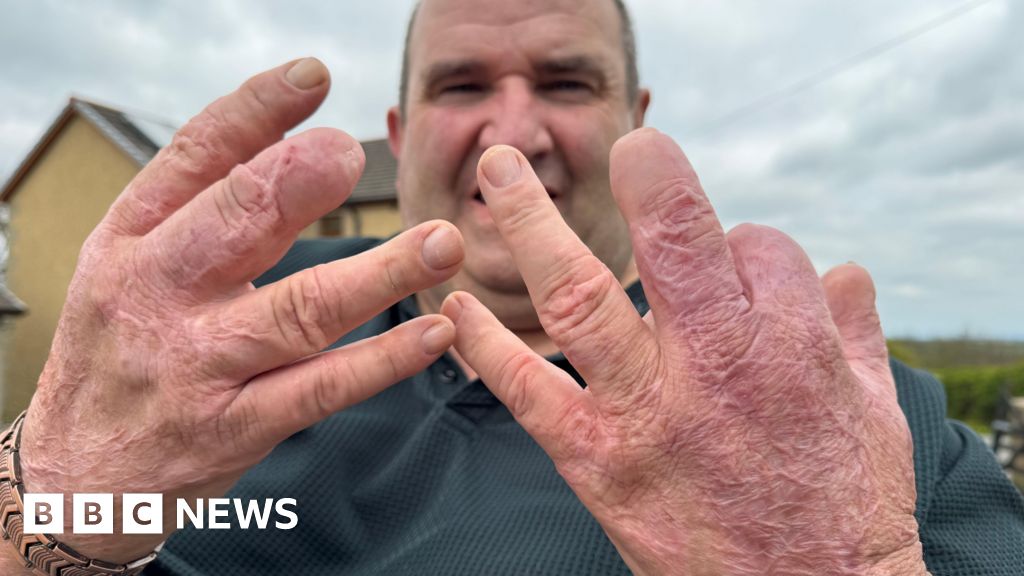
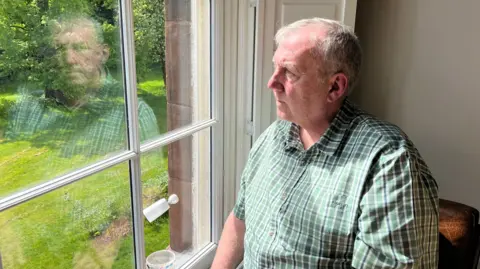
Alan Jones, 59, said losing his job had been "like a death in the family"
A disabled man who was wrongly sacked after being spied upon by his bosses said he felt "justice had been done" after his former employer agreed to pay him £329,000 in damages and lost earnings.
Alan Jones, now 59, had been forced to go off sick from his team leader role at St Helens glass-making giant Pilkington UK Ltd after developing a chronic and painful condition linked to the side-effects of earlier cancer treatment.
In October 2019 he was told the company suspected he had been working while on sick leave and had paid a surveillance firm to watch him.
A spokesperson for Pilkington UK Ltd said it had conducted an "in-depth review" to ensure the "same mistakes are not repeated".
"We recognise that we fell short with Mr Jones and we wish him the best for the future," it added.
Jones, who became the fifth generation of men in his family to go into the glass-making industry, said he had felt a sense of "betrayal" from the company he had served since 1983 when he joined them as an apprentice after leaving school.
"I'd been loyal to the company," he told the BBC. "Using their words, I had an unblemished record.
"I was somebody who showed commitment and loyalty and all that was thrown out the window, and yeah, that was disappointing."
 Jonny Humphries/BBC
Alan Jones said he had been sacked on a "suspicion" after being trailed by a surveillance firm
When he was in his early 50s, Jones said he had noticed unusual levels of fatigue while carrying out simple tasks.
He also developed debilitating pain and weakness in his shoulder, which made it increasingly difficult for him to do manual work.
The diagnosis was radiation-induced neuropathy, an incurable condition caused by the radiotherapy Jones had received for Hodgkin's lymphoma when he was aged just 21.
He was told by doctors he would never be capable of manual work again.
"You don't expect something like that to come along and then it just changed all my outlook on life, you know? Those money worries, what am I gonna do? How are we gonna survive?"
Despite being on sick leave and finding his mental health suffering, Jones expected to be able to get his pain under control and eventually be able to return and work in a role involving light duties.
 Reuters
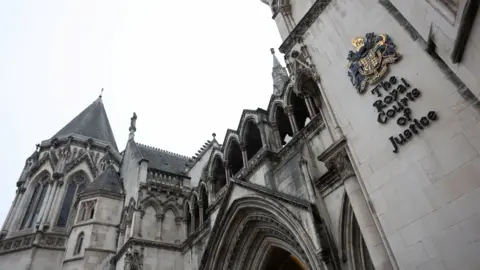
A tribunal found Pilkington UK Ltd had wrongly sacked Jones based on his disability
In the meantime, Jones spent time at a friend's farm in Cronton, Cheshire, to improve his mental health and combat an increasing sense of isolation.
"It was just being there, if you know what I mean, being outside and in nature. There was nothing physical," Jones explained.
"He had his own greenhouse, growing flowers at the time for my daughter's wedding."
But, the tribunal heard, a former colleague had spotted him wearing a pair of "work boots" and reported him to their superiors.
In response, Pilkington UK Ltd engaged a surveillance company called Mike India Five Ltd, who Jones said spied upon him, his friend at the farm, his wife Linda and even his daughter.
He said he only learned about that surveillance work during a disciplinary hearing for gross misconduct in 2019.
The tribunal heard Pilkington UK Ltd had presented Jones with video footage showing the grandfather-of-three with his farmer friend on an errand, briefly handing him a small bag of potatoes and passing a hose.
The company treated this as evidence that he was working elsewhere and undertaking activity inconsistent with his condition.
Pilkington UK Ltd sought no medical evidence, however.
After the end of the disciplinary process, Jones was told he had been sacked.
"On the way out I [saw] an ex-colleague in the security, and to this day she remarks that the look on my face she will never, ever forget.
"It was it was like a death, it was like being told somebody close to you died.
"It was up there and it was just the unbelievableness of, how have we got to this point?"
Jones said the "first thing on his mind" was the impact losing his job would have on his family.
But he added: "Deep down, I knew it was wrong. I knew it was wrong what they've done."
What followed was a six-year legal battle, with Jones being supported by the Unite trade union.
Jones succeeded at a first-tier employment tribunal in 2021 only for Pilkington UK Ltd to appeal in 2023.
That appeal was dismissed and the judge ruled Jones had been unfairly discriminated against due to his disability.
Negotiations over damages began, but in 2024 Jones suffered a heart attack, which he believes may have been impacted by the stress of his situation, and underwent a double bypass operation.
He said he and his wife, Linda, had decided not to let Pilkington UK Ltd stop them living their lives.
"I was sacked through suspicion but vindicated through justice, if you know what I mean," he explained.
"Money was never the motivation - it was always the sense of justice and making sure it never happened to anyone else."
Bernie Wentworth, head of employment rights at Thompsons Solicitors, which represented Jones, said: "This case highlights the consequences of employers making assumptions about disabled workers rather than properly understanding their condition and the medical evidence."
Stephen Pinder, Unite's legal director, added: "Alan was a loyal employee for decades and deserved support and fair treatment, not suspicion and dismissal."