.png)
 11 hours ago
6
11 hours ago
6
The 2026 World Cup is the largest tournament ever, and as such it involves more stadiums in more countries than ever before. A total of 16 venues will play host to this summer’s big games, and each has a story to tell about the past, present and future of sports in its city. Stadium names may look unfamiliar, as we are using the Fifa-approved names instead of the sponsored names that run afoul of the governing body’s clean venue rules.
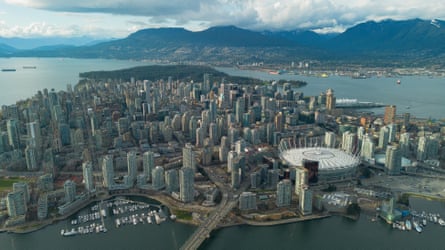
Vancouver
Tournament name: BC Place Vancouver
Usual name: BC Place
Location: Vancouver, British Columbia, Canada
Opened: 1983 (last renovated 2011)
Tournament capacity: 54,000
World Cup 2026 games:
-
Australia v Turkey, 13 June
-
Canada v Qatar, 18 June
-
New Zealand v Egypt, 21 June
-
Switzerland v Canada, 24 June
-
New Zealand v Belgium, 26 June
-
Round of 32, 2 July (1B v 3EFGIJ)
-
Round of 16, 7 July (W85 v W87)
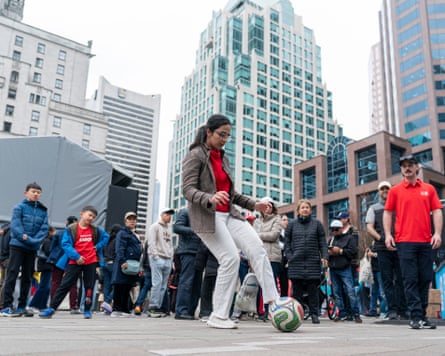
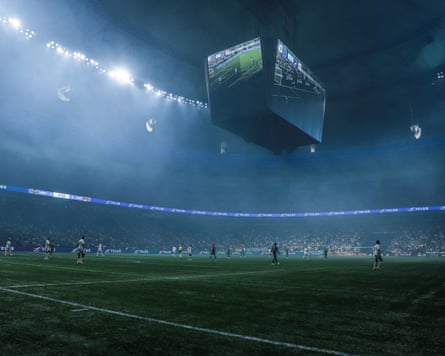
What to know: BC Place has one of the most distinctive architectural features you’ll see at this World Cup: a cable-supported retractable roof, the largest of its kind in the world. The feature was a late addition to the stadium, part of a major renovation that took place immediately after the 2010 Winter Olympics that got rid of the previous permanent roof. When open in the sun, the cables cast a shadow across the field, which is either pleasantly distinctive or terribly distracting, depending on your point of view. Recent reports indicate the roof will remain closed for the World Cup, due to potential issues with uneven sunlight affecting the growth of the natural grass surface that is being imported for the occasion. Should Fifa decide to open it, though, it won’t be a huge operation – that process takes about 20 minutes.
Usual tenants: Vancouver Whitecaps (MLS) and BC Lions (Canadian Football League)
Memorable event (non-soccer): The opening and closing ceremonies of the 2010 Winter Olympics were held at BC Place. It was the first Olympic opening ceremony to be held indoors. Hockey legend Wayne Gretzky was among the torch bearers to light the Olympic cauldron at the opening ceremony, and Canadian singer-songwriter Neil Young sang as it was extinguished at the closing ceremony.
Memorable game (soccer): The 2015 Women’s World Cup final, where Carli Lloyd’s hat-trick led the US to a 5-2 win over Japan and their first World Cup title in 16 years. The official crowd was 53,341 and the game tied a record set by Brazil v Sweden in 1958 for the most goals in a men’s or women’s World Cup final.
Seattle
Tournament name: Seattle Stadium
Usual name: Lumen Field
Location: Seattle, Washington, United States
Opened: 2002
Tournament capacity: 69,000
World Cup 2026 games:
-
Belgium v Egypt, 15 June
-
USA v Australia, 19 June
-
Bosnia and Herzegovina v Qatar, 24 June
-
Egypt v Iran, 26 June
-
Round of 32, 1 July (1G v 3AEHIJ)
-
Round of 16, 6 July (W81 v W82)
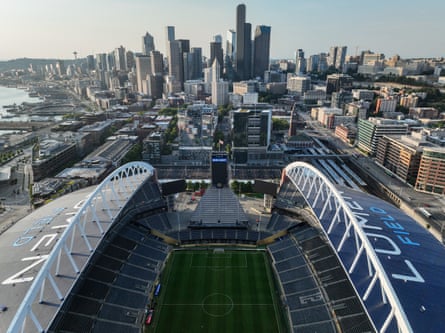
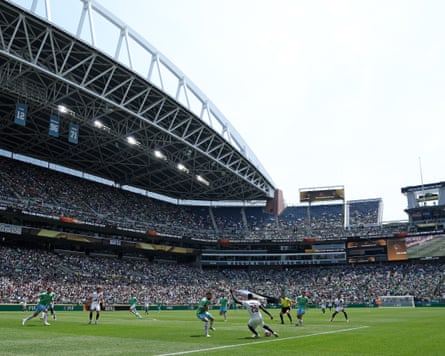
What to know: Seattle Stadium sits on the site formerly occupied by the excellently named Kingdome, and is one of the few World Cup stadiums in the US located within its city’s urban core. Aside from its location, the stadium’s distinctive architecture makes it stand out. In particular, it features three rarities for outdoor NFL stadiums. One is its roof, covering most of the seats along the sidelines. Another is the pyramid-shaped bleacher section (known as the Hawk’s Nest) at the base of a tower in an otherwise-open north end – purposely left empty so as to maintain views of the city skyline. And lastly, the grounds feature a variety of public art on display. The most visible to viewers on TV will be the four circles that adorn the other side of the tower – that’s Earth Dialogue, a work by Native American artist Bob Houzous that is “intended as a constant reminder of our deep connection to the earth”, according to the Washington state stadium authority.
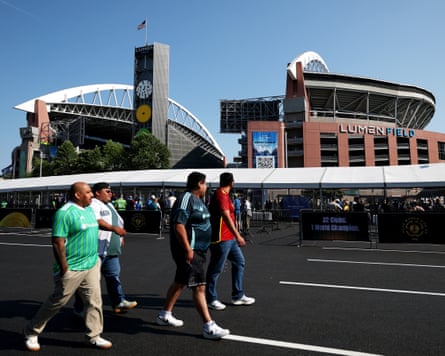
Usual tenants: Seattle Sounders (MLS), Seattle Reign (NWSL), Seattle Seahawks (NFL)
Memorable event (non-soccer): The Pacific Northwest Seismic Network began placing sensors at the stadium in 2011 and has since recorded numerous instances of crowd shaking powerful enough to register on a seismometer. Among them: the 2011 Beast Quake run by Marshawn Lynch during a Seahawks home game (with peaks similar to a 2.0-magnitude earthquake) and two of Taylor Swift’s Eras Tour dates in July 2023 (a 2.3-magnitude event).
Memorable game (soccer): The Concacaf Champions League final in May 2022. Seattle became the first MLS club to win the tournament in its current format, beating Pumas before a crowd of 68,741 that also produced seismic activity after the Sounders’ three goals. The title was monumental for the Sounders, who have played at the stadium since their days in the US minor leagues, and at the Kingdome before that as members of the NASL.
Bay Area
Tournament name: San Francisco Bay Area Stadium
Usual name: Levi’s Stadium
Location: Santa Clara, California, United States
Opened: 2014
Tournament capacity: 71,000
World Cup 2026 games:
-
Qatar v Switzerland, 13 June
-
Austria v Jordan, 17 June
-
Turkey v Paraguay, 19 June
-
Jordan v Algeria, 22 June
-
Paraguay v Australia, 25 June
-
Round of 32, 1 July (1D v 3BEFIJ)
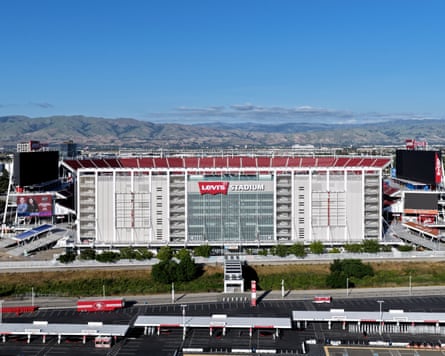
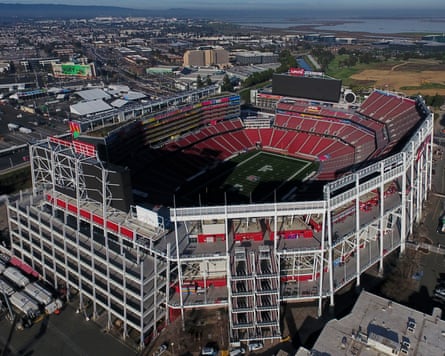
What to know: The Bay Area venue was built to replace the 49ers’ old home Candlestick Park, one of the most iconic and soulful old stadiums of its era. Given that and its location 40 miles south, the new venue was always going to suffer by comparison. In reality, it’s a perfectly fine modern stadium, praised for its environment-friendly design and clean sightlines throughout, with a large block of luxury suites resulting in an upper deck that is closer to the field than most. However, that upper deck also happens to face fans directly into the sun for afternoon and evening games. The resulting temperatures have resulted in multiple heat stress-related issues among fans.
Usual tenants: San Francisco 49ers (NFL)
Memorable event (non-soccer): The stadium has twice hosted the Super Bowl, first in 2016 and most recently this year. Back then, Beyoncé soft-launched her Lemonade era to overshadow the Denver Broncos’ win over the Carolina Panthers. In February, a crowd of 70,823 watched the Seattle Seahawks defeat the New England Patriots 29-13. Bad Bunny headlined the half-time show, with sets that mirrored the Puerto Rican countryside and guest appearances by Lady Gaga and Ricky Martin.
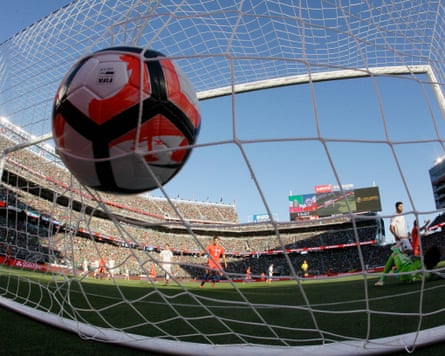
Memorable game (soccer): The Copa América Centenario in 2016 kicked off at this stadium with Colombia’s 2-0 win over the USMNT. Cristián Zapata and James Rodríguez scored for Los Cafeteros, who went on to finish third in a tournament won by Chile.
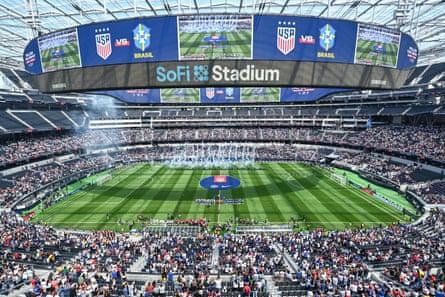
Los Angeles
Tournament name: Los Angeles Stadium
Usual name: SoFi Stadium
Location: Inglewood, California, United States
Opened: 2020
Tournament capacity: 70,000
World Cup 2026 games:
-
USA v Paraguay, 12 June
-
Iran v New Zealand, 15 June
-
Switzerland v Bosnia and Herzegovina, 18 June
-
Belgium v Iran, 21 June
-
Turkey v USA, 25 June
-
Round of 32, 28 June (2A v 2B)
-
Round of 32, 2 July (1H v 2J)
-
Quarter-final, 10 July (W93 v W94)
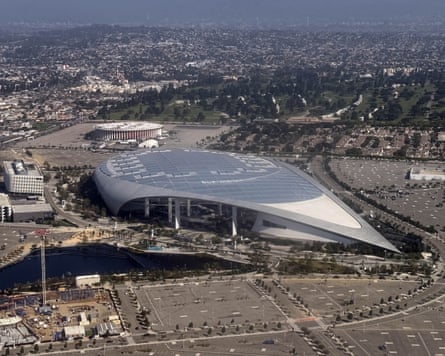
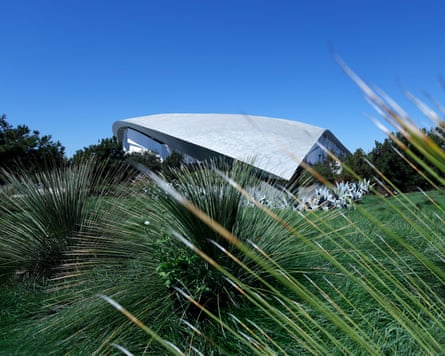
What to know: Constructed at a total cost of around $5bn, this stadium has quickly become a fixture for major events, sporting and otherwise, on the west coast of the United States. Its distinctive feature is the semi-clear canopy, spanning around 1m sq ft and covering the entire stadium structure while letting a good amount of light through. That roof extends in a teardrop shape to create a plaza in the south-east corner while also covering an event venue. Despite California’s warm, inviting climate, the stadium usually uses an artificial turf surface because it serves as the home for two NFL teams, who can wreak havoc on natural grass over time. That’s not the only major modification: as did a few other venues, this stadium has had to demolish a few rows of permanent seats in order to accommodate a pitch that meets Fifa’s sizing standards.
Usual tenants: Los Angeles Rams and Los Angeles Chargers (NFL)
Memorable game (non-soccer): The stadium will host the opening ceremony and the swimming events at the 2028 Los Angeles Olympics. The swimming venue will seat 38,000 spectators – the largest for a swimming event in the history of the Olympics – and take its design inspiration from the structures built at Lucas Oil Stadium in Indianapolis for the 2024 US Olympic trials.
Memorable game (soccer): The 2023 Concacaf Gold Cup final between Mexico and Panama had a crowd of 72,963, still the largest for a soccer game in the venue’s six-year history. Santiago Giménez’s goal off the bench gave El Tri their record ninth Gold Cup title.
Guadalajara
Tournament name: Estadio Guadalajara
Usual name: Estadio Akron
Location: Zapopan, Jalisco, Mexico
Opened: 2010
Tournament capacity: 48,000
World Cup 2026 games:
-
South Korea v Czechia, 11 June
-
Mexico v South Korea, 18 June
-
Colombia v Democratic Republic of Congo, 23 June
-
Uruguay v Spain, 26 June
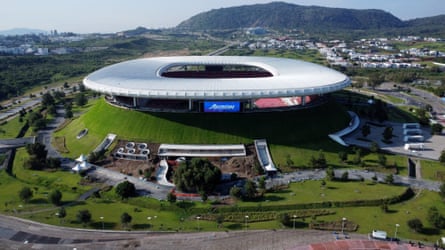
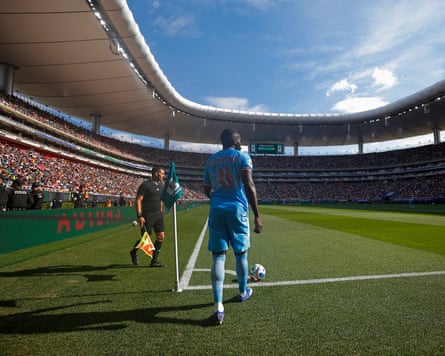
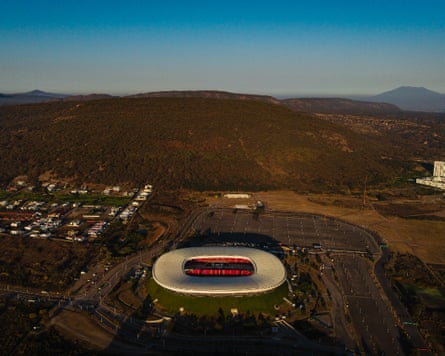
What to know: From the inside, there does not appear to be anything especially noteworthy about the everyday home of Chivas, the Mexican league team who play here. From the outside, though, Estadio Guadalajara has perhaps the most striking facade of any venue at this World Cup. Designed by French architects Jean-Marie Massaud and Daniel Pouzet to resemble an erupting volcano, the vast majority of the stadium sits within a grass-covered, man-made hill. Only the 360-degree roof rises above, with fans entering through overhangs in the hill below. It’s quite a statement, even if the interior does not immediately distinguish itself among the other 2026 venues.
Usual tenants: CD Guadalajara (Liga MX)
Memorable event (non-soccer): The stadium’s attendance record was set at a 2023 boxing bout between Mexico’s Canelo Álvarez and British fighter John Ryder. The Guadalajara native, fighting in his home country for the first time in 12 years, dominated in front of a reported 51,000 fans.
Memorable game (soccer): Manchester United and Chivas played one of the first friendlies after the stadium opened in 2010. Javier “Chicharito” Hernández, a former youth player at Chivas, played the first half for his boyhood club and scored the first goal at the stadium before switching kits and playing for United in the second half.
Mexico City
Tournament name: Mexico City Stadium
Usual name: Estadio Banorte (more commonly: Estadio Azteca)
Location: Mexico City, Mexico
Opened: 1966
Tournament capacity: 83,000
World Cup 2026 games:
-
Mexico v South Africa, 11 June
-
Uzbekistan v Colombia, 17 June
-
Czechia v Mexico, 24 June
-
Round of 32, 30 June (1A v 3CEFHI)
-
Round of 16, 5 June (W79 v W80)
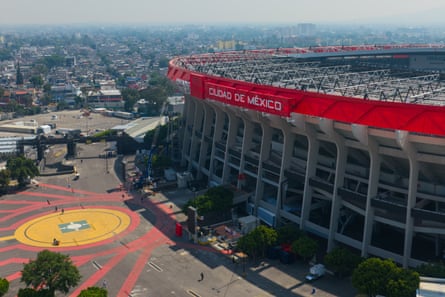
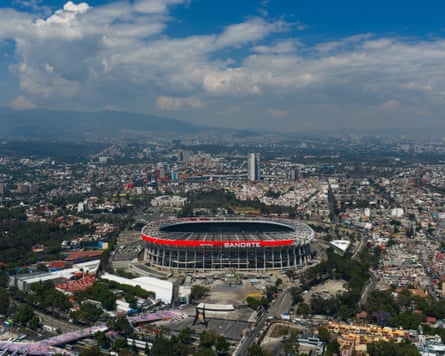
What to know: For all the large capacities, flashy amenities and significant history offered by other stadiums, there’s no denying that this is easily the most iconic of this year’s World Cup venues. Built for the 1968 Olympics, this stadium has undergone several rounds of renovations over the course of its life. That includes a wide-ranging recent round that wrapped this spring, bringing the official capacity to 87,500, making it the eighth-largest stadium in the world used for soccer. (Fifa lists the capacity for this tournament as 83,000.) It was also the first stadium to host two World Cup finals, with Mexico staging in 1970 and 1986. The environment when Mexico plays here is legendarily tough – partially due to El Tri’s passionate fans but also due to the elevation (7,200ft above sea level).
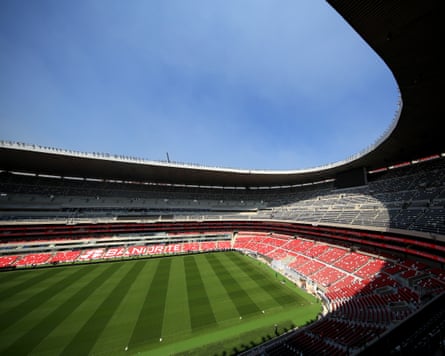
Usual tenants: Club América, Cruz Azul and Atlante (Liga MX)
Memorable event (non-soccer): A parade of big-name acts have made this stadium a stop on their world tours. Some of note include Michael Jackson, who brought in more than half a million people across five nights for his Dangerous World Tour in 1993. In 2011, U2 brought their 360° Tour to the Azteca, attracting 282,978.
Memorable game (soccer): There’s certainly no shortage of these. In the 1970 World Cup final, Brazil beat Italy 4-1 to secure a third star above their crest. In 1986, Diego Maradona was paraded around the stadium on the shoulders of his teammates after Argentina defeated West Germany 3-2 to win their second World Cup. Days before that, though, was perhaps the most infamous match of the stadium’s lifetime: Argentina’s win over England in the quarter-finals, where Maradona introduced the world to the Hand of God and the Goal of the Century.
Monterrey
Tournament name: Estadio Monterrey
Usual name: Estadio BBVA
Location: Guadalupe, Nuevo León, Mexico
Opened: 2015
Tournament capacity: 53,500
World Cup 2026 games:
-
Sweden v Tunisia, 14 June
-
Tunisia v Japan, 21 June
-
South Africa v South Korea, 24 June
-
Round of 32, 29 June (1F v 2C)
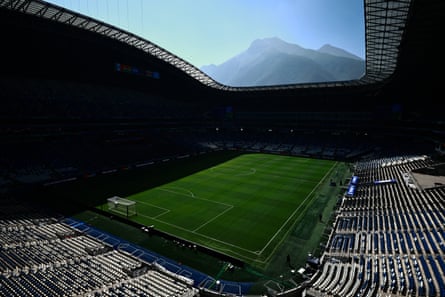
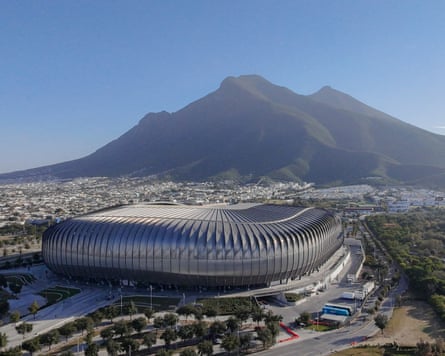
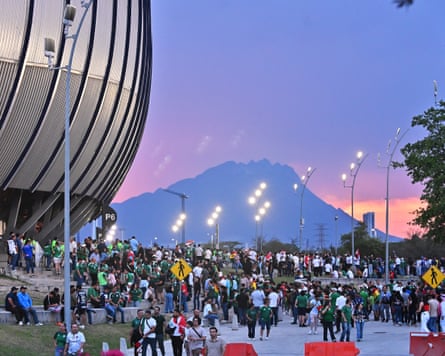
What to know: No stadium at this World Cup has a more magnificent view from the stands than this one, so expect no shortage of photos from fans in the upper decks in Monterrey of the mountain lying just beyond the south end. That would be the Cerro de la Silla, whose peak is just below 6,000ft. The stadium and the grounds it oversees are among the newest and most advanced in Mexico, with a number of nods to preserving the surrounding ecological environment with sustainable design. Nicknamed the “steel giant”, the stadium also features a cantilever roof designed to block sunlight and allow airflow to cool the hot temperatures in north-east Mexico.
Usual tenants: CF Monterrey (Liga MX)
Memorable event (non-soccer): The stadium has held numerous big-name concerts in the 11 years it has been open, with Bad Bunny visiting for two sold-out nights on his World’s Hottest Tour in 2022.
Memorable game (soccer): Inter Miami got their first taste of continental disappointment here on 10 April 2024, as Lionel Messi and co fell 3-1 to home side Monterrey in the second leg of their Concacaf Champions Cup quarter-final.
Houston
Tournament name: Houston Stadium
Usual name: NRG Stadium (formerly and soon to be Reliant Stadium)
Location: Houston, Texas, United States
Opened: 2002
Tournament capacity: 72,000
World Cup 2026 games:
-
Germany v Curaçao, 14 June
-
Portugal v Democratic Republic of Congo, 17 June
-
Netherlands v Sweden, 20 June
-
Portugal v Uzbekistan, 23 June
-
Cape Verde v Saudi Arabia, 26 June
-
Round of 32, 29 June (1C v 2F)
-
Round of 16, 4 July (W73 v W75)
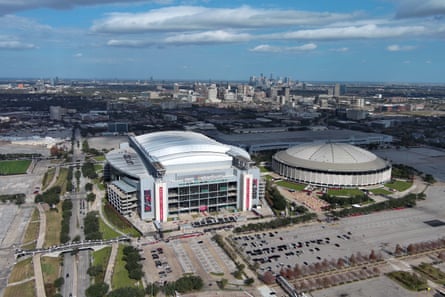
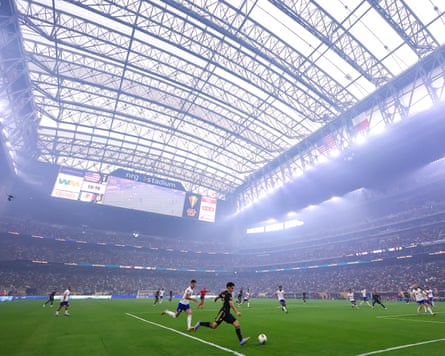
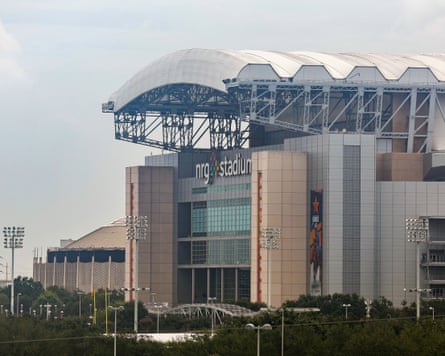
What to know: Opened at the turn of the century, this stadium was the first with a retractable roof to be used in the NFL. Designed by architecture firm Populous (then known as HOK Sport), the roof meets in the middle of the field in two sections and is covered in fabric, giving the interior a boxy feel that nonetheless makes use of abundant natural light. The roof opening procedure takes about seven minutes, but it’s anticipated it will be closed for every World Cup match. The stadium was initially known as Reliant Stadium, but later changed to NRG Stadium after the parent company of Reliant. After the World Cup, it will return to the original Reliant moniker – not that it changes much about the product being promoted. In true Houston fashion, both are energy companies – Reliant is a subsidiary of NRG.
Usual tenants: Houston Texans (NFL)
Memorable event (non-soccer): The only thing more Texan than American football: the rodeo. The Houston Livestock Show and Rodeo is held at NRG Stadium for three weeks each March. Top professional rodeo cowboys like Stetson Wright and Riley Webb headline events from calf roping and bronc riding to steer wrestling and bull riding. This year’s event drew more than 2.6m visitors across the 21 days.
Memorable game (soccer): At the 2010 MLS All-Star Game, 70,728 watched Chicharito and Manchester United beat Landon Donovan and the MLS All-Stars 5-2. United were the first international club to beat the MLS All-Stars in regulation.
Dallas
Tournament name: Dallas Stadium
Usual name: AT&T Stadium
Location: Arlington, Texas, United States
Opened: 2009
Tournament capacity: 94,000
World Cup 2026 games:
-
Netherlands v Japan, 14 June
-
England v Croatia, 17 June
-
Argentina v Austria, 22 June
-
Japan v Sweden, 25 June
-
Jordan v Argentina, 27 June
-
Round of 32, 30 June (2E v 2I)
-
Round of 32, 3 July (2D v 2G)
-
Round of 16, 6 July (W83 v W84)
-
Semi-final, 14 July (W97 v W98)
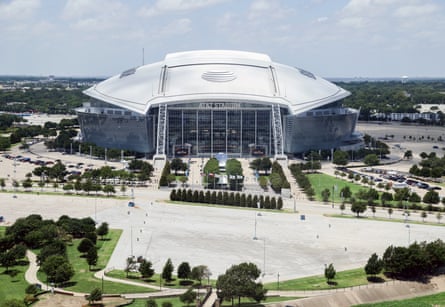
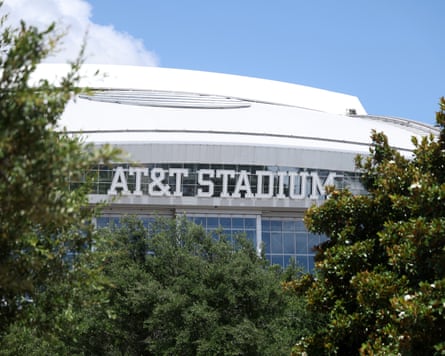
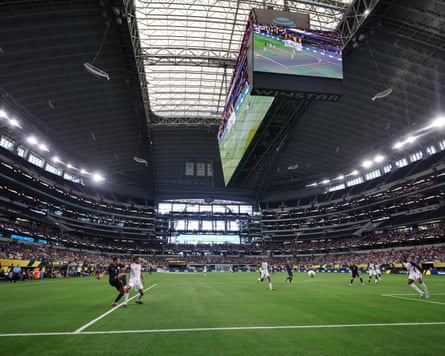
What to know: In a country of huge stadiums, this one stands out. Colloquially known as Jerry World, after Dallas Cowboys owner Jerry Jones, this retractable-roof behemoth has the largest capacity of any stadium at the World Cup. The stadium’s dome is one of the tallest in the world, supported by two 300ft-tall arches spanning the length of the venue and then some. The retractable roof, like others at the World Cup, is expected to remain closed throughout the tournament. But when it is open, the relatively small opening it reveals is a nod to the Cowboys’ previous home, Texas Stadium, which had a distinctive hole as a result of abandoned plans for its own retractable roof. Befitting Texas, just about everything about the stadium is big. The twin video boards running the length of the field were the largest in the world upon opening, and still remain among the biggest. They’re so big, in fact, that some NFL punters have been able to hit them with kicks. Let’s hope that won’t be an issue this summer.
Usual tenants: Dallas Cowboys (NFL)
Memorable event (non-soccer): The 2021 bout between Canelo Álvarez and Billy Joe Saunders surpassed Leon Spinks v Muhammad Ali in 1973 as the most-attended indoor boxing fight in US history with an official attendance of 73,126. Jake Paul and Mike Tyson faced off there before more than 72,000 in 2024.
Memorable game (soccer): Some trivia for your World Cup watch parties: the first sporting event at Jerry World wasn’t American football. It was a 2009 Concacaf Gold Cup quarter-final between Costa Rica and Guadeloupe. Costa Rican legend Celso Borges scored the first goal in the stadium’s history; the nightcap match of Mexico v Haiti drew a crowd of 82,252.
Kansas
Tournament name: Kansas City Stadium
Usual name: Arrowhead Stadium (or, if you must, GEHA Field at Arrowhead Stadium)
Location: Kansas City, Missouri, United States
Opened: 1972 (last renovated in 2010)
Tournament capacity: 73,000
World Cup 2026 games:
-
Argentina v Algeria, 16 June
-
Ecuador v Curacao, 20 June
-
Tunisia v Netherlands, 25 June
-
Algeria v Austria, 27 June
-
Round of 32, 3 July (1K v 3DEIJL)
-
Quarter-final, 11 July (W95 v W96)
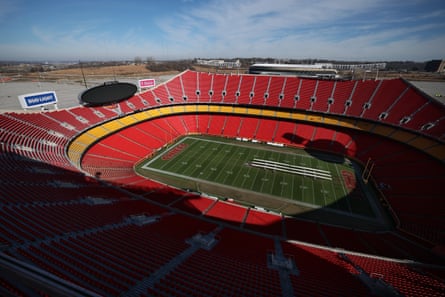
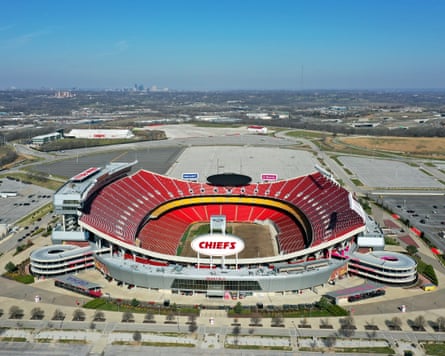
What to know: At the time this stadium was built, multi-purpose monstrosities like Riverfront Stadium (Cincinnati), Three Rivers Stadium (Pittsburgh) and Veterans Stadium (Philadelphia) were all the rage. Those concrete donuts sought to serve both baseball and gridiron football teams, and featured modular designs with movable stands to accommodate both. Kansas City went a different route, building a stadium for the NFL’s Chiefs separate from one for MLB’s Royals. Fifty years later, all of the multi-sport buildings have been demolished and Arrowhead remains, still high-functioning even if it lacks some of the flashier amenities and glass of newer venues. This is the oldest World Cup stadium in the United States, but it has undergone numerous renovations over the years, including the addition of a new press box, updated football-shaped video boards at either end and the removal of some rows of seating to allow for a Fifa-approved pitch. Its distinctive feature is the swooping silhouette along the top, meaning that seats in the corners are truly in the corners.
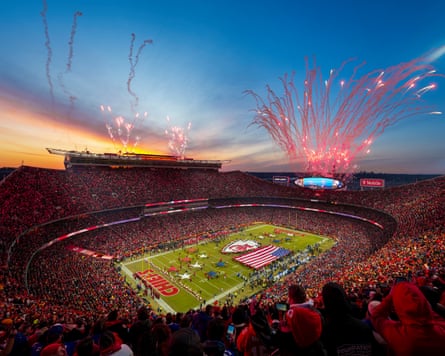
Usual tenants: Kansas City Chiefs (NFL)
Memorable game (non-soccer): Take your pick of any of the six AFC championship games hosted at the stadium since 2018, the second most of any stadium all-time. The Chiefs won four of those to advance to the Super Bowl. Other than those, the biggest game played at the venue may well be the 2007 college football game between Missouri and Kansas, who were ranked No 4 and No 2 in the country respectively at the time and carry huge fanbases in the city, which straddles the Missouri/Kansas state line. Mizzou won that edition 36-28.
Memorable game (soccer): The venue served as home of the Kansas City Wizards of MLS before they rebranded to Sporting Kansas City and moved into their own stadium on the Kansas side of town. The team won a US Open Cup title there in 2004, when Russian forward Igor Simutenkov scored what was likely the last top-flight golden goal in the world before the rule was nixed. Years later, Manchester United fell to the Wizards 2-1 in a preseason friendly at the stadium, with Davy Arnaud and Kei Kamara scoring for the hosts.
Atlanta
Tournament name: Atlanta Stadium
Usual name: Mercedes-Benz Stadium
Location: Atlanta, Georgia, United States
Opened: 2017
Tournament capacity: 75,000
World Cup 2026 games:
-
Spain v Cape Verde, 15 June
-
Czechia v South Africa, 18 June
-
Spain v Saudi Arabia, 21 June
-
Morocco v Haiti, 24 June
-
Democratic Republic of Congo v Uzbekistan, 27 June
-
Round of 32, 1 July (1L v 3EHIJK)
-
Round of 16, 7 July (W86 v W88)
-
Semi-final, 15 July (W99 v W100)
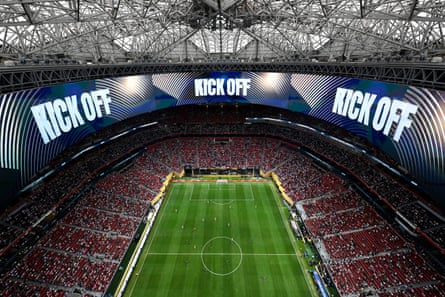
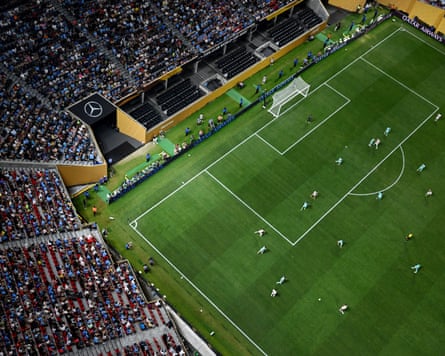
What to know: A stadium with a retractable roof is not exactly a rarity in the United States, but none of those retractable roofs quite resemble the pinwheel-esque design utilized here. It’s one of several distinctive features utilized throughout the stadium, including one end that utilizes a massive glass wall to provide views to the outside. The stadium was designed with American football and soccer in mind, with the NFL’s Falcons and MLS’s Atlanta United always in the picture to be primary tenants. Beyond that, the stadium’s most unusual feature may be its prices. Hot dogs, sodas, beer and other snacks are priced similarly inside the stadium as you might see on the outside, a key factor in what owner Arthur Blank sees as the stadium’s commitment to fan experience.
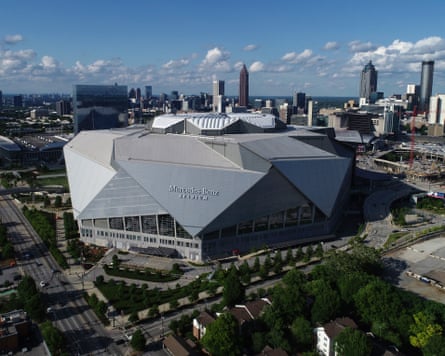
Usual tenants: Atlanta Falcons (NFL), Atlanta United (MLS), Atlanta NWSL (future)
Memorable event (non-soccer): In this case, the game in question was memorable for how relatively unexciting it was. Super Bowl LIII occurred here in 2019, when the New England Patriots defeated the Los Angeles Rams 13-3 in the lowest-scoring Super Bowl ever.
Memorable game (soccer): Atlanta United lifted their first and to date only MLS Cup at their home stadium in 2018, defeating the Portland Timbers 2-0 to set off wild celebrations.
Miami
Tournament name: Miami Stadium
Usual name: Hard Rock Stadium
Location: Miami Gardens, Florida, United States
Opened: 1987
Tournament capacity: 65,000
World Cup 2026 games:
-
Saudi Arabia v Uruguay, 15 June
-
Uruguay v Cape Verde, 21 June
-
Scotland v Brazil, 24 June
-
Colombia v Portugal, 27 June
-
Round of 32, 3 July (1J v 2H)
-
Quarter-final, 11 July (W91 v W92)
-
Third-place match, 18 July (RU101 v RU102)
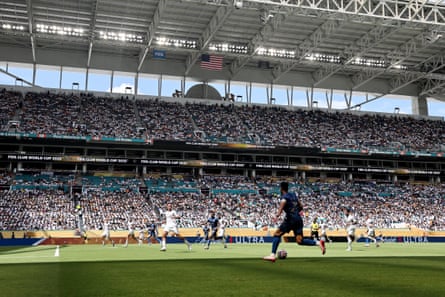
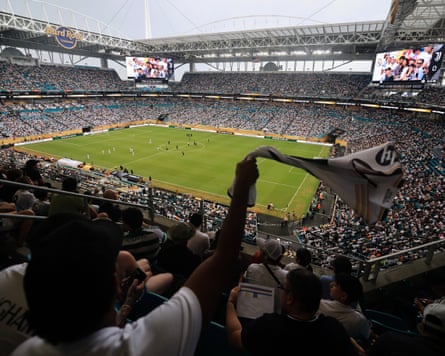
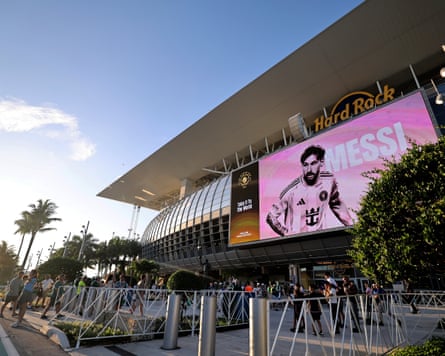
What to know: Of all of the stadiums in the United States, none has had a makeover quite like this one over the course of its life. Founded as Joe Robbie Stadium, the namesake of the founder and owner of the NFL’s Miami Dolphins, the venue was initially completely uncovered and over time adapted to host baseball in addition to American football. After the baseball team left, a large-scale renovation was undertaken that included the addition of a canopy over most of the seats, lending a more traditional feel to a stadium that has hosted no shortage of international soccer events over the years. That canopy is much needed – the south Florida heat has been a factor at numerous games played within the confines. Aside from hosting a wide variety of major events over its history, the venue is also known for its near-constant name-changing – Miami Stadium will be the ninth moniker used, following Joe Robbie Stadium, Pro Player Park, Pro Player Stadium, Dolphins Stadium, Dolphin Stadium, Land Shark Stadium, Sun Life Stadium, New Miami Stadium and its current Hard Rock Stadium name it will revert to after the tournament.
Usual tenants: Miami Dolphins (NFL), Miami Hurricanes (college football)
Memorable event (non-soccer): Miami’s stadium may have the most wide-ranging resume of any venue at this World Cup. In addition to six Super Bowls, it was home to baseball’s Miami Marlins from 1993 to 2001 – during which it hosted the World Series twice – and is still the site of tennis’s annual Miami Open, where the main show court is built over the grass field. The stadium’s parking lots also are used as part of the course of Formula One’s annual Miami Grand Prix.
Memorable game (soccer): Miami hosted the 2024 Copa América final, where Argentina beat Colombia 1-0. The match may be best remembered for chaos off the pitch: kickoff was delayed for more than an hour due to overcrowding, with an estimated 7,000 people gaining entry without having tickets; the president of the Colombian federation was arrested after getting in several fights; and the venue was left with significant damage. On a brighter note, Shakira did the half-time show. (She’s also co-headlining the World Cup final half-time show.)
Toronto
Tournament name: Toronto Stadium
Usual name: BMO Field
Location: Toronto, Ontario, Canada
Opened: 2007 (last renovated and expanded in 2016)
Tournament capacity: 45,000
World Cup 2026 games:
-
Canada v Bosnia and Herzegovina, 12 June
-
Ghana v Panama, 17 June
-
Germany v Côte d’Ivoire, 20 June
-
Panama v Croatia, 23 June
-
Senegal v Iraq, 26 June
-
Round of 32, 2 July (2K v 2L)
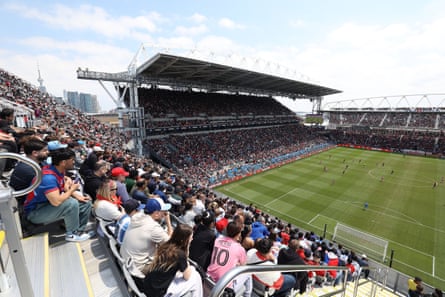
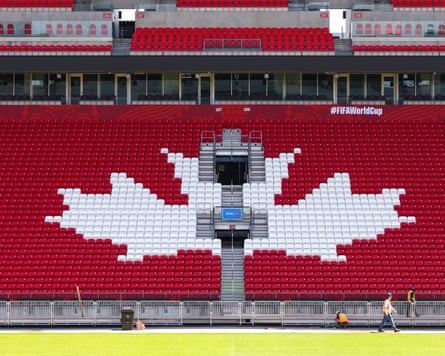
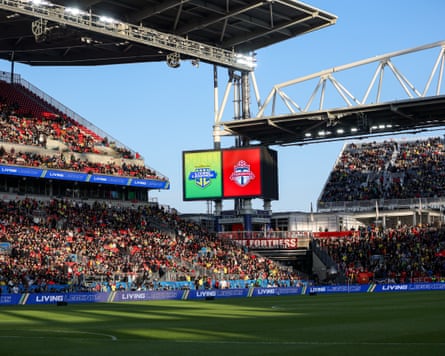
What to know: Originally built as a modest home with about 20,000 seats for Toronto’s entry into MLS, this stadium’s permanent capacity has expanded significantly and its physical profile has grown to match. Its current configuration, with an added upper deck along the sideline, seats about 28,000, and the added roof over many of the seats gives it a European feel. This summer the stadium will add more than 17,000 new temporary seats, largely through the addition of a large structure at the stadium’s south end, just under the canopy that was installed in 2016. The stadium is getting other notable upgrades for the showpiece event, namely new LED video boards, new team dugouts and a fresh sound system.
Usual tenants: Toronto FC (MLS) and Toronto Argonauts (Canadian Football League)
Memorable game (non-soccer): The 104th Grey Cup, the championship of Canadian football, was hosted at BMO Field in 2016. In that game, the Ottawa Redblacks defeated the Calgary Stampeders 39-33 to win the championship despite finishing the regular season with a losing record.
Memorable game (soccer): BMO Field has hosted MLS Cup three times, once as a neutral venue in 2010 and twice as Toronto FC’s home stadium in Cup wins over Seattle Sounders in 2016 and 2017, with the home side losing on penalties in the former before winning 2-0 in the latter.
Boston
Tournament name: Boston Stadium
Usual name: Gillette Stadium
Location: Foxborough, Massachusetts, United States
Opened: 2002
Tournament capacity: 65,000
World Cup 2026 games:
-
Iraq v Norway, 16 June
-
Scotland v Morocco, 19 June
-
England v Ghana, 23 June
-
Norway v France, 26 June
-
Round of 32, 29 June (1E v 3ABCDF)
-
Quarter-final, 9 July (W89 v W90)
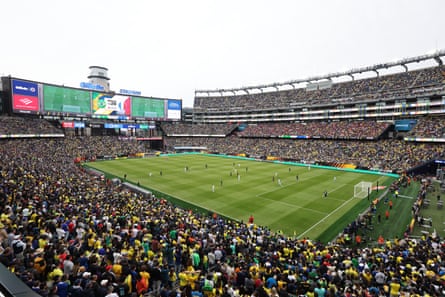
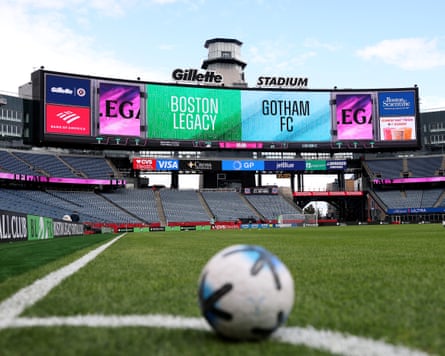
What to know: This stadium was built to replace the old Foxboro Stadium, which served as a venue for the 1994 World Cup and was located adjacent to the current plot in what is now a parking lot. It has many notable architectural features, the most obvious being a slice cut out of the seating bowl to its north-east corner. That is there at the behest of New England Patriots owner Robert Kraft, who also owns the stadium and insisted upon a grand entrance to the venue. Next to that grand entrance is a mock lighthouse that features 360-degree panoramic views of the stadium and Patriot Place, a nearby open-air shopping center also owned by the Kraft family.
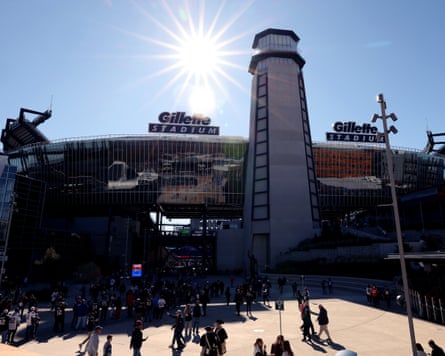
Usual tenants: New England Patriots (NFL), New England Revolution (MLS) and Boston Legacy (NWSL)
Memorable event (non-soccer): The 2002 Tuck Rule game is storied in NFL lore. As heavy snow fell during a playoff game between the Patriots and Raiders, Tom Brady was initially ruled to have fumbled the ball after being sacked deep in the fourth quarter with New England down by three. The referee overturned the decision, citing the controversial Tuck Rule. The Patriots went on to win the game and then the Super Bowl, starting a run of six championships with Brady and coach Bill Belichick.
Memorable game (soccer): The 2002 MLS Cup between the New England Revolution and the LA Galaxy. The Galaxy won with Carlos Ruiz’s 113th-minute golden goal in double overtime – the final MLS Cup to be played with a golden-goal rule – before a crowd of 61,316, an attendance record that stood until 2018.
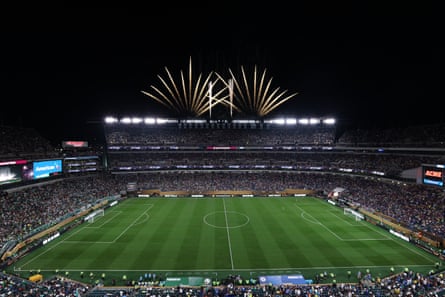
Philadelphia
Stadium name: Philadelphia Stadium
Usual name: Lincoln Financial Field
Location: Philadelphia, Pennsylvania, United States
Opened: 2003
Tournament capacity: 69,000
World Cup 2026 games:
-
Côte d’Ivoire v Ecuador, 14 June
-
Brazil v Haiti, 19 June
-
France v Iraq, 22 June
-
Curaçao v Côte d’Ivoire, 25 June
-
Croatia v Ghana, 27 June
-
Round of 16, 4 July (W74 v W77)
What to know: Like many stadiums of its era, Philadelphia’s venue is a huge mass of exposed steel and irregular seating sections. One notable feature is located at the stadium’s north end – a steel tower upon which sits a small circular seating section called the Eagles Nest. At one point, a row of wind turbines adorned the top of the adjacent seating section, but they were removed in 2019 and never replaced. Directly abutting Interstate 95 and situated in a mass of parking lots alongside the city’s baseball stadium and basketball/hockey arena, the stadium is not within the downtown core but is easily accessible via the city’s Septa train, which will be running extra service for the usual $2.90 fee with no charge for outbound trips after the games.
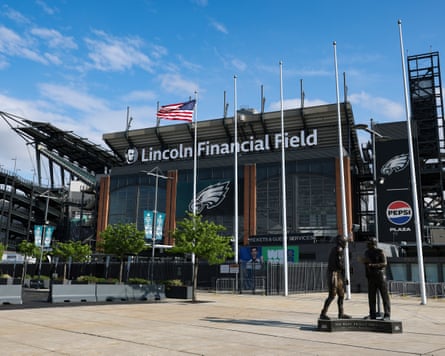
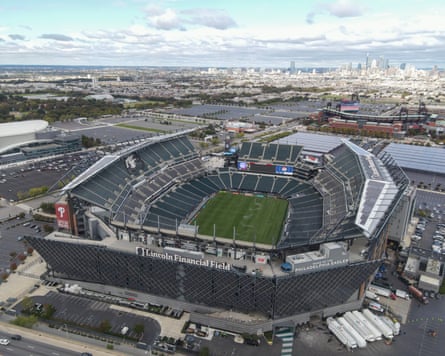
Usual tenants: Philadelphia Eagles (NFL) and Temple Owls (college football)
Memorable event (non-soccer): Located between the US Military Academy in upstate New York and the US Naval Academy in Maryland, Philadelphia is the most regular home of the annual Army-Navy college football game. The city has hosted the game 90 times – 14 times at this stadium – with sitting US presidents from Truman and JFK to Clinton and Trump attending over the years.
Memorable game (soccer): The first sporting event held in the stadium was a 2003 friendly between Manchester United and Barcelona. Patrick Kluivert scored the first goal in the stadium’s history off a Ronaldinho assist before United responded for a 3-1 win. The crowd of 68,396 was a record for a Philadelphia soccer game for 21 years until a 2024 friendly between Liverpool and Arsenal garnered 69,879 fans.
New York/New Jersey
Tournament name: New York/New Jersey Stadium
Usual name: MetLife Stadium
Location: East Rutherford, New Jersey, United States
Opened: 2010
Tournament capacity: 82,500
World Cup 2026 games:
-
Brazil v Morocco, 13 June
-
France v Senegal, 16 June
-
Norway v Senegal, 22 June
-
Ecuador v Germany, 25 June
-
Panama v England, 27 June
-
Round of 32, 30 June (1I v 3CDFGH)
-
Round of 16, 5 July (W76 v W78)
-
Final, 19 July (W101 v W102)
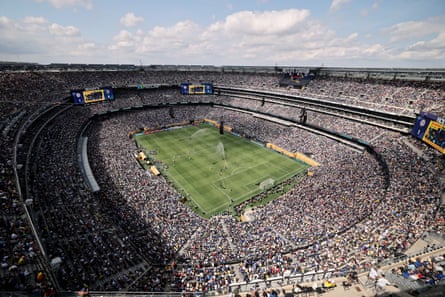
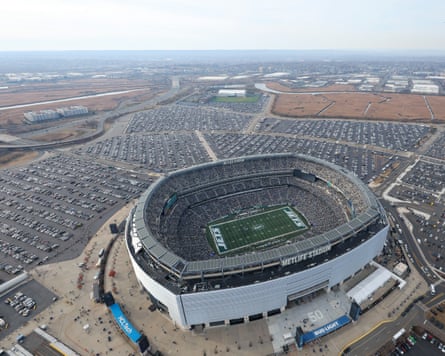
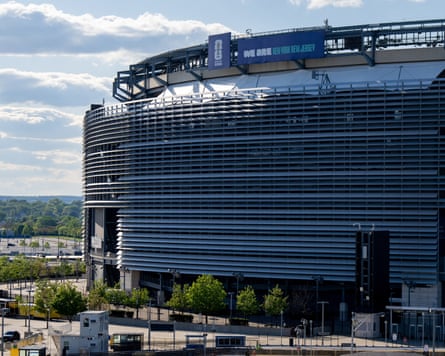
What to know: The site of this summer’s World Cup final is no stranger to big events, having been one of the few open-air stadiums in a cold-weather city to host a Super Bowl. Built for about $1.6bn, it is shared by the Giants and Jets of the NFL, who collaboratively designed the stadium. The exterior is marked by rows of aluminum slats that surround the facade, and the massive seating bowl is interrupted only by four high-definition TV screens. There is no roof over the stadium and only a small canopy over some of the seats, the result of a late change to the funding agreement that saw a proposed retractable roof dropped from the plans. Located across the Hudson River from New York City in the swamplands of New Jersey, getting to and from the stadium is a bit of a chore even at the best of times. There is no direct rail connection between New York City and the small station that serves the stadium, and car traffic often slows to a total gridlock after big games. On the mildly positive side, the American Dream mall is linked to MetLife by a pedestrian walkway, and it features numerous places to eat along with a water park and an indoor skiing facility.
Usual tenants: New York Giants and New York Jets (NFL)
Memorable game (non-soccer): Super Bowls don’t often get played in open-air stadiums in cold-weather cities, but NFL Commissioner Roger Goodell made an exception for Super Bowl XLVIII. The game didn’t necessarily reward that risk – the Seattle Seahawks dominated the Denver Broncos 43-8 in one of the most lopsided Super Bowls ever.
Memorable game (soccer): The stadium has been the site of two notable finals: the 2016 Copa América Centenario final that saw Chile win on penalties, prompting a distraught Lionel Messi to retire from the national team in the tunnel after the match. (Obviously, that retirement didn’t last.) The other notable final came last year, as Chelsea lifted the Club World Cup as Donald Trump stayed front and center in the celebrations.
-
Photos supplied by Getty Images, Reuters and the Associated Press.