.png)
 12 hours ago
3
12 hours ago
3
To understand why horse racing on both sides of the pond has been gripped by the Fair Hill Five over the past week, start with a basic principle of betting: when two unlikely horses win in back-to-back races, a wager correctly picking both should pay off handsomely. Last Sunday at New Jersey’s Monmouth Park, it did not.
The sequence began with The Great Amira, a 17-1 longshot who went from finishing last in her previous two starts to winning wire to wire by nine and a half lengths. Her trainer then won the very next race with Tepeyac, who went off at about 4-1, and the meager Daily Double payout for picking both outsiders suggested the exact combination had been unusually well backed. Later that afternoon, two more longshot winners emerged at Saratoga. They were among five runners with recent workouts at Maryland’s Fair Hill Training Center, the common link behind the name Fair Hill Five.
One horse showing dramatic improvement seemingly out of nowhere can happen. But when four connected horses all coming off lengthy layoffs do it on the same afternoon, well, it doesn’t take Barney Curley to sense that something may be off.
The strange results in America were only one part of the story. On Tuesday, Britain’s Racing Post reported that a “six-figure betting coup” had been pulled off through in-person wagers on the Fair Hill runners with UK bookmakers. The bets were reportedly spread across at least 12 London shops and, because they were placed overseas, did not directly affect the US odds. One estimate put the British bookmakers’ potential exposure as high as £800,000 ($1.08m).
In horse racing, a betting coup is a coordinated attempt to outsmart the bookmakers. It can be entirely legitimate and nothing so far in Sunday’s case proves doping, race-fixing or any other misconduct. The mystery is what made the bettors so confident in horses which the public had largely dismissed. The US Horseracing Integrity and Safety Authority (Hisa) is investigating whether this was exceptionally sharp betting or something more nefarious. Here’s what we know so far …
Who are the Fair Hill Five and what links them?
The Fair Hill Five originally referred to those five Monmouth and Saratoga runners. Subsequent reports linked the operation to a sixth Sunday horse, Winston Wolf, who finished second at Virginia’s Colonial Downs.
Angel Quiroz was the listed trainer of The Great Amira, Tepeyac and Scootaloo. Classic Rock and M BS Melanie Cares were entered by owner-trainer Ernesto Ochoa, although the little-known Quiroz has acknowledged previously working with both horses in addition to Winston Wolf.
All six had recently recorded workouts at Maryland’s Fair Hill Training Center, a private facility where trainers and owners can rent barn space, and each were returning from layoffs of between four and nine months.
Why were the performances so surprising?
The horses had little recent form suggesting four victories on the same afternoon. The Great Amira for instance had finished dead last in her two previous outings, including once by 40 lengths, before overwhelming the field at Monmouth. Altogether, the six horses had finished outside the top three in 16 of their previous 17 races, with only a single third-place finish among them.
Quiroz and Ochoa had each recorded only two winners in all of 2026 before last Sunday. The Great Amira, Tepeyac and Scootaloo were also Quiroz’s first starters outside Florida since 2015. It’s not unusual for a horses to chart improvement following layoffs or changes in training. But the case of four dramatic turnarounds involving overlapping connections on the same afternoon has been difficult for experienced bettors and regulators to dismiss as ordinary coincidence.
What was unusual about the American betting?
US horse racing generally uses parimutuel wagering, with all bets entering a common pool and determining the final payouts. That contrasts with the fixed odds favored in the UK, where the payout is based on the bookmaker’s price rather than how much other people bet.
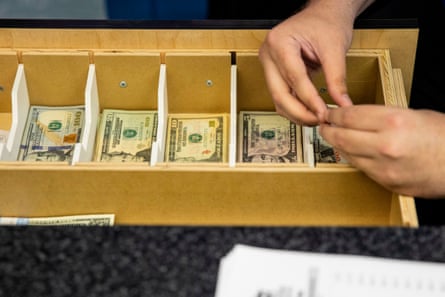
The $2 Daily Double combining The Great Amira and Tepeyac returned only $25.60, compared with $178.56 if the win payout on the first horse had simply been rolled over to the second. A Horse Racing Nation analysis of 1,065 comparable doubles dating to 1998 identified it as by far the worst-performing Daily Double of its kind in nearly 30 years.
But the entire pool contained less than $10,000, meaning a relatively modest wager could produce a freak payout. This was a clear indication that somebody had targeted that exact combination, if not necessarily a smoking gun that enormous sums had been bet in the US.
How does the British betting operation fit into the story?
According to an industry source, at least five bookmakers across 12 brick-and-mortar London shops accepted wagers connected to the horses with some of the bettors presenting American identification. They used packages of singles, doubles and trebles, allowing parts of the wager to survive a losing selection. The individual stakes reportedly remained below the levels likely to trigger bookmakers’ liability checks.
Because the money was wagered with British bookmakers rather than through the US parimutuel pools, it did not directly shorten the horses’ American tote odds, leaving the scale of the overseas betting largely undetectable at the tracks.
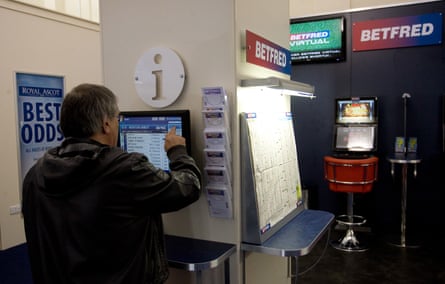
British prices on obscure American races normally track the US betting pools. On this occasion they diverged sharply. Classic Rock was 2-1 in Britain but longer than 8-1 in America; all four winners were shorter-priced with British bookmakers. That strongly indicated that far more concentrated money was being wagered in London.
One estimate placed bookmakers’ potential liability at £600,000 to £800,000, although Paddy Power described its own loss as modest. The operation appeared set to continue Monday, but Threedots Andadash and Bravo Rough were scratched. Those withdrawals did not cancel the bets but they reduced them to smaller, less lucrative combinations, stripping away much of the potential return.
Is a betting coup the same as race-fixing?
No. A betting coup can be completely above board: gamblers identify horses the public has underestimated, secure favorable odds and collect when they win.
Any potential scandal lies in the source of that edge. A coup crosses into regulatory or criminal territory if bettors gained their advantage through doping, concealed ownership, false information or race manipulation. None of those things has been established here.
What are racing authorities investigating?
The New York Racing Association referred the matter to Hisa and its enforcement arm, the Horseracing Integrity and Welfare Unit (Hiwu), as well as the Thoroughbred Racing Protective Bureau (TRPB). All four winners underwent routine post-race drugs testing, while Hiwu is conducting additional out-of-competition tests. The TRPB is examining the betting and broader integrity issues, including hidden ownership and race manipulation.
Separately, Quiroz was charged with a banned-substance violation on Thursday after another horse he trained, Bonita Rough, tested positive for albuterol. Bonita Rough did not race on 9 August, and the result does not establish that any of that day’s runners received a prohibited substance.
What happens next?
Investigators will await laboratory results, trace the American and British wagers and try to establish who placed them and whether they had undisclosed connections to the horses. Hiwu says results from the recently tested horses will be disclosed under its anti-doping rules.
The betting trail may prove harder to follow than the drugs tests because the US racing bodies investigating the horses have no jurisdiction over wagers placed in London shops. That part of the inquiry may depend on information shared by British bookmakers and regulators.
Quiroz has denied any wrongdoing, arguing that he simply entered his horses and tried to win. For now, racing authorities have reached no conclusion. The question remains whether somebody was unusually clever, unusually lucky – or operating with information unavailable to the public.