.png)
 1 month ago
62
1 month ago
62
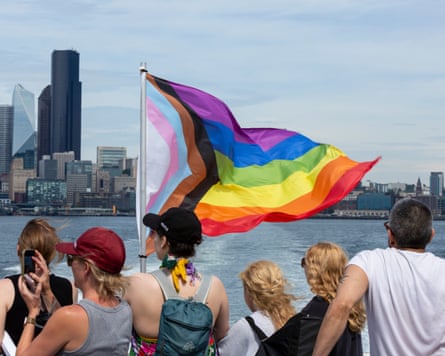
Seattle’s World Cup committee is pushing forward with “Pride Match” celebrations this week despite backlash from Egypt and Iran, who have called for the cancellation of LGBTQ+ rights festivities around the game.
Last year, Seattle’s local organizing committee, which is separate from Fifa, made plans for 26 June to be a Pride-themed match coinciding with the city’s annual Pride weekend.
In December, Egypt and Iran were drawn to play each other on that date in Seattle, causing a swift firestorm and condemnation from the two countries.
Egypt’s football association appealed to Fifa, saying it “categorically rejects any activities promoting LGBTQ during the match,” warning the events could “provoke cultural and religious sensitivities among fans”. Iran’s football federation was quoted suggesting the Pride designation was an “irrational move that supports a certain group”.
In Iran, LGBTQ+ relationships are illegal, and Egypt has a history of prosecuting queer and trans people.
Organizers with Seattle Fifa World Cup 26 (SeattleFWC26) said their plans will remain unchanged, with Pride match watch parties slated across Washington state, themed merchandise available to fans and a social media campaign celebrating LGBTQ+ locals.
“Pride Match Day for us was always going to be bigger than the actual soccer match. It’s really a citywide celebration of visibility, belonging and community,” said Hedda McLendon, SeattleFWC26’s senior vice president of legacy. “We see this as an opportunity to introduce the world to what it looks like to live in a place where the LGBT community is a protected class … where we get to hold hands in public, where we show our joy on the streets. That’s not the case everywhere, even in the US. We hope fans visiting come with curiosity.”
Fifa is not affiliated with the Pride Match branding. A spokesperson said in a statement the World Cup is an “inclusive event” that welcomes fans of all sexual orientations and gender identities, and said Pride flags are allowed at World Cup matches.
“General statements of human rights, including rainbow flags and other flags representing sexual orientation and gender identity … may be displayed inside stadiums provided they are used in a manner consistent with the [stadium code of conduct],” Fifa said.
Jaelynn Scott, executive director of Lavender Rights Project, a Seattle Black trans rights group, served as a volunteer on the SeattleFWC26 committee and said it was a no-brainer to link the World Cup match to Pride.
“We’re not paying attention to the noise. Seattle is going to be Seattle … All 12 months in Seattle is very queer, very trans. It is a welcoming sanctuary city for so many people who seek a place where they can be themselves and thrive,” said Scott.
The rise of anti-trans policies across the US had led more LGBTQ+ people to relocate to Seattle, making it a critical moment to highlight Pride while the World Cup brings international attention to the city, Scott added.
The tensions are reminiscent of 2022 in Qatar when European countries abandoned plans to wear rainbow armbands after Fifa threatened sanctions.
Headlines about Seattle have focused on the contradiction of having a Pride match between two countries with anti-LGBTQ+ records. But Bookda Gheisar, an Iranian-American social justice activist in Seattle, who is lesbian, said it was meaningful to have the match timed with Iran’s game.
“To have queer people who are Iranian right now celebrating our identity, celebrating Pride – I think it’s really important as Iranians that we see one another, we respect one another and that we unify,” said Gheisar, who participated in a Pride video for the World Cup.
Gheisar, who serves as the Port of Seattle’s senior director of equity, diversity and inclusion, said she had long embraced her dual identity, raising her children within both Iranian and queer communities. She said she would be wearing Pride colors inside the stadium on 26 June.
“The Pride match brings that intersection forward for a lot of people, and I think people are aware of this shock of ‘Iranian, Egyptian and queerness’, but that’s where I have lived all my life,” she said.
Islamophobia, she noted, can lead people in the US to have a simplistic view of queerness in Iran: “In Iran today, more people are able to be gay and live openly – of course the policies are not supportive, but people are fighting for that freedom.”
Gheisar also noted the erosion of trans and queer rights in the US, which has led some LGBTQ+ fans from the UK to say they won’t be attending US games this year.
“The US since the first Trump administration has rolled back so many freedoms and civil rights for not just queer people, but for immigrants, refugees and brown and Black people,” she said. “Our struggles are absolutely connected to one another … To me, the meaning of the Pride match is visibility, awareness, celebration and recommitment to struggles and building movements.”
Scott said she hoped the combined World Cup and Pride weekend would provide a moment of joy for the city: “I just love the opportunity to enjoy our favorite teams, celebrate together and dance the night away at our local queer clubs.”