.png)
 1 month ago
84
1 month ago
84
As they prepared for the future, the Iran national team looked to its past.
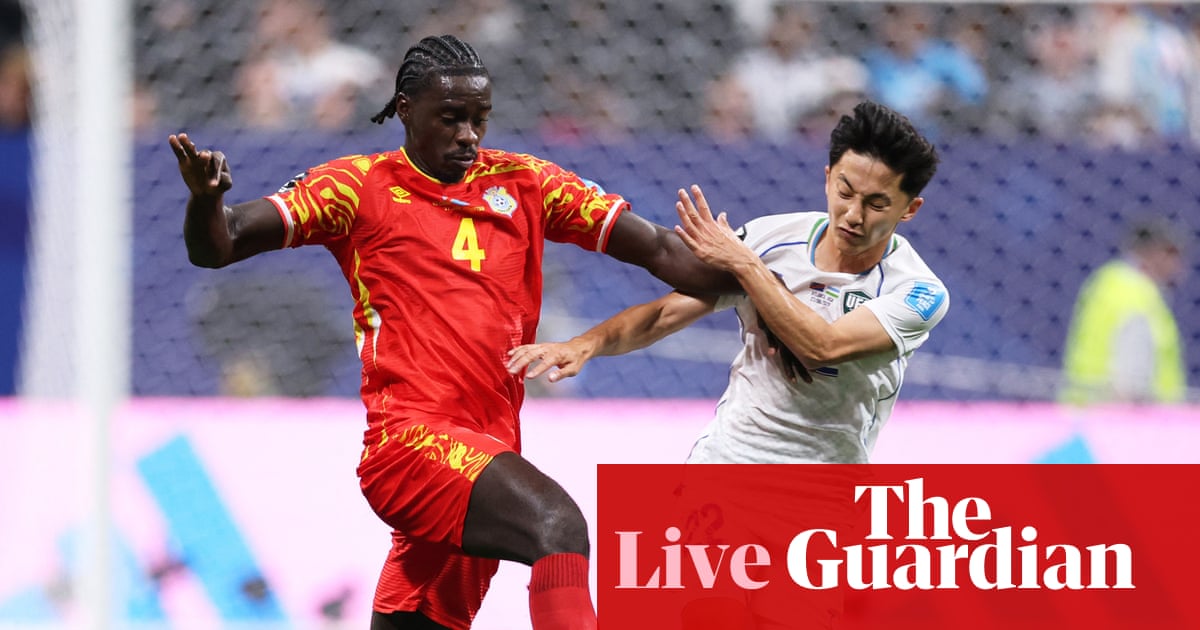
Before Sunday’s matchup against a No 9-ranked Belgium with plenty of stars, the team was played a motivational video; a clip containing what midfielder Alireza Jahanbakhsh said were the indelible moments of Iran’s past two World Cup appearances. These included dogged defending, aggressive closing down, and the few moments of on-field triumph against world powers like Spain and Portugal that have characterized this latest generation of a proud footballing hotbed.
In and of itself, this is not an unusual tactic for teams looking for confidence ahead of a big matchup, which Sunday’s fixture certainly was. But in a coincidence Saman Ghoddos called “crazy,” this backward-looking video ended up foreshadowing the biggest moment of the 0-0 draw that puts Iran on the precipice of its best-ever performance at a World Cup.
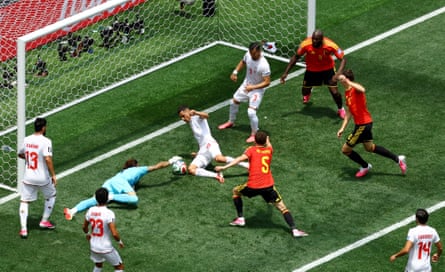
Goalkeeper Alireza Beiranvand’s desperate, lunging save in the 59th minute seemingly left all 70,317 fans at Los Angeles Stadium with mouths agape. But in a sense it was also ordinary. Beiranvand has had a signature World Cup moment before, saving a Cristiano Ronaldo penalty in 2018. And he has had a similar impact on a goalline scramble, blocking an effort in a 1-0 win for Iran against Morocco in that same competition. This, Ghoddos said, was the moment the team had focused on in the video.
“The same situation happened now,” he said. “The unity, the fighting spirit we have for each other, for our country, for the people we try to win every game, try not to concede, and a situation like this can happen.”
Iran have been no stranger to late, decisive moments in major tournaments. They fell agonizingly close of a place in the knockout round in 2022 in a loss to the US. They succumbed to a Ricardo Quaresma trivela in 2018, and a Lionel Messi moment of magic in 2014. Beiranvand’s save, one senses, could be the first step in another direction.
“In our last tournaments, Asian Cup, World Cups, [at the] last minute we didn’t get what we deserved, now is one of those times,” said Jahanbakhsh, who added that he felt Iran could have won the game against the 10-man Belgian side. “So it’s really in our control to do what we have to do firstly for our people back home, and then for ourselves. Some of us, we’ve played more than 10, 12 years together. Hopefully we can make [our] best performance [against Egypt].”
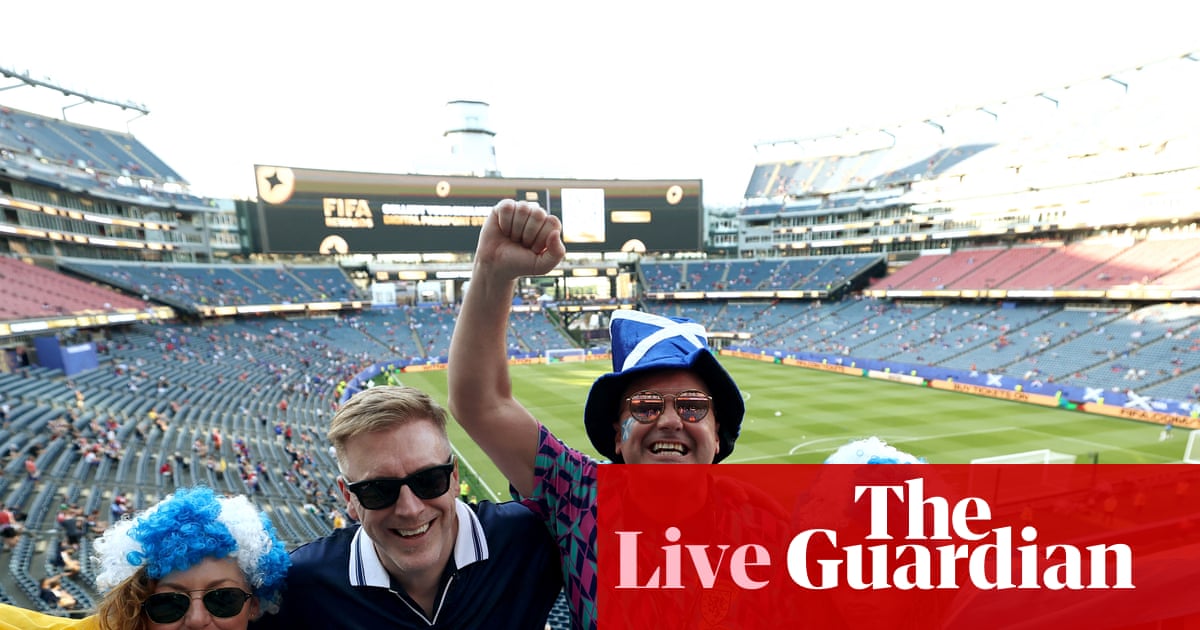
Beiranvand’s signature moment gave this match a unique edge, but outside Los Angeles Stadium, little had changed since Iran’s previous visit, a 2-2 draw against New Zealand. There were Iranian fans donning all manner of modified kits, eager to see their team on their quest to finally advance to the second round of a World Cup for the first time.
Among the crowds that so enlivened the team’s previous game remained a large portion of protesters too, including a group of 200 or so who chanted for the removal of the Islamic Republic, saying that the team represented “terrorists” and not everyday Iranians. Others turned their ire at Fifa. Within the stadium’s outermost perimeter, a banner depicting a backpack with a tag reading 168 called attention to the 168 people who were killed in the US and Israeli strike that hit an Iranian school. “No Fifa war games,” it read.
Iran’s lion and sun flags, too, continued to be out in force. Though nominally still banned at the request of the Iranian government, attendees wore them in droves. Increased enforcement saw many more confiscated upon entry than last time, but vendors were comfortable enough to hawk tables of merch with the insignia just outside the stadium gates.
When the national anthem played, the boos and jeers that accompanied it last time were just as present. And when the game got under way, in the biggest moments the crowd heaved with each sharp Belgian attack, every desperate Iranian defense. They called loudly for Nathan Ngoy to be sent off after taking down Mehdi Taremi through on goal, and they cheered when their wish was granted.
“We know they deserve a lot, even the people who came to the stadium today with the different ideas, different ideology, different culture and from different cities in Iran,” Jahabakhsh said. “There are a couple of things that [Iranians] have in common everywhere in the world. One is Team Melli, one is ghormeh sabzi [a signature stew], and one is tahdig [crispy rice].”
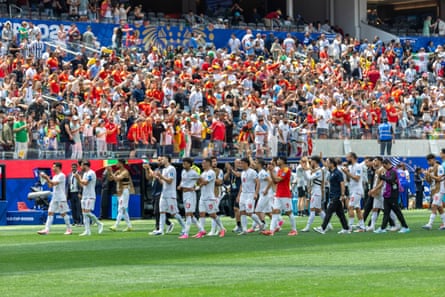
The status quo of the crowd, oddly, marks a form of change. In 2022, Iran played their first game of the World Cup with frequent displays of protest in the stands with the country in the throes of the Woman, Life, Freedom movement. By the time of the second game, those displays had been severely curtailed, with attendees saying they feared surveillance by regime operatives disguised as fans. Some protesters could be seen confronted and shouted down back then. This time, if there were arguments, they were once again minor and among individuals.
Iran’s performance on the field, too, remained consistent. The same dogged, if at times disorganized defending. The same scrappy ingenuity up top. Belgium knifed through with sharp edges, but lacked an effective point as Romelu Lukaku was held in check by Shoja Khalilzadeh throughout. Iran thought their moment to savor came in the first half, when Taremi finished off a cleverly worked freekick but was correctly adjudged to have been offside, but only by his backside.
Instead, that moment came in the 59th minute via Beiranvand. The Tractor goalkeeper had risen from relative obscurity on the back of his performances in Russia 2018, where his most distinctive feature were long, cannon-like throws from his own box, shaped by his time as a child throwing stones with friends across the Iranian countryside with the nomadic family he would later run away from to pursue his football teams.
“He was amazing today, and it’s been amazing for a couple of years now,” Ghoddos said of Beiranvand. “He’s the best goalkeeper in our history of our country.”