.png)
 13 hours ago
4
13 hours ago
4
ByMarco SilvaBBC Verify and Peter MwaiBBC Verify
"They grabbed me from behind and started punching me, hitting me with spades and machetes," says Daniel Uyirwoth Welo, one of four Red Cross volunteers injured when a crowd tried to open a coffin carrying someone who had died from Ebola.
The 27-year-old and his colleagues were attempting to carry out a safe burial at a cemetery in Bunia, eastern Democratic Republic of Congo, last month when they were attacked. The assault was triggered by rumours - circulating locally and online - that the coffin was empty.
Some in the crowd said, "No Ebola doesn't exist," Welo told BBC Verify, adding that others believed the Red Cross team was there only "to get money".
The attack is one of a series of incidents linked to misinformation during the latest Ebola outbreak, which has infected more than 1,750 people and killed 600 in DR Congo since mid-May, according to government data.
False claims circulating in affected areas include allegations that Ebola doesn't exist, that health workers are deliberately infecting people or harvesting their organs, and that the Ebola response is a money-making scheme.
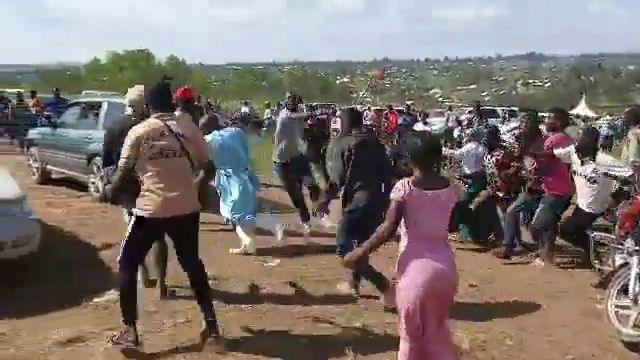 Image source, X
Daniel Uyirwoth Welo is seen wearing blue scrubs running through a crowd of people as they start to chase him
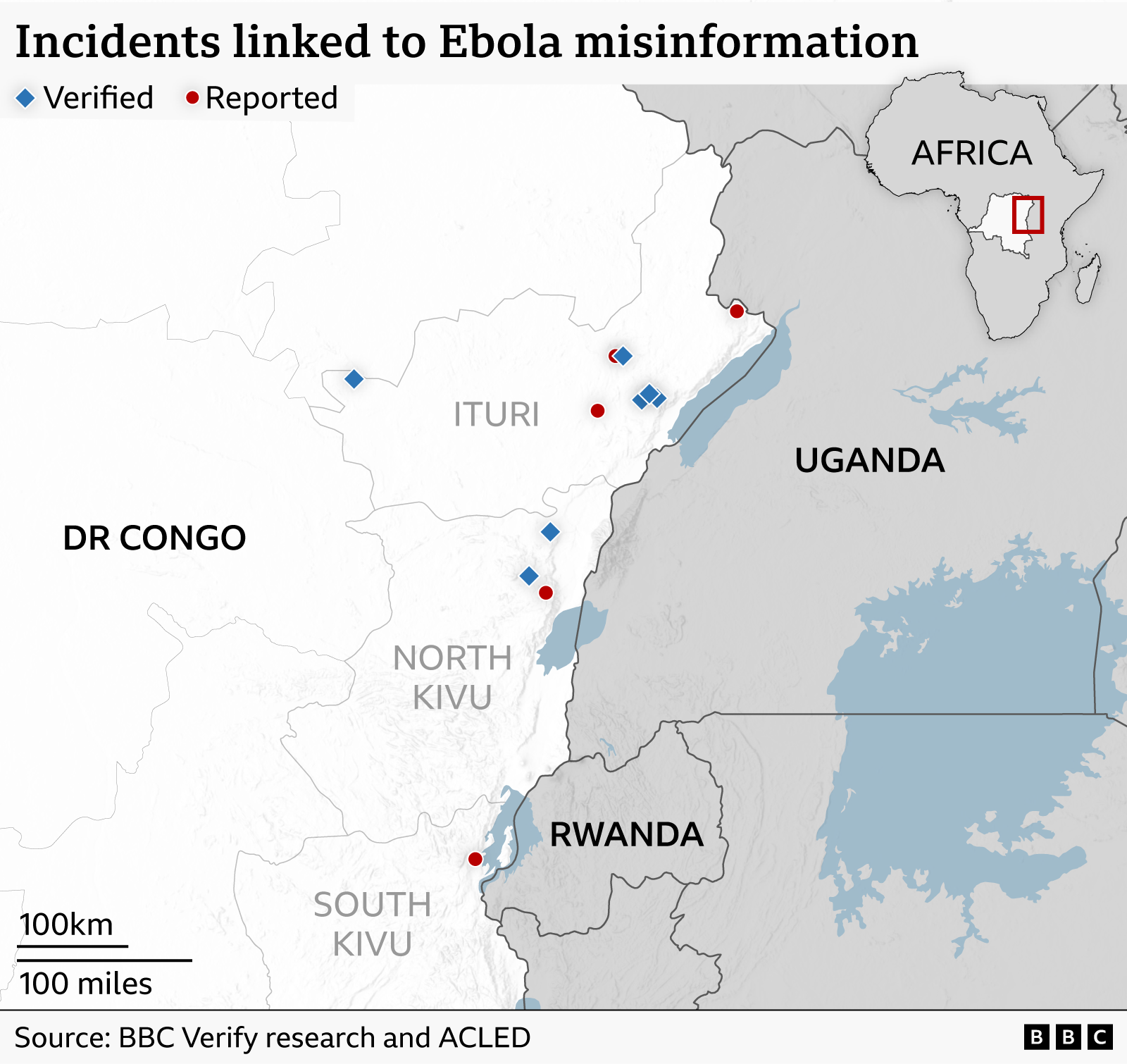
BBC Verify identified 12 cases of community resistance to Ebola control measures, seven of which we have been able to verify using social media footage. These include attacks on treatment facilities, assaults on health workers, and repeated attempts to interfere with safe burial procedures for people who died from the disease. The true number is likely to be higher as incidents may happen in remote areas and go unreported.
Most recently, on 1 July, people set fire to an Ebola treatment centre in Bafwabango, Ituri province, the epicentre of the outbreak. Local media reported that a police officer was killed following clashes over the body of a person suspected to have died from the virus.
Ebola spreads through direct contact with infected bodily fluids and victims' bodies can remain highly infectious after death. Health workers had wanted to bury the victim safely - though this measure has repeatedly faced resistance during the outbreak amid baseless claims that Ebola is not real.
The current outbreak is linked to the Bundibugyo species. While there is still no approved vaccine or treatment for this species, the World Health Organisation (WHO) says a trial has begun of two potential treatments - though experts caution that it could take months to complete.
Response teams from aid organisations and the Congolese authorities have been carrying out safe burials, preventing practices such as washing or touching bodies that can spread infection. Funeral rites involving contact with the deceased have played a major role in the spread of Ebola during previous outbreaks, making safe burials a key way of limiting further spread of the disease.
But health officials say misinformation is undermining those efforts.
In late May, rioters set fire to equipment and two isolation tents at an Ebola treatment centre in Rwampara after relatives of a young man believed to have died from the virus were prevented from taking his body away for burial.
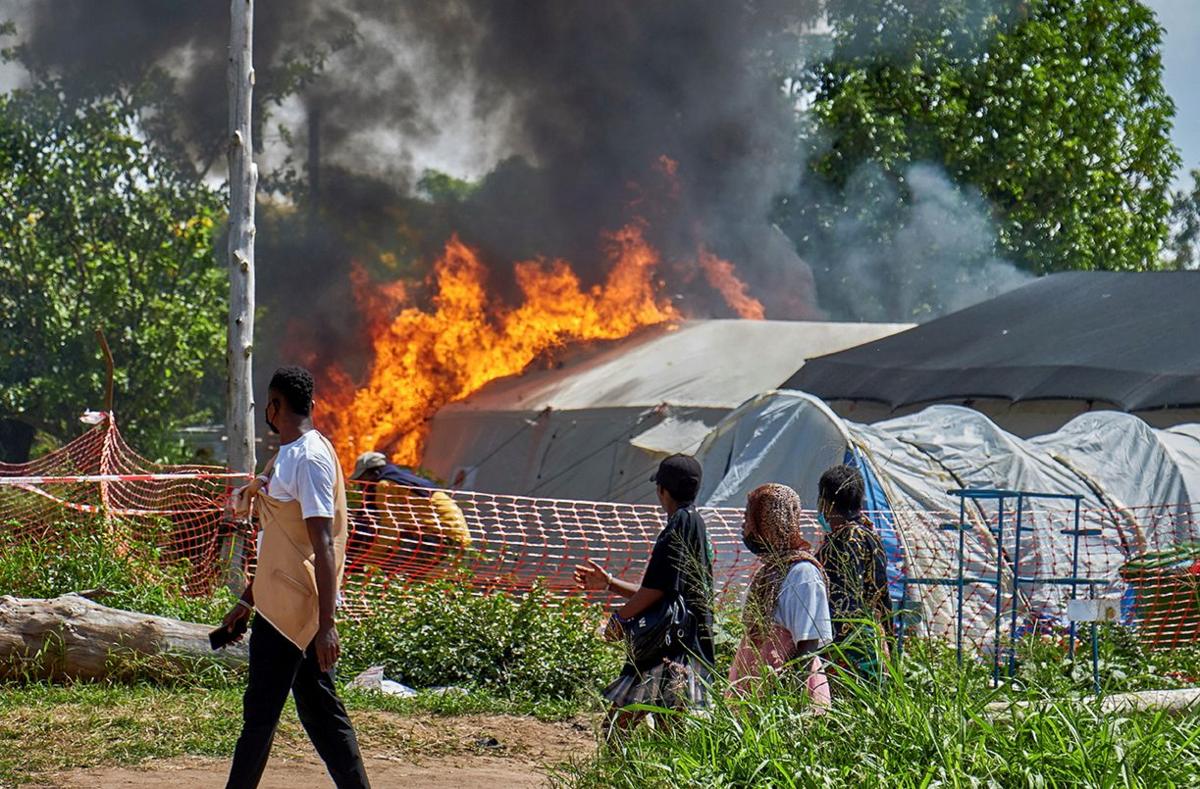
People walk past a burning Ebola treatment centre in Rwampara general hospital in Bunia after it was attacked
Funerals - often a multi-day affair in DR Congo - are among the most important communal and cultural ceremonies in the country, with deep social, cultural, and spiritual relevance.
"Women are dressed in a wedding dress with make-up… They sing, they celebrate that person, because it's a journey, it's not the end of the life," Julienne Anoko, an anthropologist working with the WHO as a community engagement officer, told the BBC last month.
Since then, medical facilities have reportedly been attacked or vandalised at least three more times.
Ebola responders in Ituri told the BBC that misconceptions about the virus and fears about what happens in treatment centres have discouraged some patients from seeking care promptly, often leaving them with little chance of recovery by the time they arrive for medical help.
Dr Aimé Mbonda Noula of the International Federation of Red Cross and Red Crescent Societies (IFRC) said some families had fled their homes when a relative died from Ebola, abandoning the body rather than notifying authorities because they feared being taken into quarantine.
"Most of the people in [these] communities think that these treatment centres are places where, when you go, you die," he said. "So, you usually run away from these places and run away from the health workers".
Others resisted changes to funeral practices.
"They don't believe that safe, dignified burials could really help," says Dr Babou Rukengeza from the charity Save The Children. "They say: 'this is my family member, I need to honour him… this is the last time that I can touch him'."
Last month, two Ebola response workers were attacked in North Kivu province by people who reportedly blamed them for deaths in their community.
Video verified by BBC Verify shows a female health worker trying to flee from a group of men who strike her with wooden planks. In another clip, a man appearing to wear medical scrubs crawls along a road while people throw stones at him.
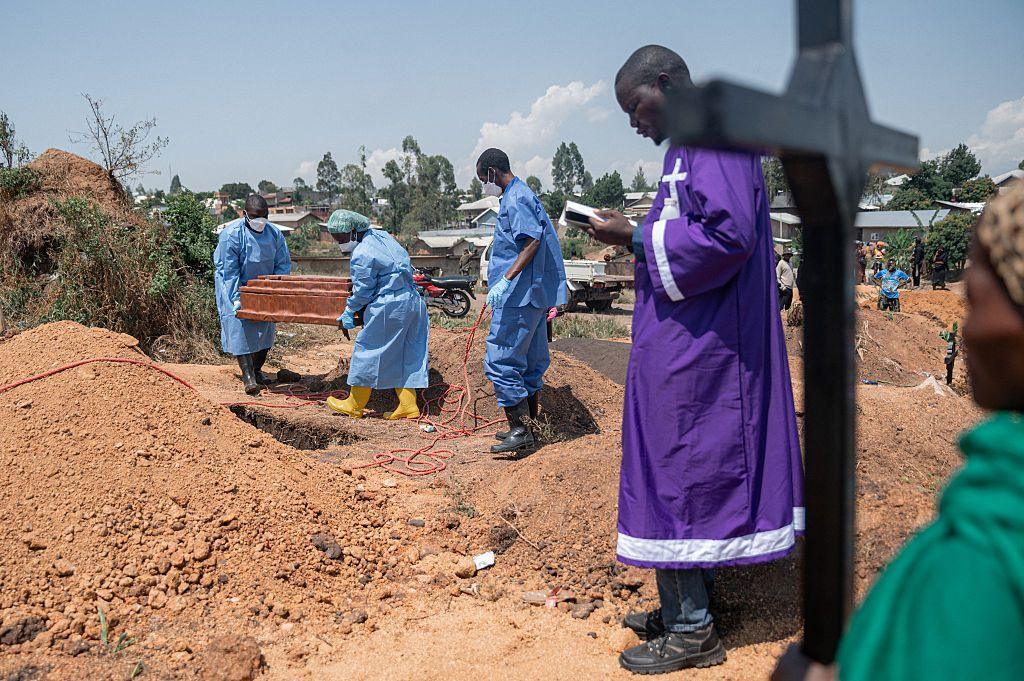 Image source, Getty Images
A priest conducts a blessing ceremony at Mbiyo cemetery for an orphan who died from Ebola in Bunia
A recent assessment, external by the charity ActionAid in Ituri suggested about a third of respondents did not believe Ebola was a real disease, instead viewing it as a spiritual phenomenon or the product of sorcery.
"Ebola misinformation is Ebola's greatest ally," Dr Wessam Mankoula from the Africa Centres for Disease Control and Prevention told the BBC. "False rumours delay care for people who need help and fuel attacks on health workers and health facilities, disrupting outbreak control and giving the virus more opportunities to spread."
Experts say distrust has been fuelled by decades of unrest in eastern DR Congo — from prolonged conflict to outside interference and competition over valuable minerals, such as gold and coltan, which have drawn in foreign companies and armed groups.
"You have a very strong base of being very distrustful of anything coming from outside, including the central government," says Dr Jean-Vivien Mombouli, who has previously advised governments across the region on how to respond to Ebola outbreaks.
Health officials argue that containing the outbreak now depends as much on rebuilding trust as on medical treatment, warning that without being accepted by communities, they cannot do their work.
"Mistrust is the real battleground," WHO chief, Dr Tedros Adhanom Ghebreyesus, wrote on social media, external in June. "Win trust, and we win this."