.png)
 4 hours ago
2
4 hours ago
2
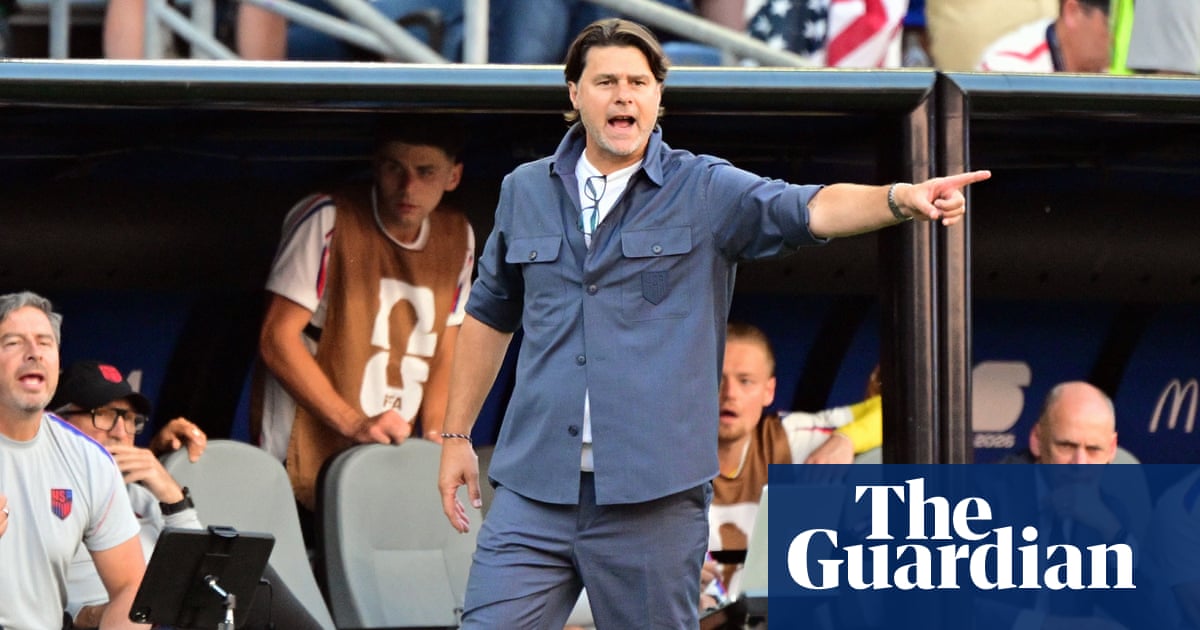
Mauricio Pochettino and US Soccer enjoyed their time together.
Or, rather, they enshoyed it, as Pochettino would pronounce it in his thick Argentinian accent, which charmingly carries over when he speaks English.
Nevertheless, the two sides should have moved on from each other.
From his 10 September 2024 appointment through the US men’s national team’s 4-1 last-16 World Cup elimination at the hands of Belgium on 6 July, Pochettino had broadly accomplished what he was brought in to do.
He energized a team who had grown stale. He found a playing system and style that suited a generation of USMNT players who were unprecedented in their pedigree and talent but lacked difference-makers on the World Cup stage. He coaxed from them two excellent performances – including a 4-1 hammering of Paraguay that was surely the best the Americans have ever looked at a World Cup – and two very good ones. Then it all caved in against Belgium after the good vibes had been ruined by a meddlesome president in all that Folarin Balogun suspension/unsuspension business.
Pochettino’s spell in charge was a success.
Now, he will be back, having accepted a contract offer extended to him by the US Soccer Federation before the World Cup and kept on the table after the team was eliminated a round sooner than many had hoped they would reach. Pochettino’s new deal runs through the 2030 World Cup, giving him a full cycle to try again.
This is something of a gamble. The inclination to see what Pochettino will construct atop the sturdy foundations he laid is understandable, but it assumes that he even stays through the length of his new deal.
It feels like the Argentinian and his staff are still here on account of the absence of opportunity elsewhere, to coach the sort of club he has worked for over the course of a decade – the likes of Tottenham Hotspur, Paris Saint-Germain, Chelsea. Perhaps he settled for a prolonged stay with the US men by default; perhaps not. Before the World Cup, Pochettino was reportedly in talks with Milan, who ultimately hired Ruben Amorim as manager instead.
It seems unlikely Pochettino will actually stick around four more years as one top coaching job after another opens up and he invariably winds up on the lists of rumored candidates. Should he leave early, the team will once again be starting over mid-cycle.
Besides, the job he returns to is very different from the one he has done.
For the USMNT, World Cup qualifiers for 2030 won’t even start until November of 2027, although there will be editions of the Concacaf Nations League and Gold Cup to slog through before then – to say nothing of a great many friendlies against teams you are largely supposed to beat every time. The final round of World Cup qualifying will be played in June of 2028 and the fall of 2029, after still more Nations League and Gold Cup duties. Mind you, Concacaf will have six places at the next World Cup, with a possible seventh through a playoff – as opposed to three automatic berths for the 2022 World Cup, the last edition before the tournament expanded and was hosted in this region. The stakes and peril will simply not be the same as before. The adrenaline rush of high-stakes games is an awfully long way off.
after newsletter promotion
Then there’s the history of USMNT managers staying on for a second World Cup cycle. It’s abysmal. Bruce Arena hung on for a second World Cup and watched helplessly as the side who stunned on their way to the brink of the semi-finals in 2002 got grouped in 2006. Bob Bradley made it just a year after 2010, getting sacked after a 4-2 Gold Cup final loss to Mexico the following summer. Jürgen Klinsmann’s second cycle was a debacle and sowed the seeds for the failure to reach the 2018 World Cup. Gregg Berhalter’s return to the job after 2022 was marred by a scandal and never really got going, ending in humiliation at the Copa América on home soil and his subsequent replacement by Pochettino.
Granted, all of them got more of that first cycle than Pochettino did, who parachuted into the job less than two years before the World Cup. But what each second-term failure had in common was that all the coaches struggled to keep the program fresh when the process reset.
While this remains a fairly young team, they could do with an injection of fresh faces, legs and ideas. Out of the team’s longstanding core of Christian Pulisic, Tyler Adams, Weston McKennie, Antonee Robinson, Sergiño Dest and Chris Richards, only McKennie has been spared major and repeated injuries. The scare over a late knock to Richards before the tournament emphasized that while the standard and quality on the field has inarguably improved, it nevertheless feels tentative. The US were never more than an injury or two away from calamity. This was especially apparent when Pulisic was pulled at half-time against Paraguay and did not play a full 90 minutes all tournament, lasting longer than an hour only once.
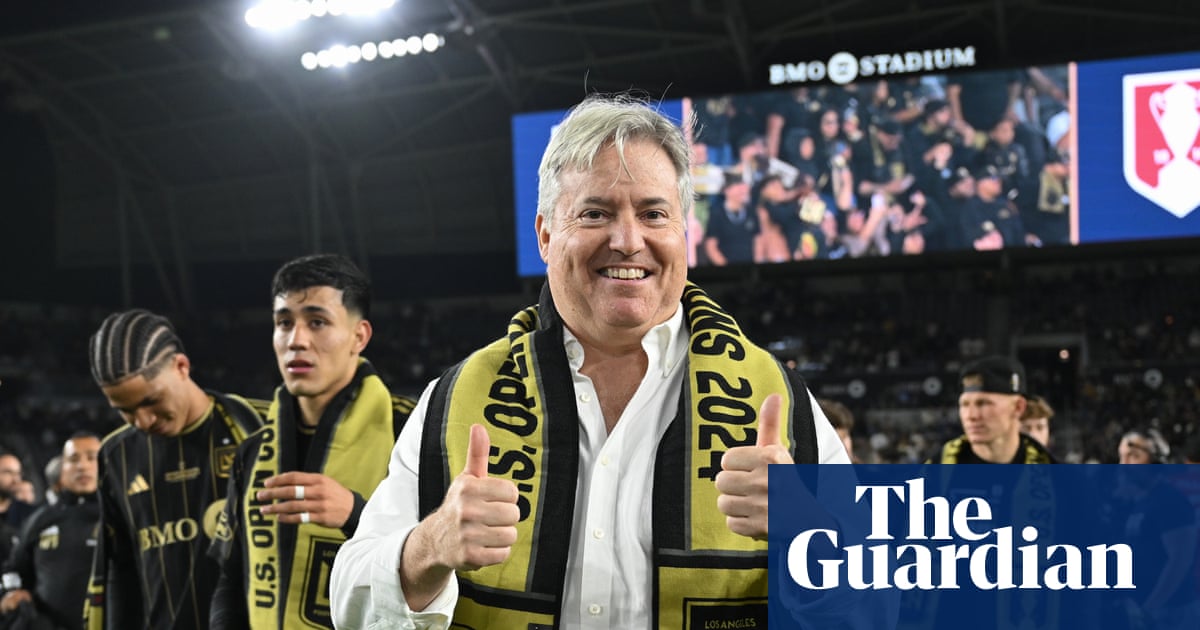
There is also something of an opportunity cost to keeping Pochettino on. Tax filings show that he made more than $5m over his first seven months in the job, a sum that was reportedly padded with further payment from billionaire US Soccer supporter Ken Griffin and other sources. Griffin is once again a primary funder of Pochettino’s new deal, which keeps him among the most highly paid managers in international soccer. And while the federation got a return on that investment over the past summer, it’s worth wondering whether it makes sense to pay out that kind of money to go and play early qualifiers against Nicaragua, or to face Jamaica and Panama again and again.
You wouldn’t buy a supercar just to drive it to the grocery store and back. In the next few years, the USMNT will mostly be making school runs and commuting back and forth to an office park without ever hitting the highway.
-
Leander Schaerlaeckens is the author of The Long Game: US Men’s Soccer and Its Savage, Four-Decade Journey to the Top, or Thereabouts, which is out now. He teaches at Marist University.