.png)
 5 hours ago
3
5 hours ago
3
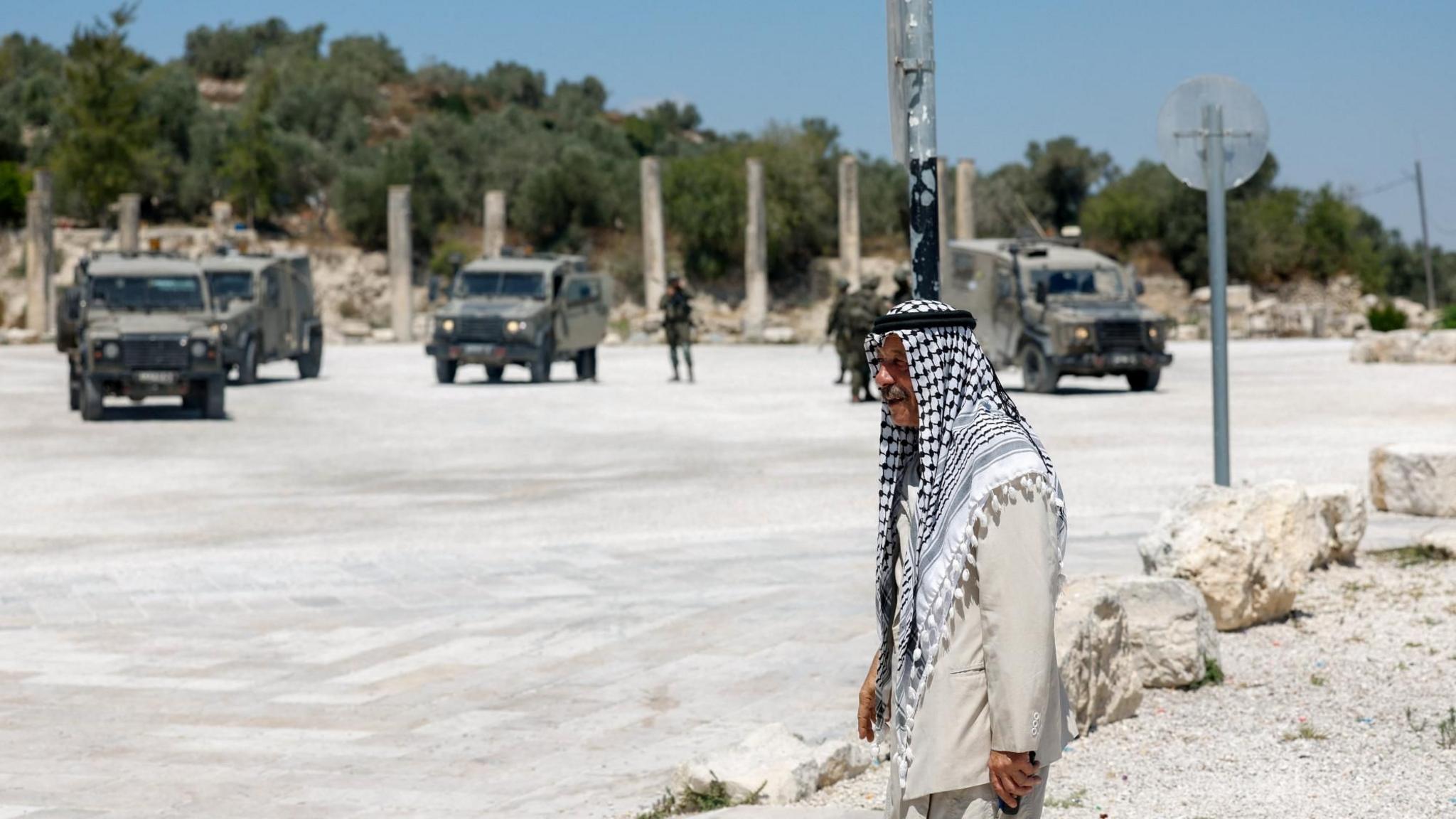 Image source, Reuters
BySebastian UsherGlobal affairs correspondentReporting fromSebastia, occupied West Bank and Callum TulleyReporting fromSebastia, occupied West Bank
Up in the hills above the Roman columns of the ancient site of Sebastia, in the occupied West Bank, are olive fields that have been cultivated for generations by Palestinian families.
One of the landowners, Abu Mudif, says he has received notification that his land is part of a tranche of about 450 acres that the Israeli authorities are taking possession of in order, they say, to protect and develop the site for a major new national park.
Typically, Palestinian landowners receive little or no payment for such land expropriation. And even when it is offered, most refuse it as they see accepting it as giving recognition and legitimacy to the loss of what they see as their patrimony.
It's a vital income for Abu Mudif to lose of course, but it goes deeper than that for him.
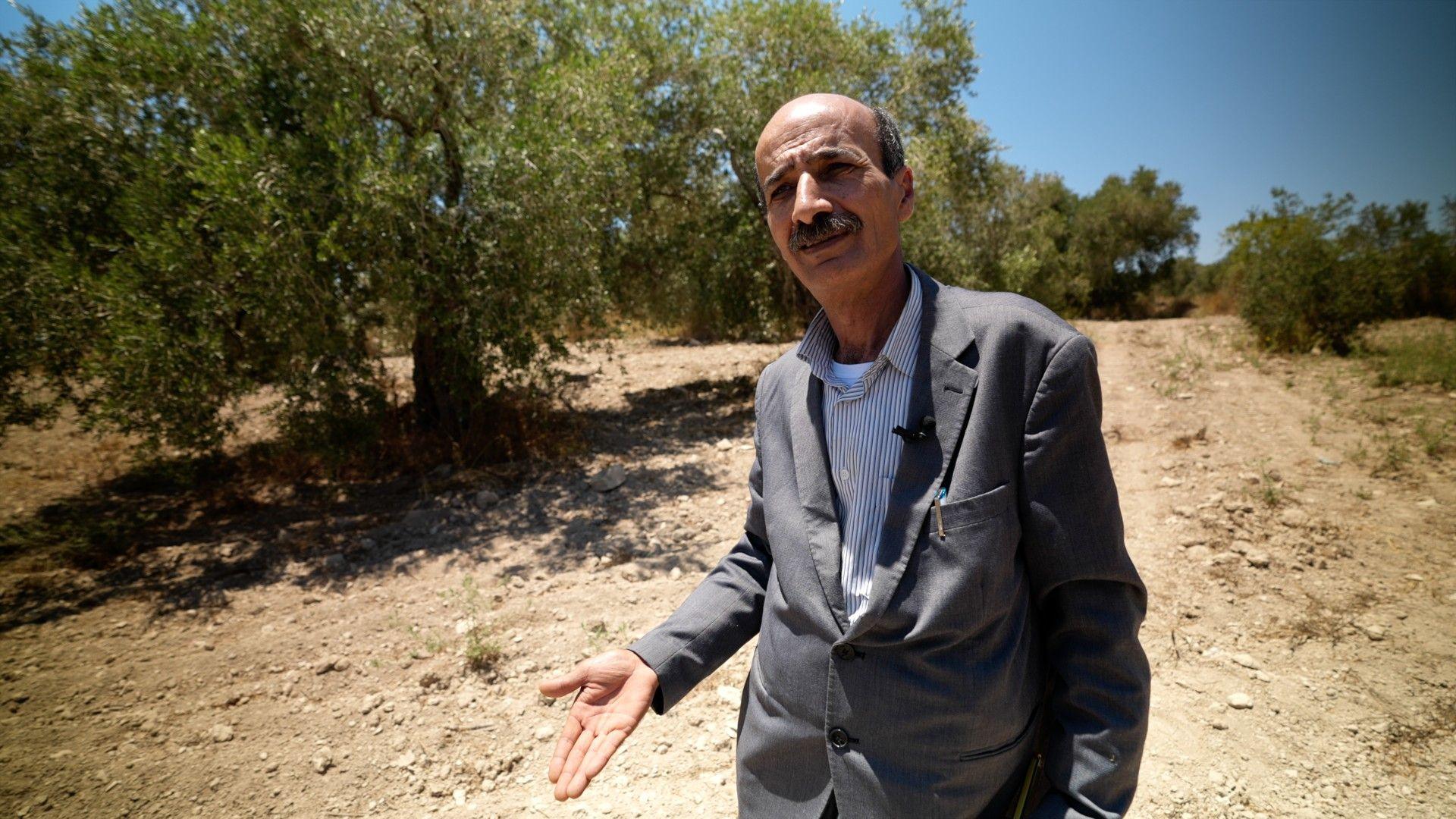
Abu Mudif says his land is part of a tranche of about 450 acres being expropriated by Israeli authorities
"If I wanted to describe it, the closest description I can give is that it is like having your soul ripped away. I cannot imagine myself without my land."
Nahed Sakha owns a local restaurant that is under threat of demolition.
He says the Israeli plan seems to be to cut Palestinian residents off from the archaeological site, which dates back thousands of years and has significant remains from the ancient Jewish past, as well as many other eras including the Romans, the Crusaders and the Ottomans.
"Restoration work has now begun along with excavations," he says. "Landowners were told that no-one would be allowed to use or plough their land."
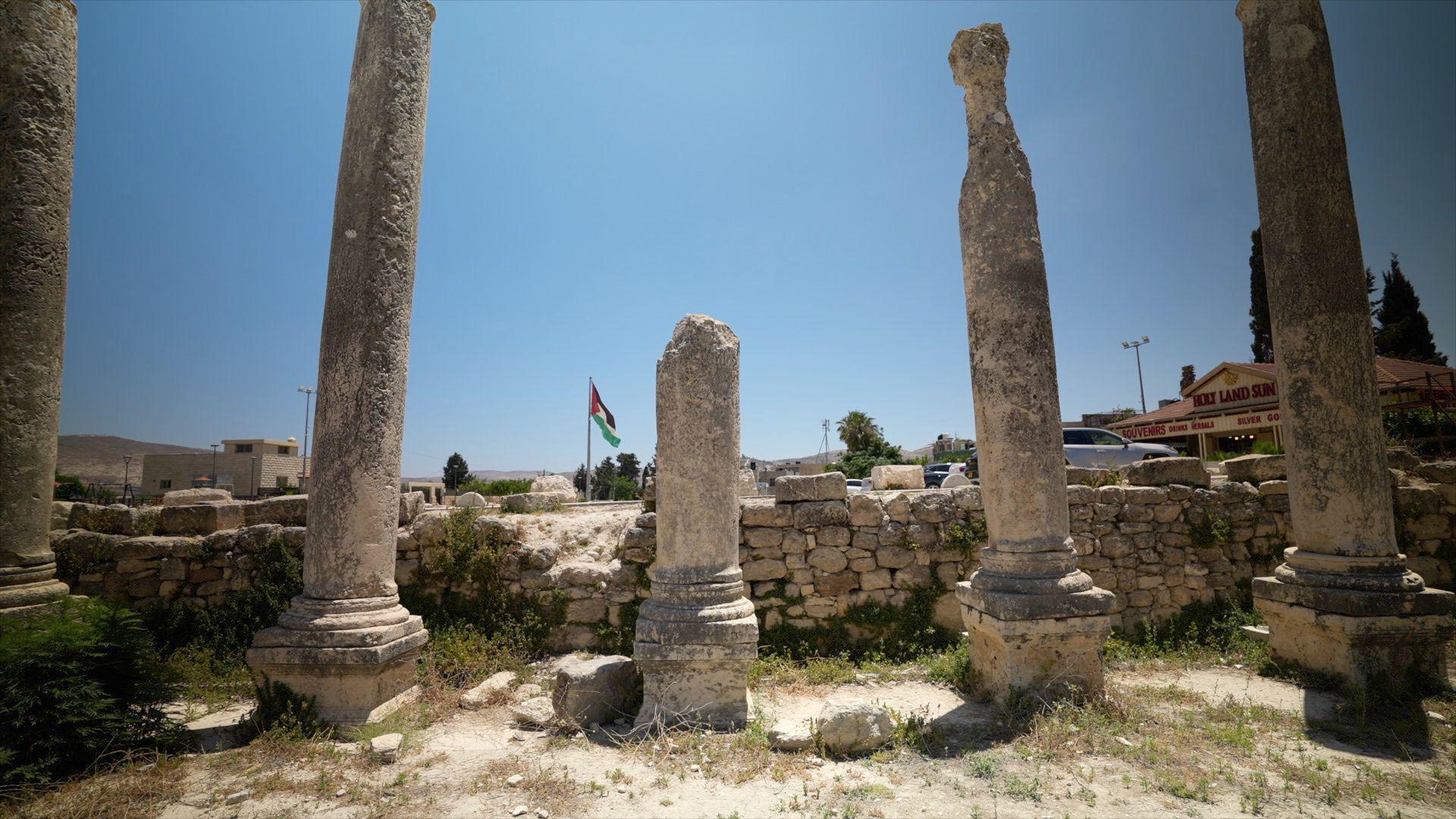
Unesco added Sebastia to its World Heritage List on 25 July following an emergency procedure
The concerns of the village that surrounds Sebastia have been echoed by the United Nations culture and education agency, Unesco, which has now declared it not just a World Heritage Site but also added it to the List of World Heritage in Danger.
Unesco says that the main threat facing the site concerns what it calls the "planned expropriation and creation of the 'Samaria' (Shomron) national park, which could divide the property".
Standing on a path between the entrance car park in Sebastia on one side - where the Roman-era forum once stood - and the columns of the basilica on the other, the village mayor, Mohammed Azem, looks down to his right at some rubbish left in the ruins.
He says locals are now worried about reaching down to clean the area as it might cause problems with Israeli security forces and settlers.
The path on which he stands divides the site between Area B of the West Bank - which is under Palestinian civil and Israeli security control - and Area C, which is under full Israeli civil and security control.
Last week, Israel allocated roughly 113 million shekels (£27.8m), external to expanding its control over archaeological sites in the West Bank. Some projects involve sites in areas administered by the Palestinian Authority.
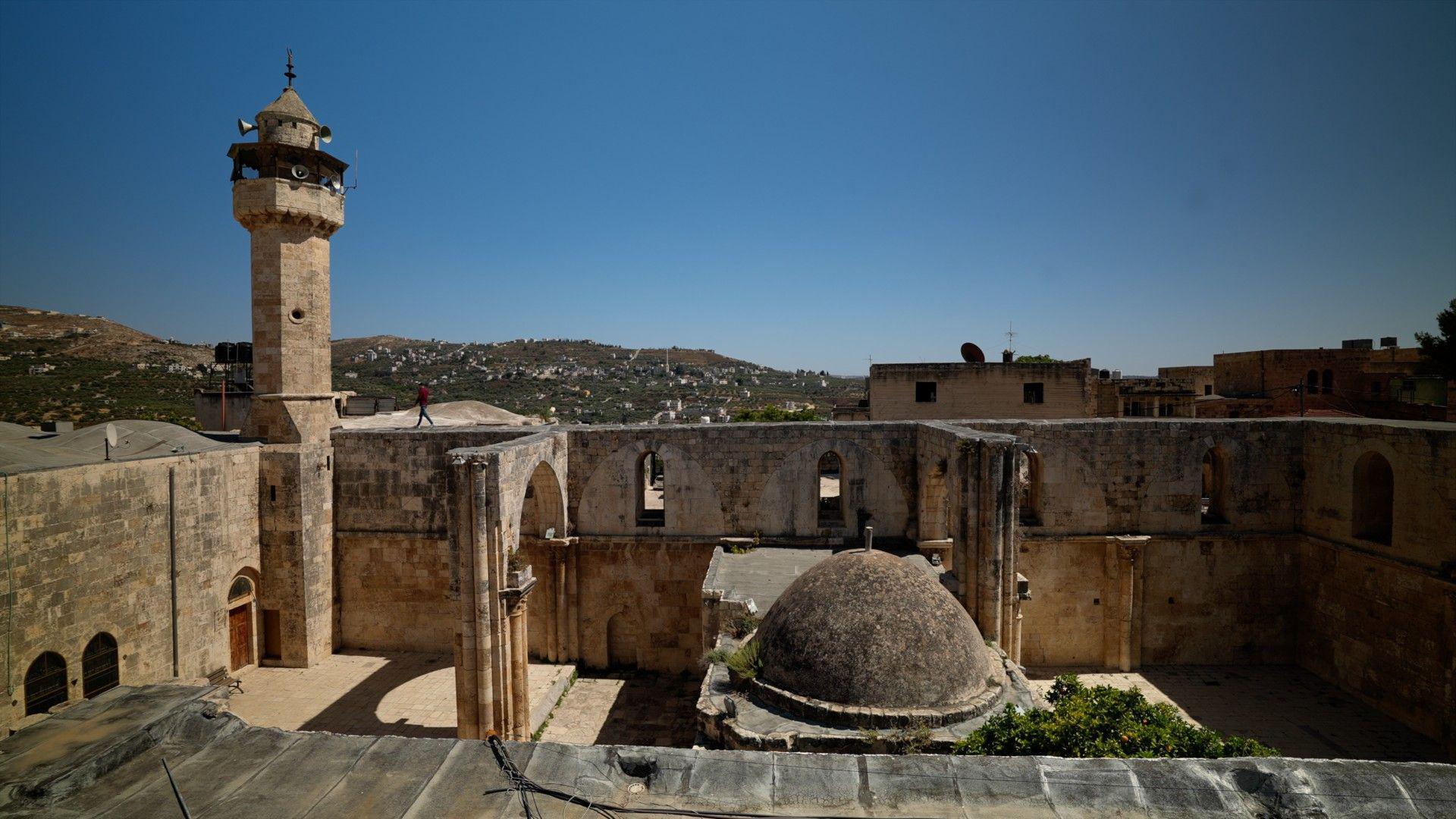
The Cathedral of St John the Baptist/Mosque of Nabi Yahya is part of the Unesco-listed site
In the remains of the Roman theatre, Israeli activist Alon Arad - who heads Emek Shaveh, an Israeli group that aims to ensure that the ancient heritage of the region belongs to all communities - says that the Israeli authorities have bypassed consultation with the local administration and residents of Sebastia.
"The thing is that Israel is not the owner of this place. This is a Palestinian heritage site. And in order to develop it in a positive way, it has to be done with the local community, with the municipality, so they can benefit."
The Israeli plans would see Sebastia's entrance moved to the other side of the vast site, away from the village and current car park and shops.
The Palestinian tourism and foreign ministries have expressed their hope that recognition by Unesco may buttress international support for their opposition to Israeli land seizures in Sebastia.
But the Israeli Foreign Minister, Gideon Saar, has portrayed Unesco's move as enabling Palestinian efforts to diminish historic Jewish ties to the West Bank.
"No vote in an international organisation can change history," he asserted.
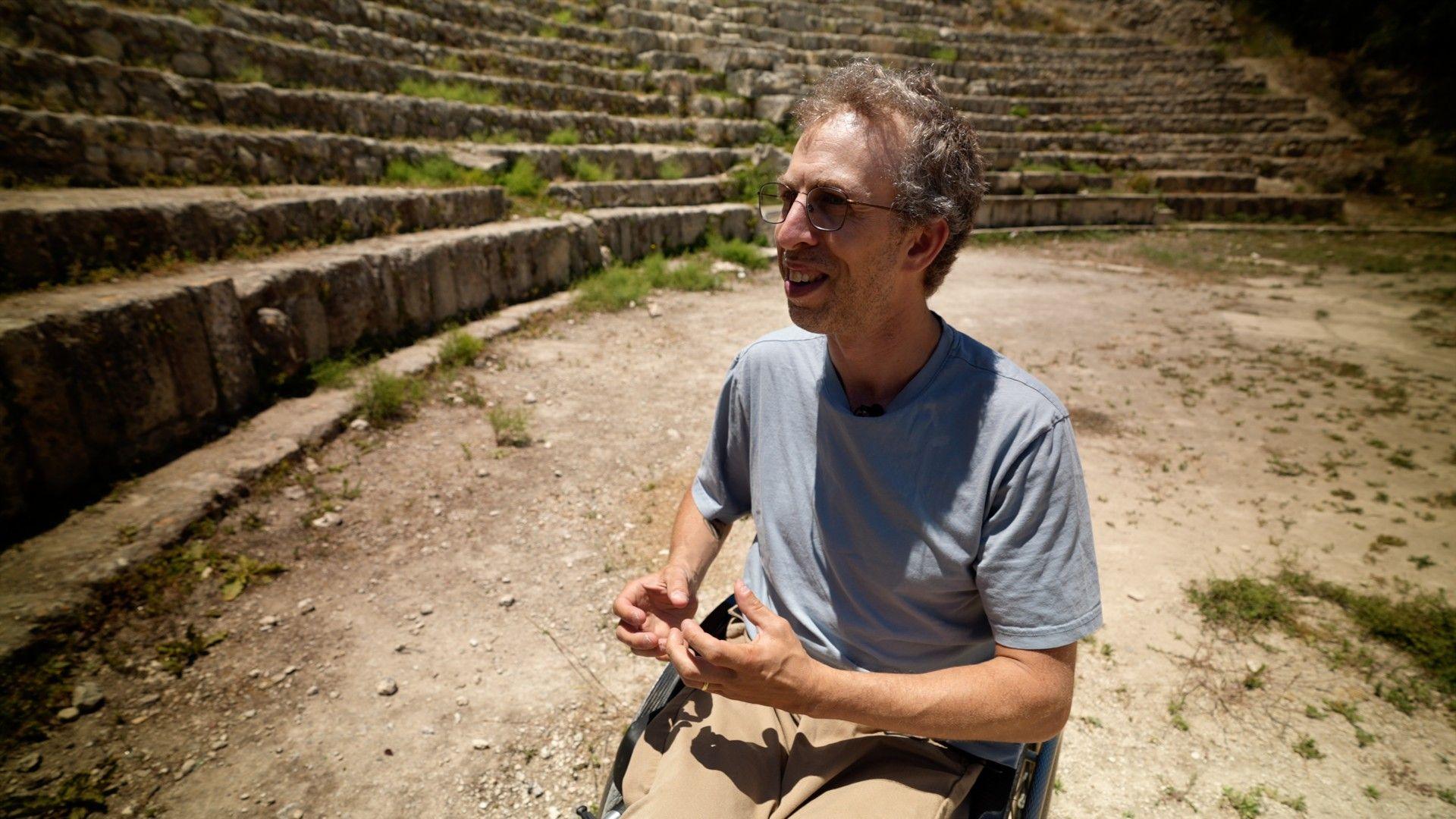
Israeli activist Alon Arad says archaeology is being used as pretext by Israeli authorities to seize land
Further to the south in the West Bank and just in sight of Jerusalem is Herodium, a manmade hill with an extraordinary palace built on its summit by King Herod, who ruled the Kingdom of Judea just before the Christian era.
Recently here, too, Israel has begun to expropriate land - this time about 80 acres - for what it says is the "preservation and development" of the site.
Peace Now - an Israeli organisation that monitors settlements - says: "Under international law, as well as according to rulings of the Israeli Supreme Court, Israel is prohibited from expropriating land for settlement purposes or exclusively for the benefit of Israeli citizens".
"Consequently, in order for the expropriation to be considered lawful, the state will likely argue that the site is intended to serve both Palestinian and Israeli populations, despite the apparent fact that its primary rationale and purpose are linked to settlement expansion and Israeli control."
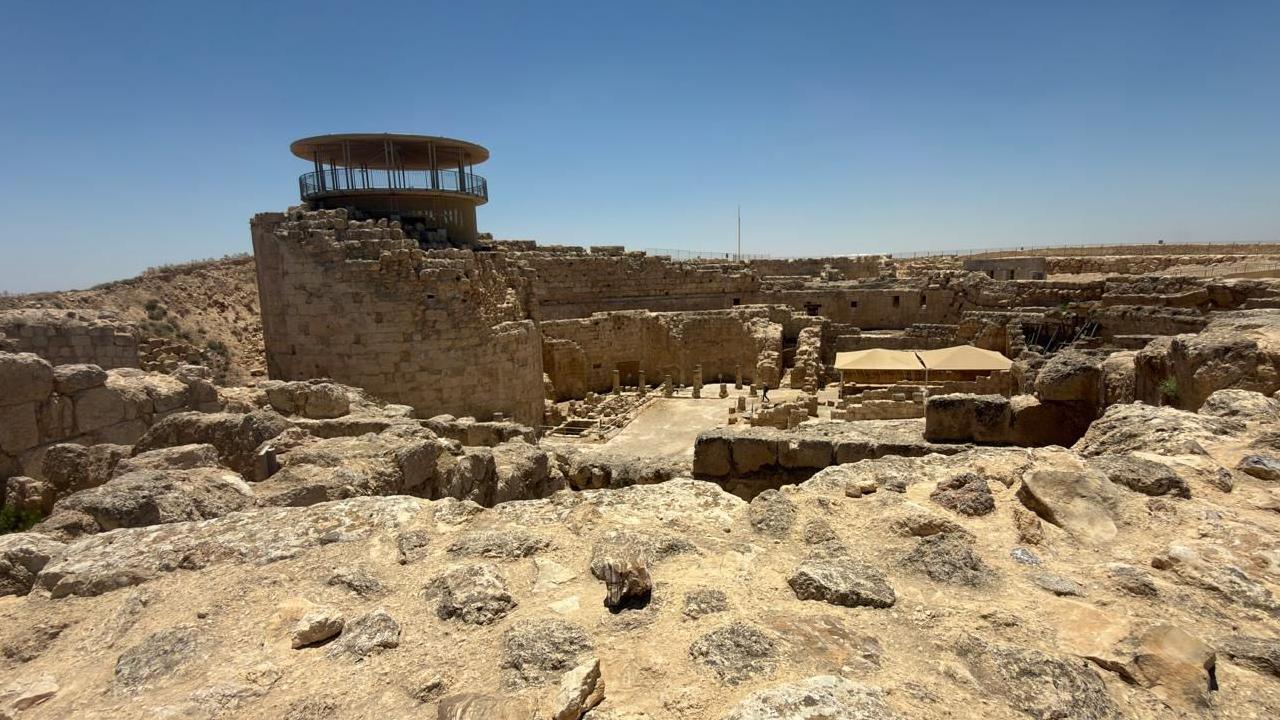
Herodium is a hilltop fortress-palace close to Bethlehem
For Shmuel Browns, who has worked on excavations in Herodium and leads deeply enthused guided tours, it's vital for Israeli archaeologists and officials to be able to oversee and protect places that are so freighted with historical and religious significance.
"Israel feels responsible to look after the archaeology, the artifacts, the history of this land," he says.
But there has also been a drive to go further than this among far-right members of Israel's current government.
A new law was proposed earlier this year that would have transferred control of archaeological sites to the Israeli heritage ministry from the Civil Administration, which operates under military authority, and given it sweeping powers to seize land for archaeological preservation across the West Bank.
That bill passed its first reading in parliament in May but is now on hold as elections are coming up. It may never re-emerge.
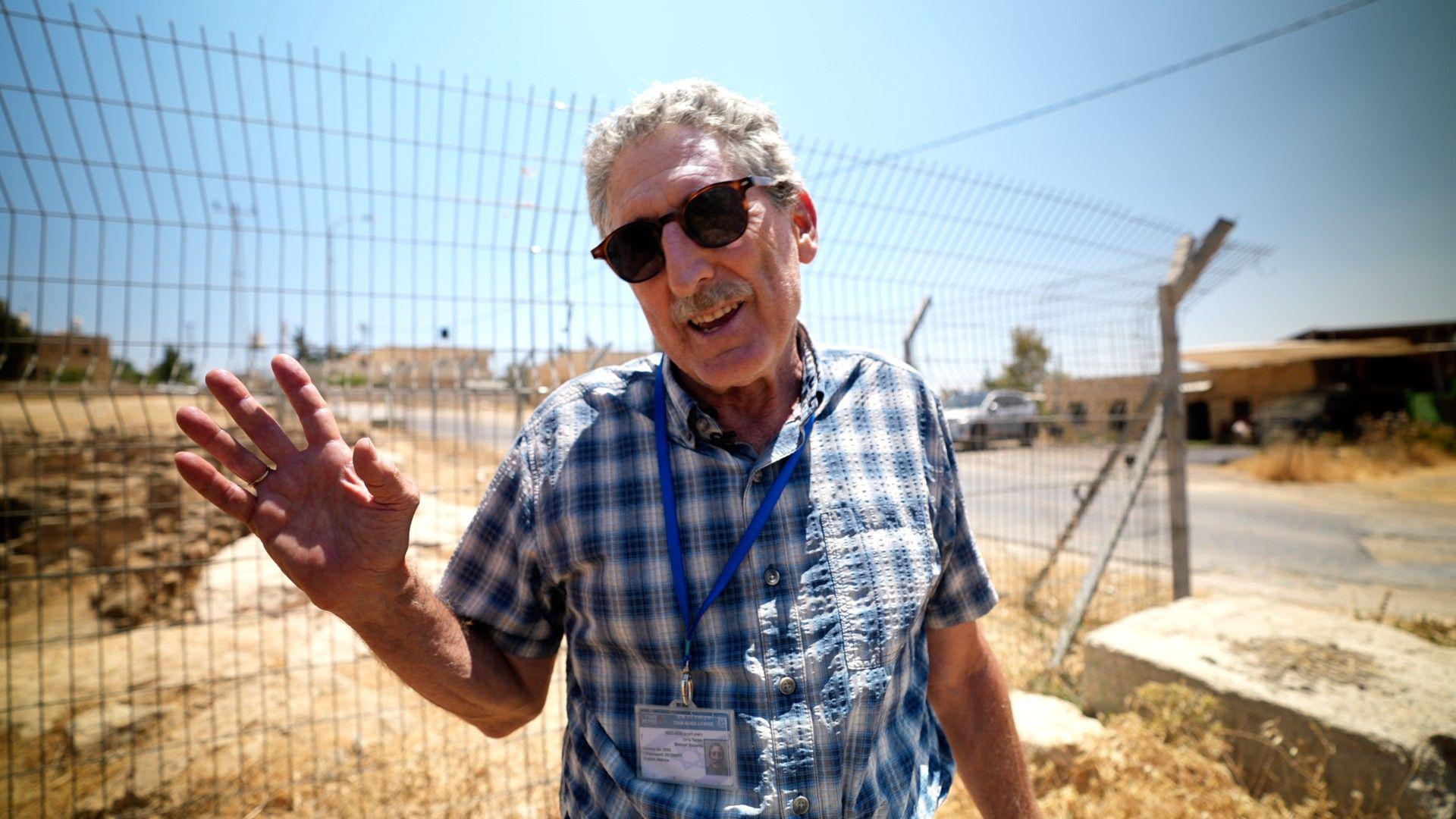
Herodium guide Shmuel Browns says Israel feels responsible to look after local archaeology
Back in Sebastia, the Israeli activist Alon Arad says the very fact that the bill was put forward shows how archaeology itself has been weaponised in the West Bank.
"This is exactly how the mechanism works. You use archaeology, you use it in order to do excavations and to the narrative, to rewrite history, but you also use it in order to allocate lands or reallocate lands from Palestinian to Israeli," he warns.
Increasingly, Palestinian residents of Sebastia fear that their close connection with the ruins is in danger of being lost.