.png)
 1 month ago
74
1 month ago
74
It wasn’t so long ago that UK government briefings from Downing Street were essential viewing. Professors Chris Whitty and Patrick Vallance were household names in Britain and there was a roaring trade in “next slide please” mugs. Four years after the final Covid lectern was put away comes an attempt to alert the public to another emergency – the climate and nature emergency. And sport could be the secret weapon in spreading the word.
The National Emergency Briefing was held in London last November, in front of over 1,000 guests including MPs. It brought together experts from the fields of nature, climate, tipping points, weather extremes, food security, health, national security, economics and energy transition to sum up the scale of the challenge ahead and what could be done about it. A condensed version of the day was made into a 45-minute film, The People’s Emergency Briefing, which was released earlier this month, with backers including the British Ecological Society and the Campaign to Protect Rural England.
Prof Paul Behrens, sustainability scientist and British Academy Global Professor at Oxford University, is the film’s food security spokesman. He is also a huge sports fan. “There’s a tighter link between sport and food than we think,” he says. “Our food system is responsible for around 30% of global greenhouse gas emissions and is the single biggest driver of nature loss. That means what we eat is one of the biggest levers any of us has on the climate and nature crisis.
“A number of high-profile elite athletes across football, tennis, motor sport, and endurance sport have adopted plant-rich diets. It turns out that more plants in our diets help our health, and those diets are remarkably similar to what’s good for the planet. And climate change is now pushing back from the other direction too by destabilising the food supply that feeds us. It’s also impacting how we play sport, exercise, and run competitions. A better diet with more plants is genuinely one of the rare win-win-wins. Better for climate, nature, our health, and our bank balance.”
The People’s Emergency Briefing is being screened all over the UK, mostly in church halls and community centres. There’s also a screening in Paris. Behrens hopes that sport will be able to get the film get in front of more pairs of eyes. If sports clubs en masse were to start hosting events, the word would spread outside the usual environmental silos.
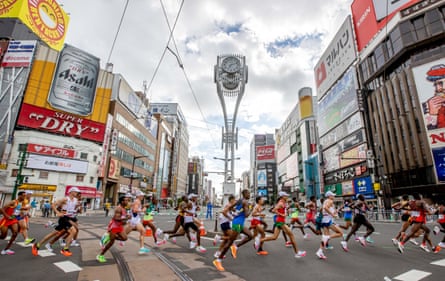
“Sport reaches people in a way that scientific reports never will,” says Behrens. “Most sport happens outside, and outside is getting harder to live with. A third of Grassroots football clubs in the UK are already losing around six weeks to two months of the year from flooding, cricketers are collapsing in heat and at global events like the Tokyo Olympics, marathons have been moved hundreds of miles north and brought forward to dawn to dodge the heat. The climate and nature crisis stops being abstract when you see these very real impacts on how we play sport and exercise.
“Sport has a unique ability to make change because it’s local, we can see the impact on our communities. It’s also loved by so many of us, which makes athletes, clubs, and fans some of the most powerful messengers we have. That’s why sport’s voice in this moment matters far more than people realise.”
Some sportspeople have already thrown a hat into the ring. World champion cyclist Kate Strong is hosting a couple of briefings, and British Olympic sailor Laura Baldwin addressed a showing in Weymouth last week and is involved in another in Portland.
“Even after years of hearing the scientific facts, it still hits me hard,” says Baldwin. There is grief in fully seeing what is happening to our precious world … there is much meaningful work to be done, work that gives us purpose and brings us together.”
The organisers’ aim is that once enough people have seen the film, pressure will build on government to hold their own non-partisan briefing, though the timing is admittedly unfortunate – in the current political climate, grabbing attention for climate and nature is a challenge.
This Thursday there is a one-off chance for sports fans to watch the People’s Emergency Briefing online, organised by Claire Poole, the founder of Sport Positive. The idea behind the film is collaboration and for people to come together in person in their communities to watch and talk about it, but Poole hopes the showing will act as springboard. International sports federations, governing bodies, athletes and agents have already signed up but it is open to all the sports community. You can register here. Or here to find a briefing near you or to organise your own screening.
In the words of The National Emergency Briefing’s chair Prof Mike Berners Lee, “there’s an escalating polycrisis … but everything to play for.”
-
This is an extract from our newsletter, The Hotspot. To subscribe just visit this page and follow the instructions.