.png)
 6 hours ago
4
6 hours ago
4
2 hours ago
Liv McMahonTechnology reporter

 Getty Images
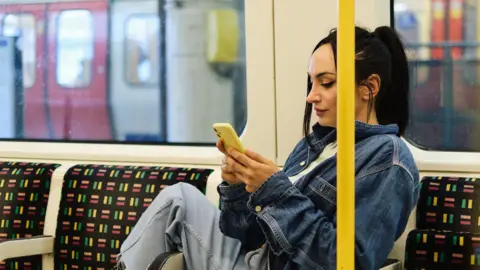
Fewer adults in the UK are posting, commenting on, or sharing material on social media - while AI use is up and the majority of people worry about their screentime - according to Ofcom.
Across the UK, 49% of respondents said they actively post on platforms such as Instagram, Facebook and X, down from 61% the previous year, according to the regulator's latest survey of online habits and usage.
Ofcom said this, and its finding some people were choosing to post less permanent content, indicated a rise in "passive" social media use.
For social media expert Matt Navarra, it suggests people may be seeking "digital self-preservation" by turning to smaller, private spaces like group chats and DMs.
Still social, less public
"People haven't fallen out of love with social media, I think they've just become a lot more intentional about how they show up on it," Navarra told the BBC.
Ofcom also said it found more adults had expressed concern posting online could cause them problems in the future, something Navarra said showed that for many, it now "feels less like self-expression and more like a potential liability".
"Social media isn't becoming less social, it's becoming less public."
 PA Media
The majority of adults, and a large majority of 16-to-35 year olds, reported using AI tools, according to Ofcom
Ofcom's findings form part of its wide-ranging annual Adults' Media Use and Attitudes survey exploring people's changing media habits.
Its latest survey, carried out between 29 September and 28 November last year, saw 7,533 UK adults aged 16 or over asked about how they use social media, find news online and feel about their digital privacy, among a range of issues.
This included more UK adults using AI tools compared to previous years - rising from 31% in 2024 to 54% in 2025.
This was largely being driven by young people using the tech, Ofcom said, with four-in-five 16-to-24 year olds and three quarters of 25-to-34 year olds saying they use AI tools.
 PA Media
The average UK adult was online an average of four hours and 30 minutes every day in 2025, says the report
For the first time, the survey also asked participants how they felt about their screentime - with two thirds (67%) saying they sometimes spend too long on their devices.
In a separate report published in late 2025, Ofcom said UK adults were spending 31 minutes longer online than during the pandemic in 2021.
Meanwhile, it said responses to its annual qualitative Adults' Media Lives tracker, which follows 20 participants over time, suggested a shift in how adults use social platforms.
"I'm posting something very rarely now, which is funny because when I was younger, I would have been posting what I was eating for dinner," said one 25-year-old participant Ofcom have named Brigit.
Dr Ysabel Gerrard, senior lecturer in digital media and society at the University of Sheffield, said with some young adults swapping smartphones for dumb phones and "craving the MySpace era", digital fatigue may be a factor for those posting less.
"When social media first became popular in the UK in mid-to-late 2000s, posting written updates, photos and videos was novel and exciting, but it's neither of those things anymore," she told the BBC.
Ofcom also said its survey found less positive sentiment overall about being online.
While 59% of people saw benefits outweighing risks of being online in 2025, this was "down from 72% last year and 71% in 2023," it said in its report.
It also saw little difference in positivity toward the internet between those age groups very active and less active online.
The findings also come against a backdrop of a much-changed social media landscape, in which shortform video dominates the most popular platforms.
Where platforms like Instagram and Facebook once prioritised showing people posts from those they know, feeds now show users more content from accounts they don't know but whose videos are gaining attention.
"Social feeds are no longer really about your friends, they are algorithmic, video-first entertainment platforms," said Navarra.
Ben Woods, creator economy analyst at Midia Research, sees this as social media becoming "less social" - with platforms like YouTube and TikTok, known for their creator content, now also "one-stop-shops for entertainment".
He said this would likely only increase with the growth of micro-drama content on TikTok and broadcasters distributing shows on YouTube.
"When social platforms start to feel like TV, users naturally start acting like viewers instead of participants," Navarra added.