.png)
 11 hours ago
2
11 hours ago
2
Esme StallardClimate and science reporter

 EPA_EFE_Shutterstock
Water companies released raw sewage into England's rivers and seas for 48% fewer hours in 2025, compared with the year before, according to the Environment Agency.
The regulator said most of this improvement can be put down to drier weather rather than infrastructure upgrades.
Sewage is spilt when it is raining to prevent the system becoming overwhelmed and backing up into people's homes. So with less rain there are fewer sewage releases.
Environmental charities said the lower numbers were "not evidence of real change", but the industry body Water UK said the country was starting to see the effect of companies tripling investment in infrastructure.
In 2025, there were 1.9 million hours of sewage spilled, compared to 3.6 million hours the year before.
England, like the rest of the UK, has a combined sewage network which means that both rain and sewage enter the same system. Ageing infrastructure coupled with increased populations and more intense rainfall events due to climate change have pushed the system to its limit.
Rainfall was 24% lower last year as the country experienced one of its driest starts to the year, even though the winter saw heavy rain.
James Wallace, CEO of charity River Action, said: "After one of the driest summers in decades, lower spill numbers were inevitable, not evidence of real change.
"Water companies are still profiting from pollution, and regulators have failed to act."
Disentangling how much of the drop in sewage spills was down to a reduction in rainfall is challenging, as it also depends on the number of spillages and how heavy the rain was.
The Environment Agency said there would need to be "sustained investment to bring lasting improvements".
But Water UK, the industry body, said that the country was already "starting to see the effect of a tripling of water company investment".
In 2024, the industry regulator, Ofwat, agreed that water bills in England and Wales could increase over the next five years to fund investment of £104bn in infrastructure upgrades.
Water UK pointed to the efforts of one company, United Utilities, who upgraded more than 400 storm overflows in its patch and Yorkshire Water, which had upgraded around 100 in the last few years. There are nearly 15,000 overflows across the country.
"It is good to see that storm overflow spills are down since the previous year, but there is still an unacceptable amount of sewage entering our waterways and a long way to go in cleaning up our rivers, lakes and seas," said water minister Emma Hardy.
In 2024, leading scientists including Prof Chris Whitty, chief medical officer for England, published a report warning that sewage entering our waterways was putting the public in danger.
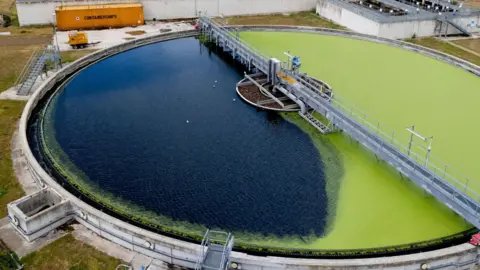
Sewage also poses significant environmental risks – it increases nutrients in the water leading to algal blooms which then eventually denies other wildlife oxygen, including fish. These spills also have been shown to introduce waste products like plastics and drugs into rivers and seas.
The impacts on wildlife and people are particularly acute when there is dry spilling i.e. sewage is released when it has not been raining. With no rainwater to dilute the sewage it is particularly concentrated - this is an illegal practice.
For the first time this year the Environment Agency (EA) published data on the number of dry spills - after instructing water companies to collect this information.
The Environment Agency said on Thursday that there were 14,700 such spills last year and that it was now investigating them.
In some cases the monitors that measure sewage spills can misfire but if the regulator does find these incidents occurred it will take enforcement action, it said. That could be a warning or an unlimited fine.
Last year water companies paid £6.9m in fines for breaking environmental law.