.png)
 5 hours ago
1
5 hours ago
1
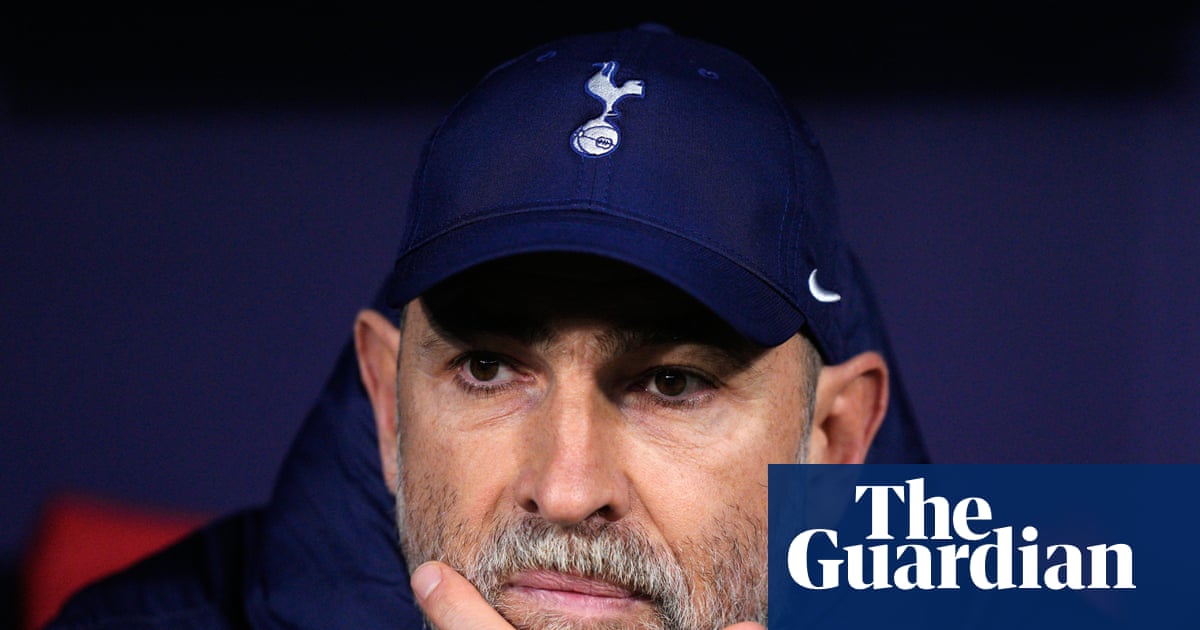
Mauricio Pochettino was literally unmoved.
To his left and right, his assistants pumped their fists, clapped their hands, rose to celebrate. Not Pochettino. After Weston McKennie put the US ahead with an end run around the Belgian defense that freed him up at the far post to tap the ball past Senne Lammens in the 39th minute, Pochettino just sat there, stoically, hunched forward in his seat, two fingers to his mouth.
It was the second time in the opening half that McKennie had found himself wide-open at the far post on a corner and with the ball presenting itself to him in mid-air. The first time around, Lammens had made a marvelous reaction-save to deny the Texan’s volley point-blank. Just then, things were looking good for the home team in Atlanta, still floating on the momentum from four wins and a tie in the fall.
Perhaps Pochettino was prescient, well aware that there was almost an hour of soccer left to play. And over that span, long-time USMNT fans would have felt a sense of déjà vu as their team disintegrated under the mounting pressure applied by a team from the Lowlands, a collapse all too similar to their elimination from their last two World Cups.
By the time of McKennie’s goal, Belgium had already fashioned a few promising scoring chances and seen a goal by Charles De Ketelaere disallowed for offside. But going behind seemed to alert Belgium that the game had indeed begun. From there, they methodically strung together five goals of all shapes and sizes: a daisy-cutter from outside the box; a low, placed shot; a curler; a penalty; a close-range finish. They all went unanswered until, in the late going, Patrick Agyemang finally tallied another one for the Americans.
Remarkably, things might have been much worse. Matt Turner, finally back in goal for the US after a dozen games displaced by Matt Freese, made a raft of strong saves to keep the rout from running up further.
Pochettino’s side gathered up more of the possession over the course of the game. But a Belgian team that cruised to qualification for the upcoming World Cup without losing a game threatened more, connected and moved more incisively, and ultimately proved far more clinical in front of goal, converting half of their 10 shots on goal. Therein lay the difference between this ascendant USMNT program and the sorts of opponents it aspires to match. Still.
To Turner – poor Turner, let back on to the field at last, only to get his chance in this game – the contest brought to mind another handy defeat three-and-a-half years ago.
“It reminded me a lot of the Netherlands game in the World Cup, where you’re going against a really experienced team that knows how to suffer, knows how to accept pressure and then turn around,” he recalled, likening Saturday’s humbling to the 3-1 round-of-16 defeat to the Dutch at the 2022 World Cup. “They were absolutely clinical in the final third.”
This loss to Belgium also felt like a yardstick of sorts when laid beside the 2-1 extra-time defeat to the Red Devils in the last 16 of the 2014 World Cup. Then, as now, the Belgians produced chances on an industrial scale, only for the score to be held down by an American goalkeeper – Tim Howard setting a World Cup record for saves.
If Saturday’s first-half suggested that the USMNT had gained substantial ground, asserting themselves against a global soccer power, albeit hardly a World Cup favorite, the second posed the question how much progress had really been made in almost a dozen years.
Usually, the sensible answer lay somewhere in the middle.
Yet this particular loss felt revelatory in the same way those knockouts in 2014 and 2022 did, even coming as it did in a friendly. The Americans flashed the same old naïveté, not to mention a skill gap exposed by an opponent that could match the US for physicality.
Some good may yet come of Saturday’s dreary afternoon. Looked at one way, the timing of this truncheoning was terrible, just as the glare on this team sharpens in the home stretch to the long-awaited World Cup on home soil. Pochettino and his winger Tim Weah, who acquitted himself relatively well in the impossible task of chaining down Jérémy Doku, saw it another way.
“Definitely a difficult experience,” Weah told TNT. “We just have to get back into the lab and continue working. … Right now is the best time for this to happen. We have a World Cup to think about.”
“This type of thing is good because we have the time to improve,” added Pochettino. “It’s a good check of reality for us.”
Certainly, much the better to suffer this collapse now than in three months. If you learn from it, that is. If time reveals it to have been a teachable moment, rather than a portent.
-
Leander Schaerlaeckens’s book on the United States men’s national soccer team, The Long Game, is out on May 12. You can preorder it here. He teaches at Marist University.